Irish Fin Whale
Photo Identification Gallery (2004 -Feb. 2026)
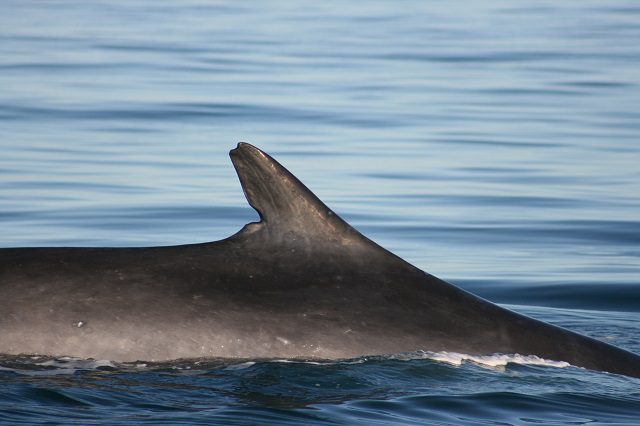
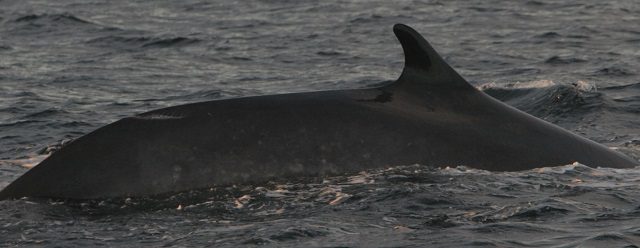
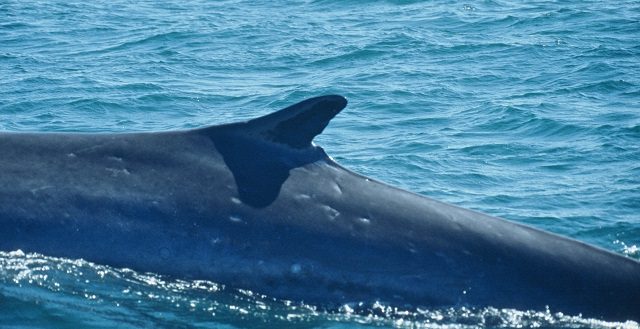
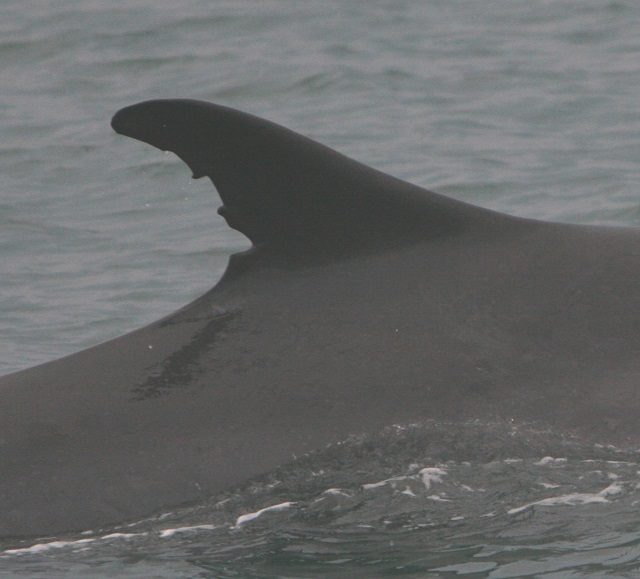
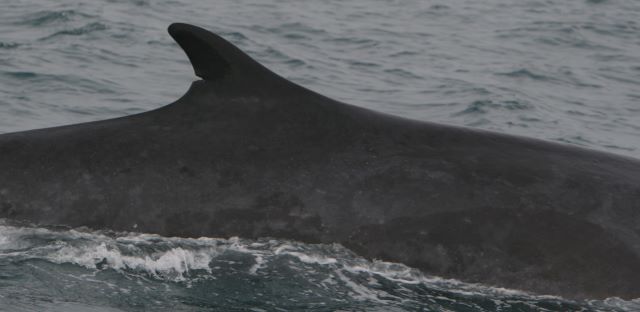
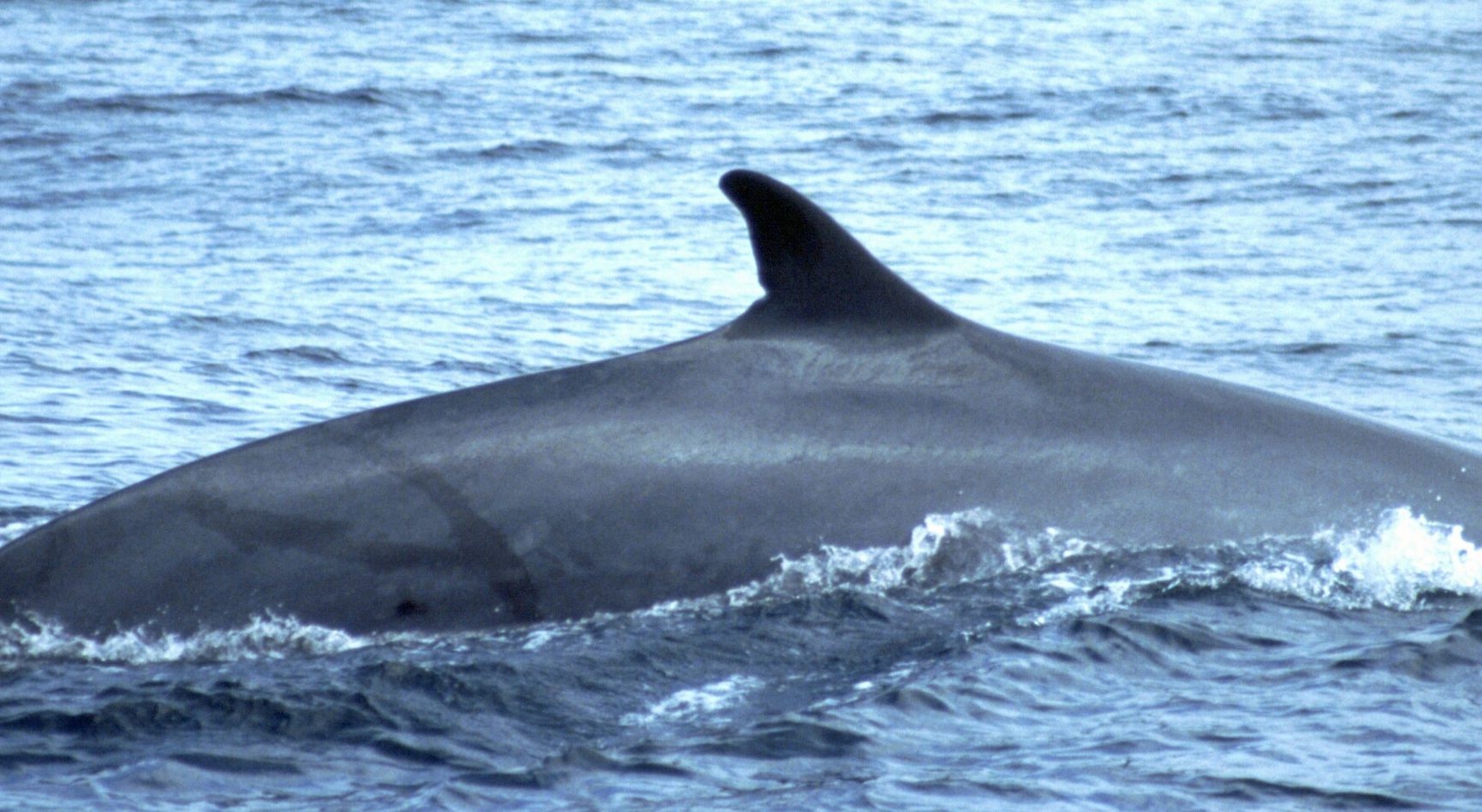
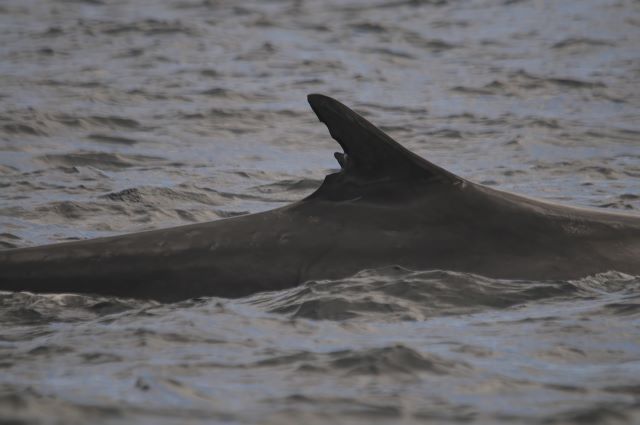
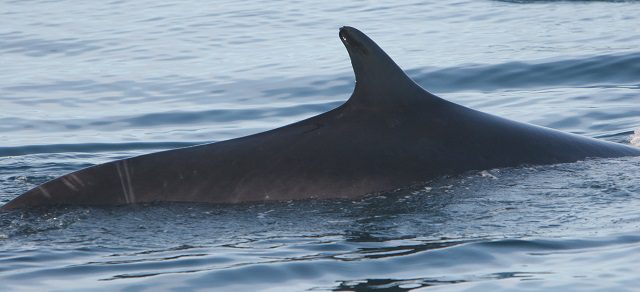
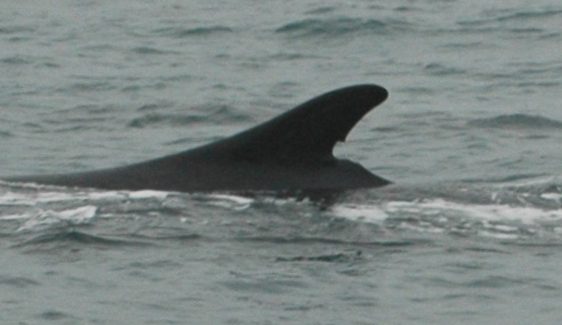
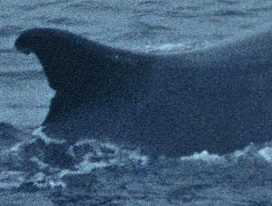
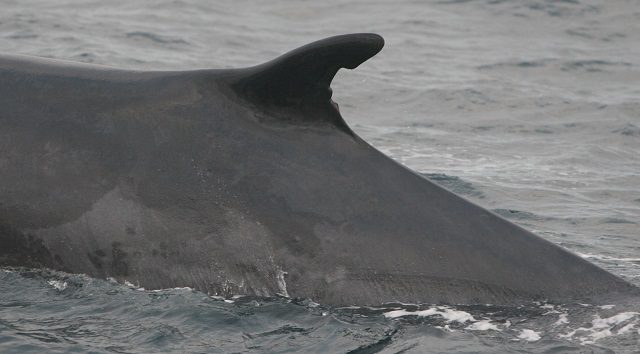
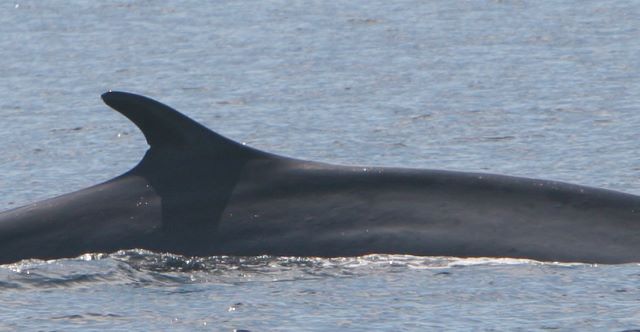
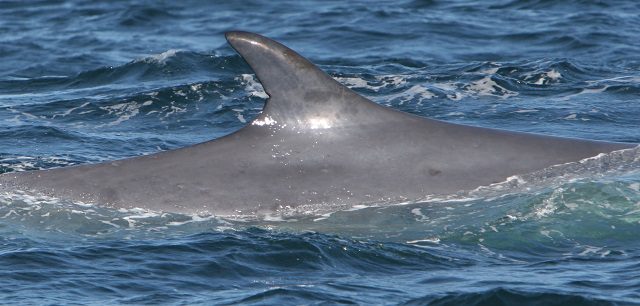
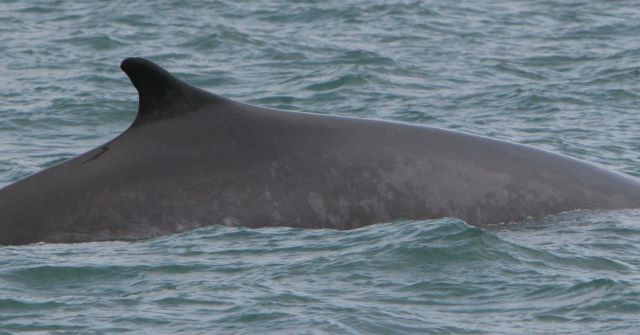
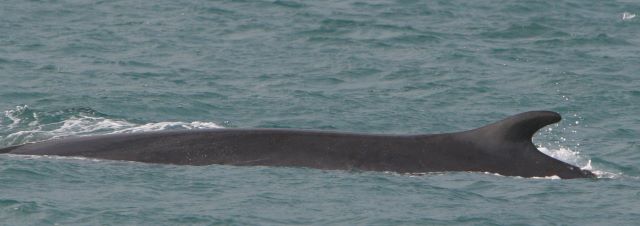
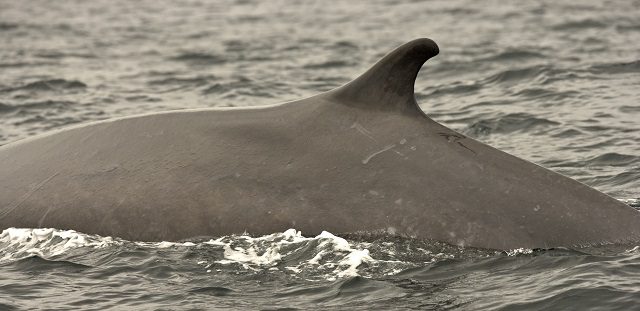
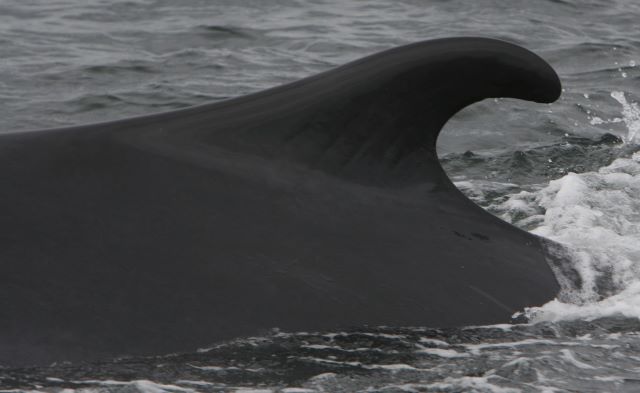
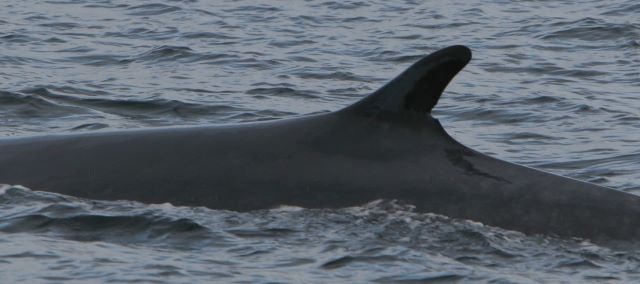
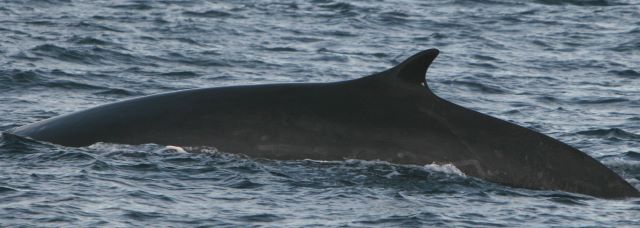
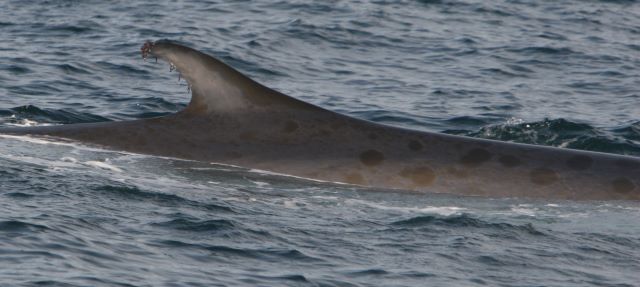
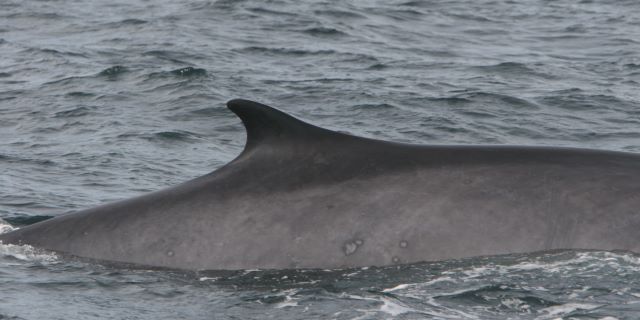
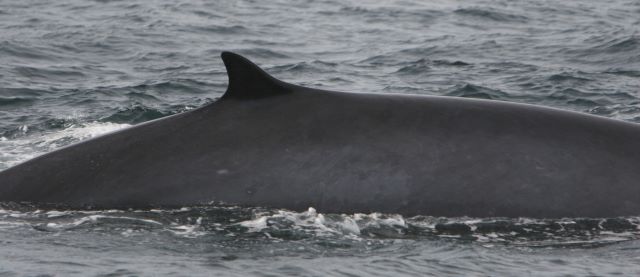
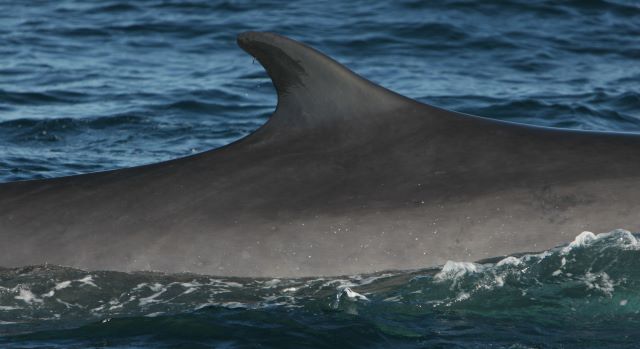
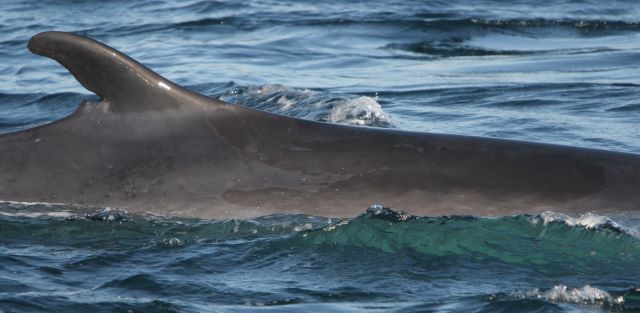
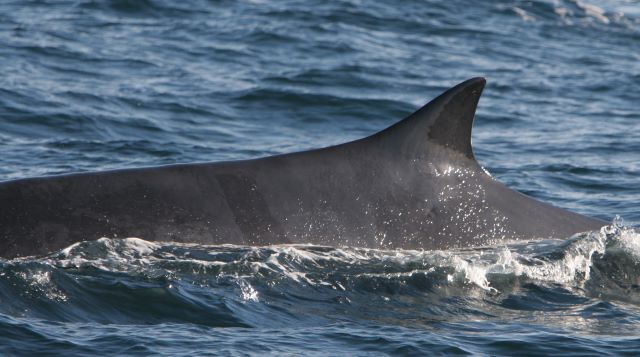
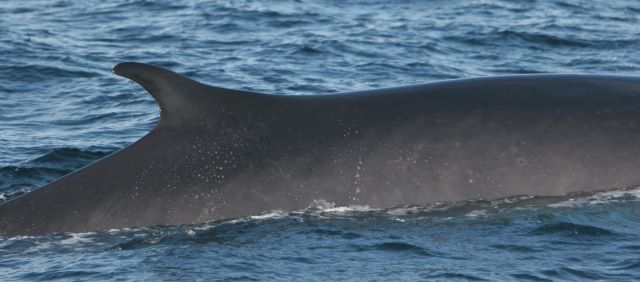
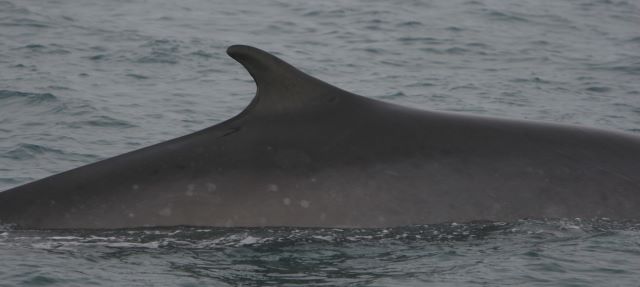
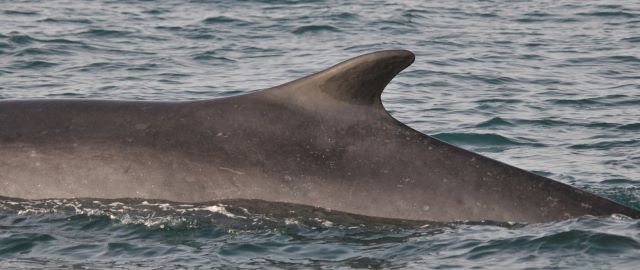
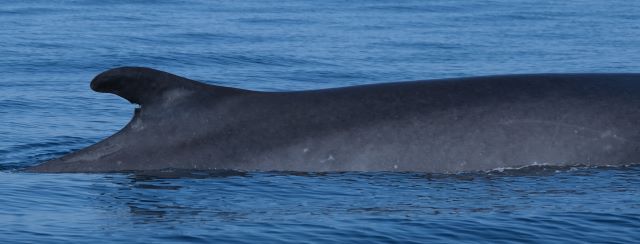
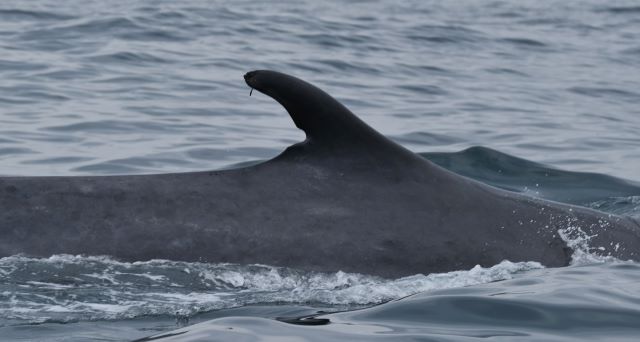
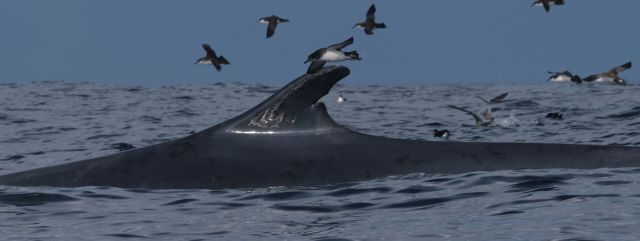
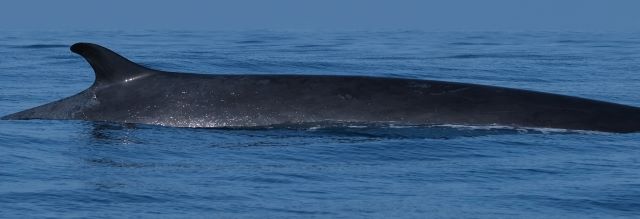
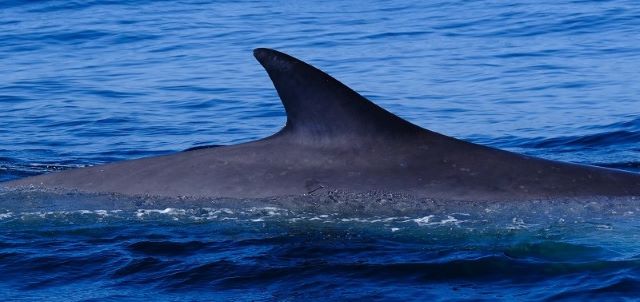
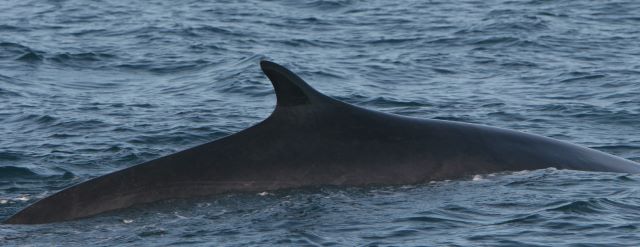
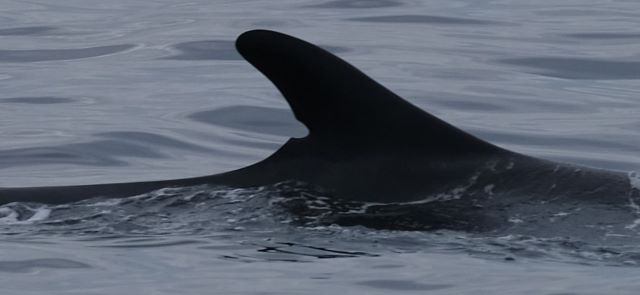
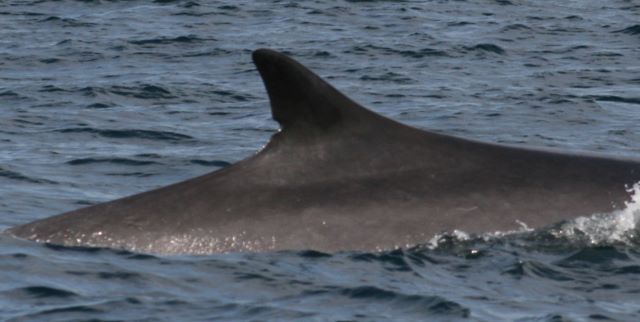
Click on an image to enlarge for greater detail on any of the 60 individuals documented to date in Irish waters up to Feb. 2026

Irish Fin Whale Photo ID Project.
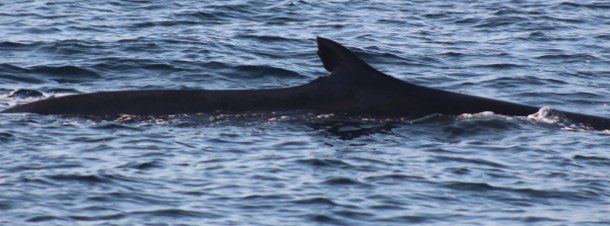
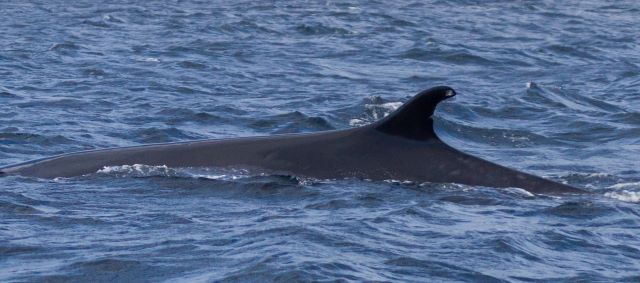
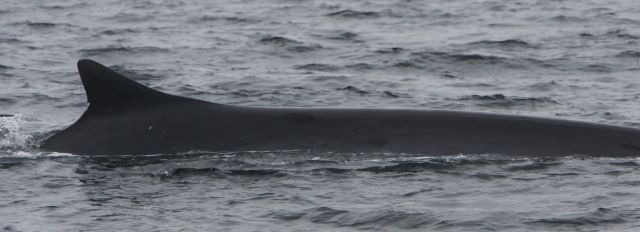
One of the main aims of the WhaleTrack Project is to document the occurrence of large whales in Irish waters, by encouraging members of the public to report their sightings and to forward any useful images to IWDG. This facilitates the recognition of individual whales from their respective catalogues, curated and maintained by IWDG. This can be achieved by photographing their unique and naturally occurring markings, which can be permanent or temporary. The two main rorqual species that have been the focus of this monitoring effort since 1999, are the humpback and fin whale.
Both the biology and ecology of humpback whales lend themselves to the benign research technique known globally as Photo ID (Photographic Identification). Humpbacks have a preference for shallow coastal waters, are slow moving, can be found in Irish waters on average 9 months of the year, but more importantly they tail-fluke, to reveal their impressive and uniquely marked 15-20 ft broad flukes, which can offer even the amateur enthusiast with a decent smartphone an opportunity to capture the all-important “mug shot” that helps us establish whether your whale is known to us, or is a new animal, not previously documented in Irish waters anyway! By contrast, fin whales could hardly by more different and are a far more challenging prospect for even the most experienced wildlife photographer with the fastest of digital SLRs. So of the two large baleen whales our early focus has been on the humpback whale, the low hanging fruit so to speak.
Your images can be used to track the short-range Irish movements of these whales within a season, or by sharing your images with overseas colleagues, in time, such images can reveal their international movements along migration routes and ultimately to their low latitude breeding grounds.
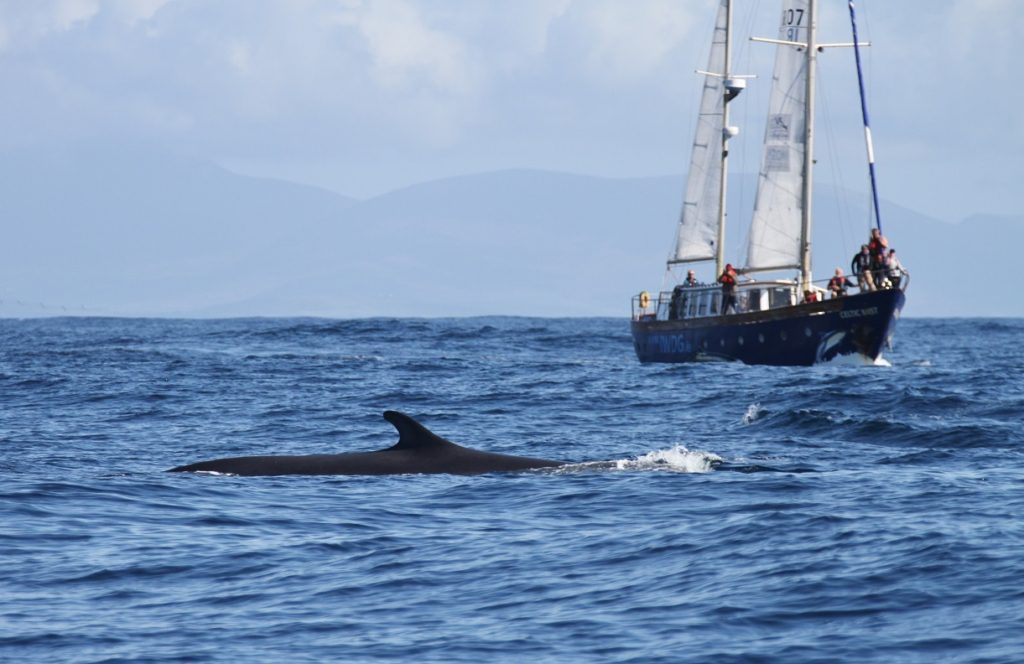
Fin whale and Celtic Mist, Blaskets, Co. Kerry © Nick Massett, IWDG
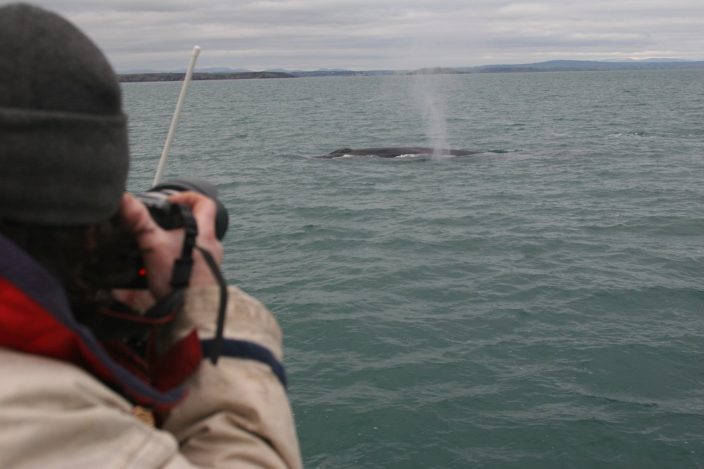
Fin whale Photo ID, Youghal, Co. Cork Jan 2007 © Simon Berrow, IWDG
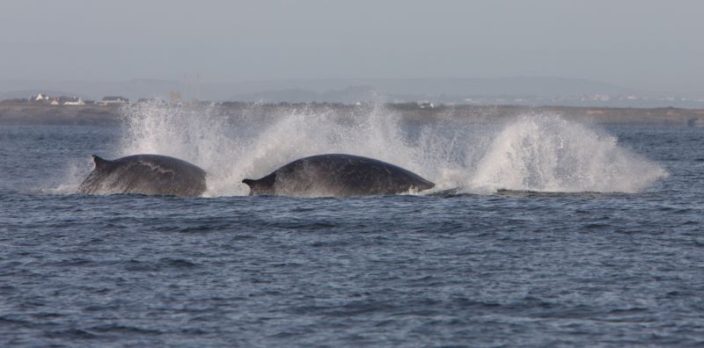
Fin whales showing their turn of speed, East Cork Jan. 2012 © Pádraig Whooley, IWDG
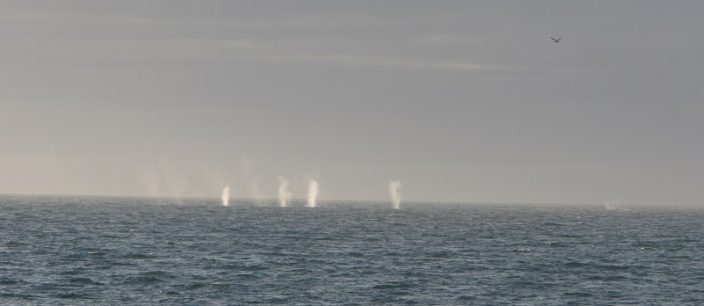
Distant fin whale columnar blows, West Cork Nov 2008, © Pádraig Whooley, IWDG
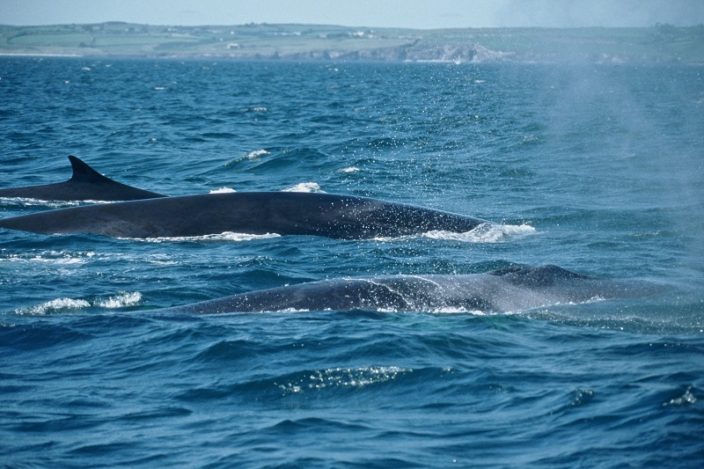
Fin whale group, June 2004 West Cork © Pádraig Whooley, IWDG
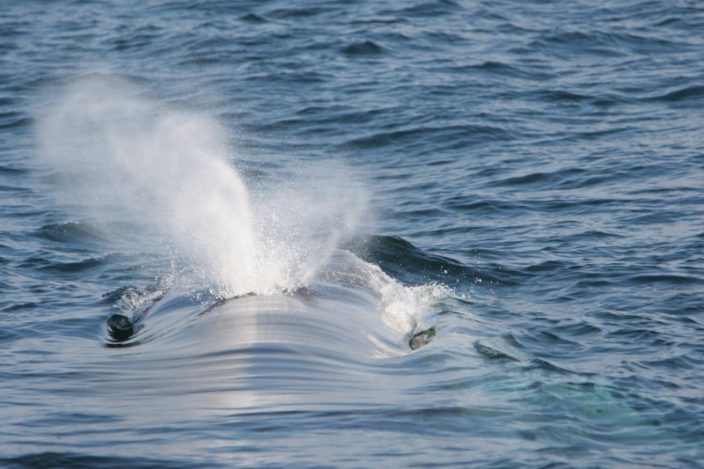
Fin whale surfacing © Pádraig Whooley, IWDG
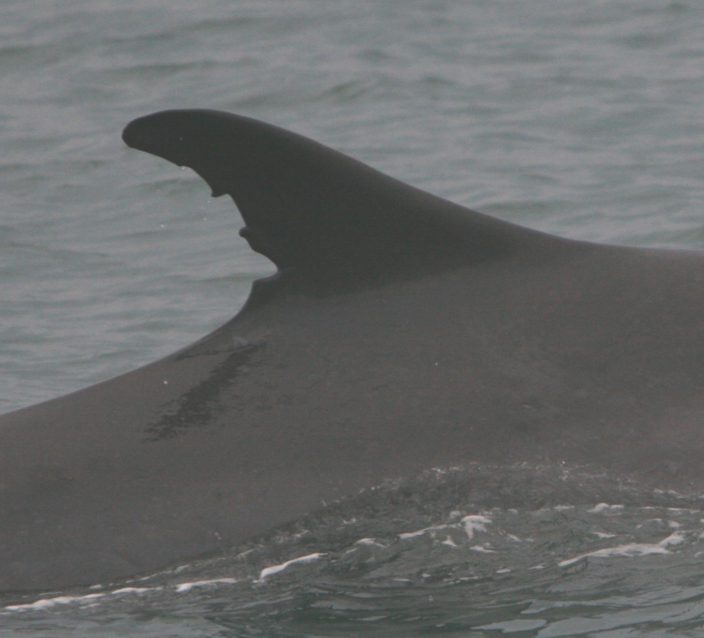
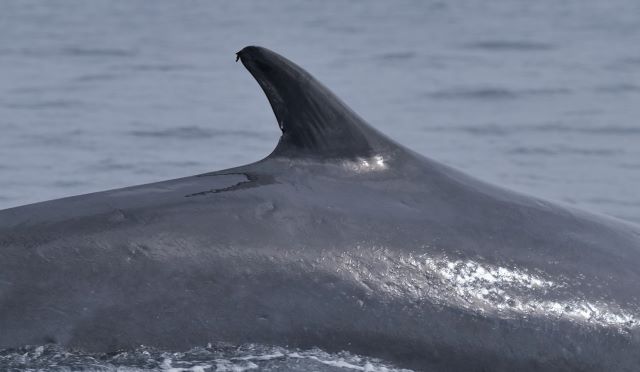
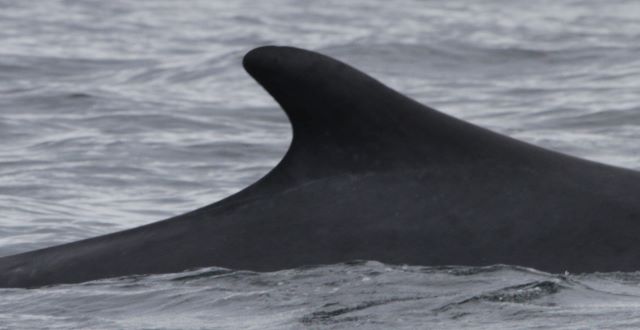
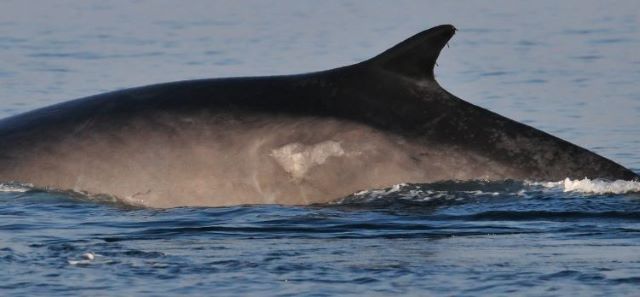
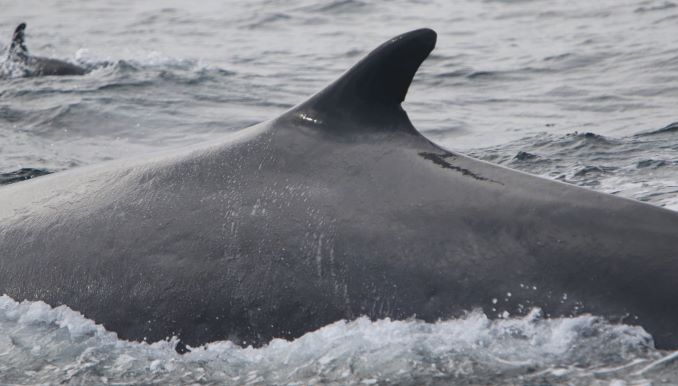
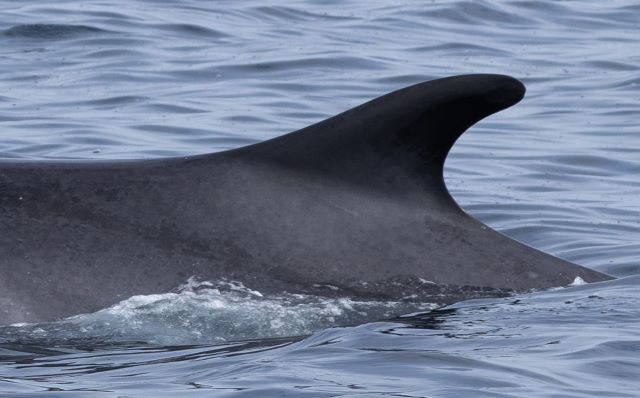
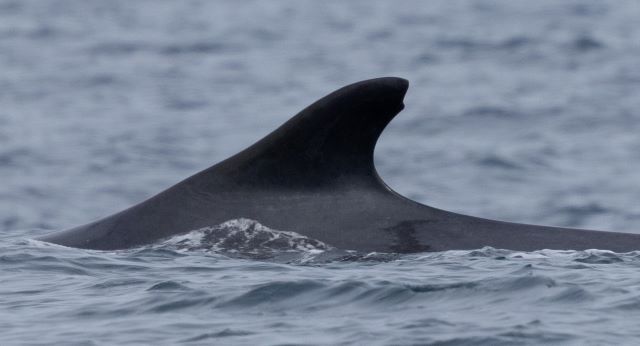
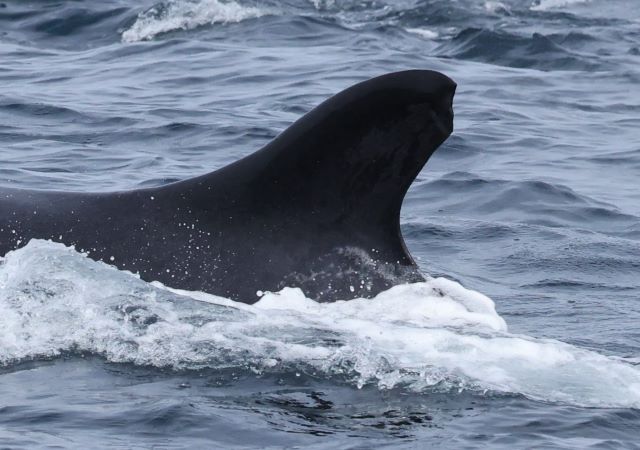
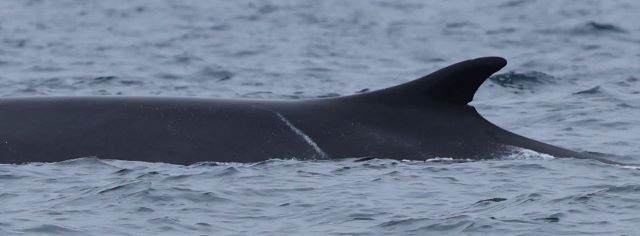
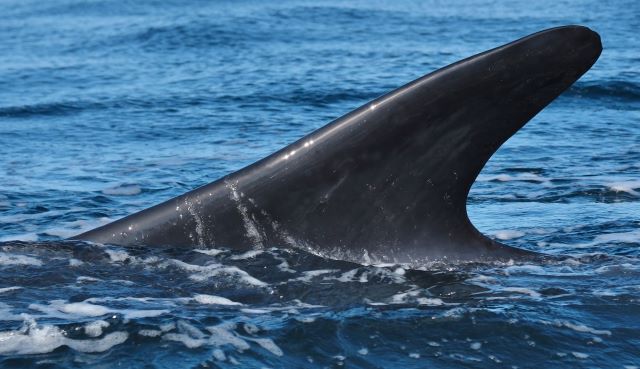
Well marked fin whale dorsal fin of FWIRL004, Youghal Co. Cork Jan 2007
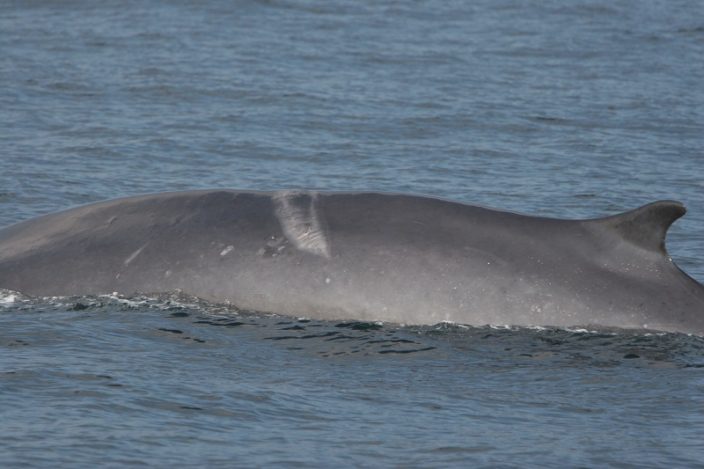
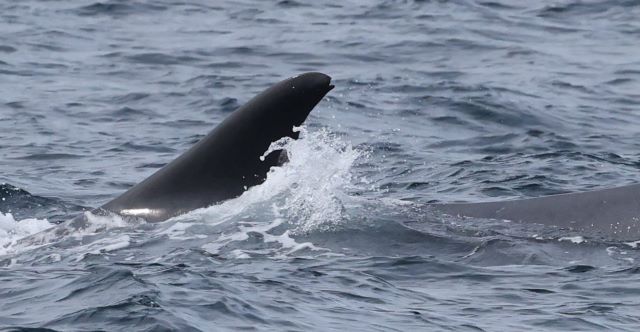
FWIRL002 “Scar”, Toe Head, W. Cork 220807 Padraig Whooley

Lunge feeding Fin whale, Nov. 2008 © Pádraig Whooley, IWDG
What sort of images do we want and what sort of equipment will I need?
Whale Photo-ID by its nature will almost always take place from boats. Capturing an image of a sometimes fast moving and often non cooperative whale, from a moving platform in a frequently choppy sea and in poor light conditions, is not without its challenges. But to have some chance of success, you’ll ideally need to use a skipper who is familiar with this species and their behaviour and who is used to working around some of the planet’s largest animals.
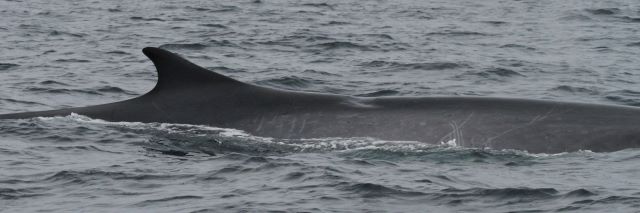
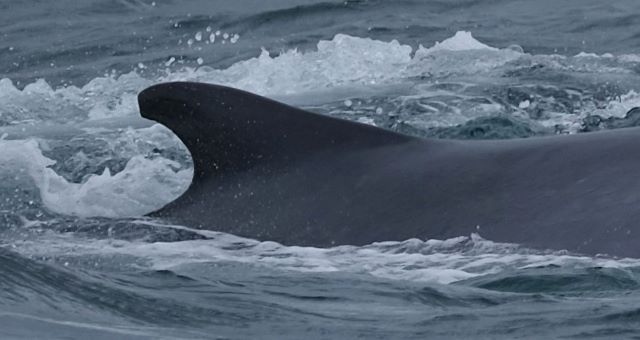
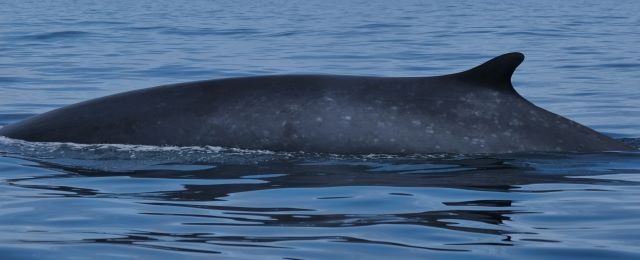
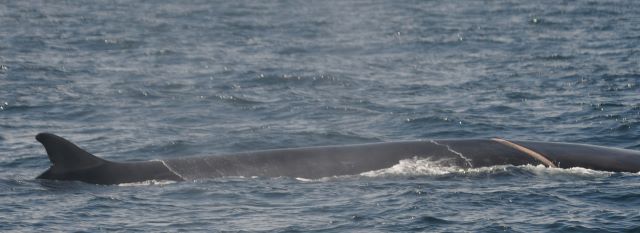
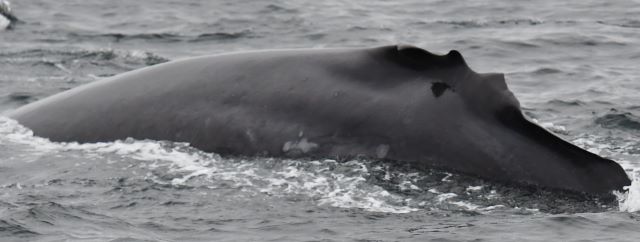
Fin whales were once called the “Greyhounds of the Sea” by early whalers, which will tell you something about how fast they can travel. So, if a fin whale isn’t obliging and shows little interest in your boat getting close, we’re realistically talking about 50-100 mts, then it’s very unlikely that you’ll secure anything other than interesting record shots, that are still useful, as they should help us confirm species, although little else. So, the need to get close to a fin whale, ideally photographing it from both the left and right sides is important, so we maximise the chance of capturing any useful scars, nicks or pigmentation from the head down along the flanks and dorsal fin.
If you are routinely planning on attempting Photo ID on fin whales in Irish waters, then we’d strongly urge you to discuss your plans with the NPWS ( National Parks and Wildlife Service) as you’ll most likely require a research or filming permit, as you would if flying a drone over any species of cetacean.
So in brief, this is really what needs to go right for fin whale Photo ID
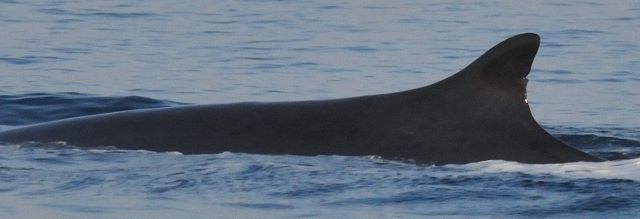
At time of writing (March 2026) IWDG has catalogued 60 well-marked fin whales, mostly from nicks on the dorsal fin trailing edge and overall shape of the dorsal fin. As you’d expect given the nature of this species, there are many more unknowns in terms of their migration route, breeding grounds, site fidelity and associations. There is so much more to be discovered. Can you help?
| No. Individuals | 60 | |
| Re-sightings within 1 Yr. | 30 | 50% |
| Inter-Annual Re-sighting | 22 | 37% |
| International Match (Portugal) | 1 | 1.6% |
We’d really appreciate your sending us any useful humpback or fin whale images to sightings@iwdg.ie at the highest possible resolution JPEGS. If you’ve taken video, it may be possible to take a screen grab of a tail fluke or dorsal fin and to email this to us as a PDF or a GIF file also.
By Pádraig Whooley, IWDG Sightings Officer
Click on an image to enlarge for greater detail on any of the 60 individuals documented to date in Irish waters up to Feb. 2026