
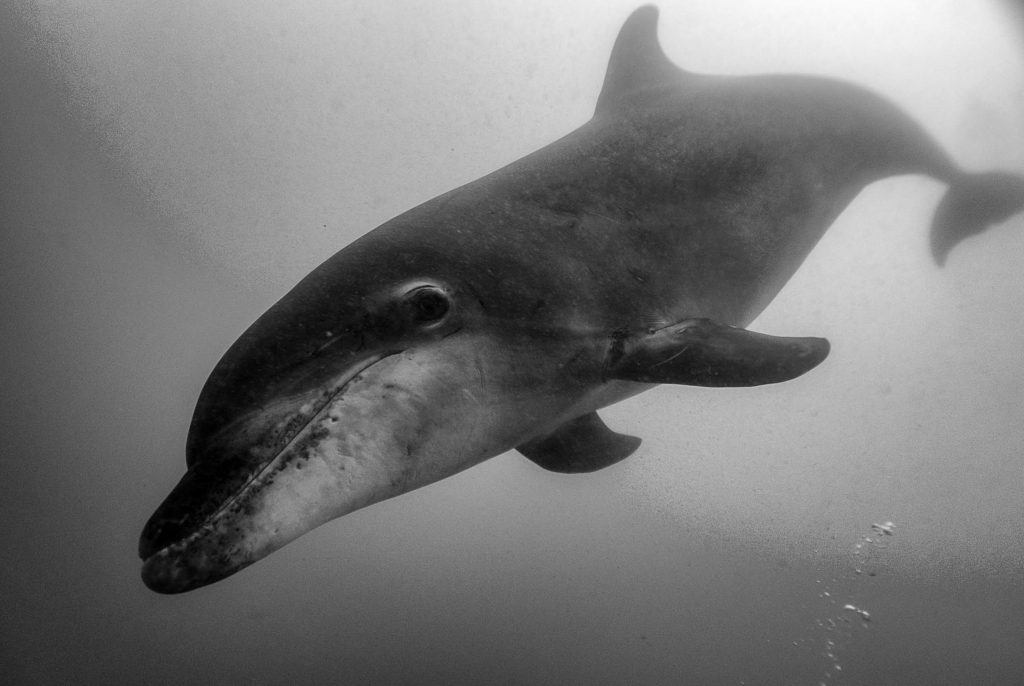
Ireland has experienced a large number of “solitary” dolphins over the years from Fungi to Dony, Finn to Dusty. Some have left while some are still in pockets around the Irish coast. This is an international phenomena and the reasons why individuals may not be part of a wider social dolphin group and become exposed to humans is unclear and most likely a wide range of reasons.
An international workshop of 41 participants from some 14 nations met online on 10 and 12 June 2026 to discuss solitary dolphins and the issues that they present.
Evidence was reviewed from around the world, together with relevant published literature. The IWDG were represented by Simon Berrow and Mags Daly. The workshop recognised that encountering wild animals can be an inspiring and life-enhancing experience and that dolphins are globally regarded as charismatic species that often elicit strong emotional responses and foster a sense of connection with the natural world.
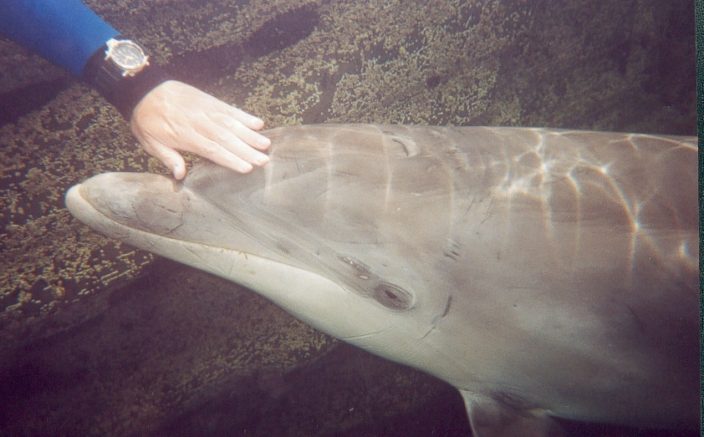
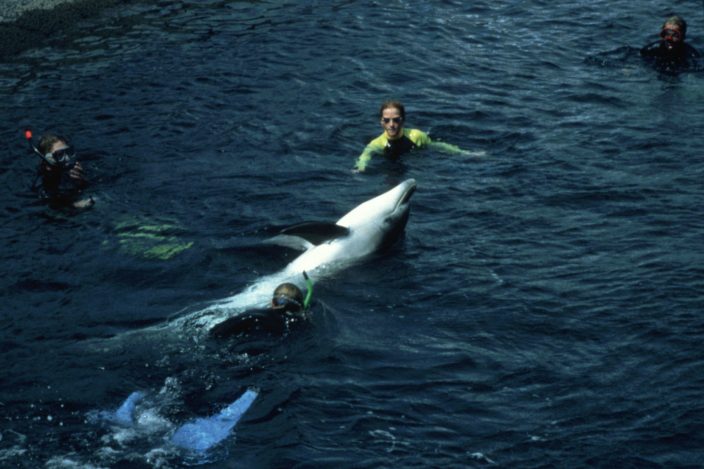
The history of solitary-sociable dolphins – i.e. those who actively seek out people to interact with – sadly shows that a large proportion of such animals suffer injuries, deaths due to unintentional human-related factors, or are deliberately killed. It also shows that, in many cases, human-directed behaviour is something that is learned over time because of the persistence of some people in swimming and interacting with the dolphins, causing them to lose their natural wariness of humans. Some solitary-sociable dolphins may also develop forceful behaviour towards swimmers, including pushing them underwater and preventing them from leaving the water. Solitary-sociable dolphins may interact extensively with vessels, paddleboards, surfboards, kayaks and other human-made objects. These behaviours are social and play-related in nature rather than aggressive but may nevertheless pose a risk to humans owing to the dolphin’s greater strength and manoeuvrability in the aquatic environment. Adult bottlenose dolphins are large, powerful animals which can be up to 4m long and weigh up to 650 kg (1,430 lbs), roughly six times heavier than a human being.
In line with other published assessments of solitary dolphins, the workshop agreed that the most important measure for better protecting these animals is to prevent human-induced habituation and sociability towards people. In practical terms, people should avoid actively seeking interactions with these dolphins, whether in the water or from vessels, pontoons, and other structures. It was concluded that whilst all solitary dolphins are unique individuals, the case histories and other information that the workshop reviewed indicate that for those who associate with people, the greatest threat is vessel strike – especially injuries caused by propellers.
Such injuries have been known to cause serious wounds or kill the affected animal outright or indirectly via infections. Dolphins who spend prolonged periods in busy inshore waters and other human-dominated environments are at increased risk of exposure to anthropogenic threats and, in addition to vessel strikes, to pollution and hazardous interactions with other human activities and infrastructure. The workshop identified the following management recommendations for solitary dolphins:
i. Discourage people from approaching, feeding, touching, swimming, or otherwise interacting with these dolphins, whether from the water, vessels, or other human-made structures;
ii. Advise swimmers and divers that, if approached by a solitary dolphin, they should quietly and calmly leave the water and avoid further interaction;
iii. Advise users of watercraft and other floating devices to leave the vicinity of the dolphin calmly and safely as soon as possible; and iv. Report the dolphin to a local official stranding response network. Reducing or preventing human interactions may help limit habituation and encourage a return to more natural behavioural patterns and social associations.
Simon Berrow presented a paper on the genetic origins of these solitary dolphins in Ireland as a preview of a paper on this issue soon to be published (will be released soon) and the current management of Dusty in north Clare where Clare Water Safety have been licensed to use pingers to deter her from swimmers during lifeguard and swim training was discussed.
Local councils and other administrations faced with the presence of a solitary dolphin in their jurisdiction can find further advice in the sources listed and general management guidance and should implement locally appropriate measures to regulate human-dolphin interactions and reduce the risk of incidents. The full report of the workshop will be released in due course.
The statement from the workshop can be found here Solitary Dolphin Workshop Statement June 18th