
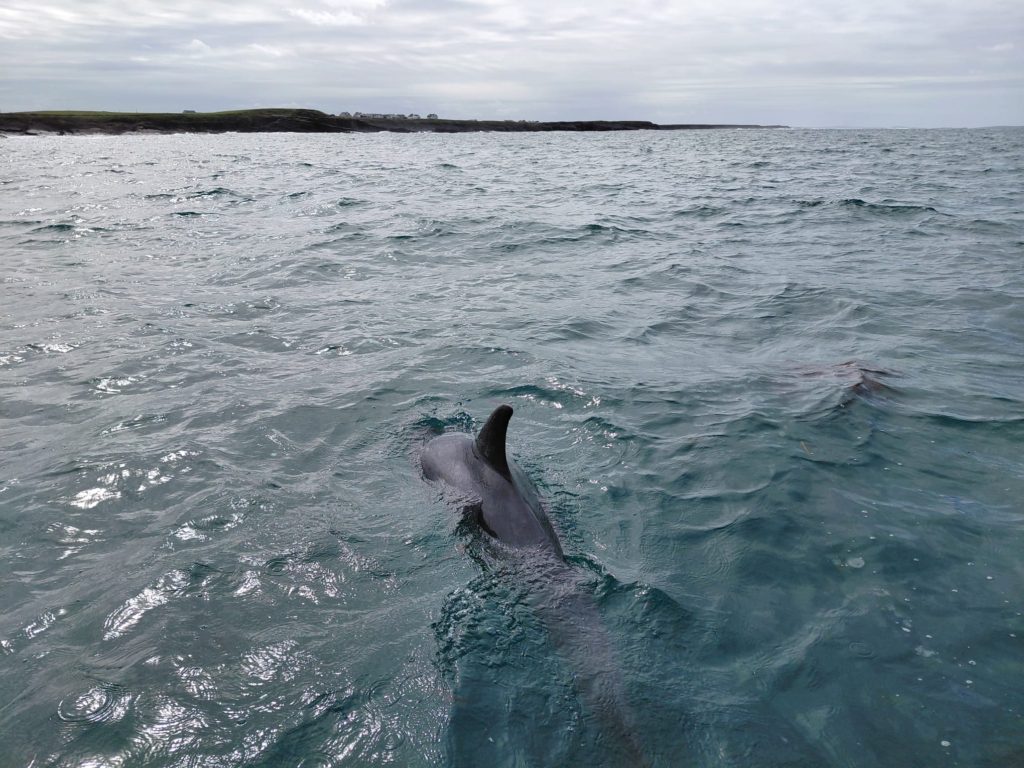
The results of a short acoustic study of the use of White Strand, near Miltown Malbay, Co Clare by the solitary dolphin known as “Dusty” have been released. It is well known that Dusty, a well-known solitary dolphin that has been off north Clare since 2000, frequently occurs in the bay but detailed data on her presence was lacking. This knowledge gap became important this year as Clare Water Safety had planned to use an acoustic pinger to deter Dusty from potential interactions with their young lifeguards during the “nipper training”. Despite being issued with a derogation license by the National Parks and Wildlife Service, following public protests the pinger was not used. However the IWDG deployed a CPOD in the bay to explore how Dusty used this stretch of water to help inform future management of the bay.
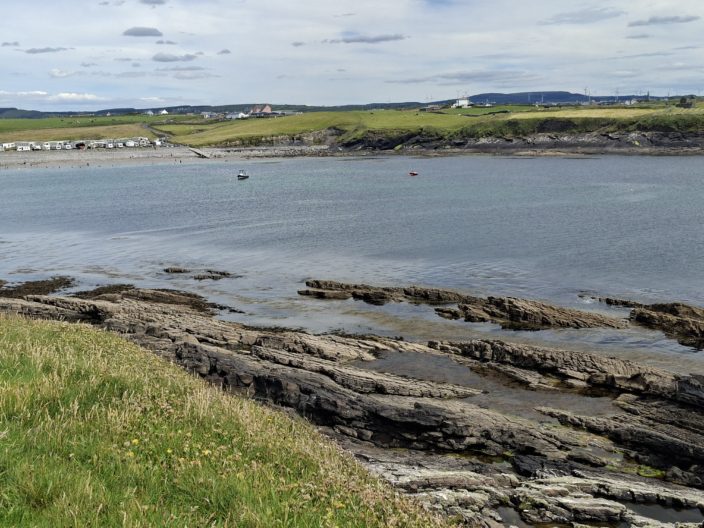
White Strand, Miltown Malbay, Co Clare
A CPOD was deployed between 13 June and 5 September 2026, in the centre of the bay. CPODs have a detection distance of around 700m so any dolphin entering the bay would be logged by the device. The CPOD also cannot distinguish between dolphin species or individual dolphins but a visual log of all dolphin sightings was made opportunistically by the local lifeguards during the deployment period, and apart from one sighting of a pod of dolphins all sightings were of Dusty, suggesting that all acoustic detections logged would have been of Dusty.
The acoustic dataset recorded contained 245 Detection Positive Minutes (DPMs) over the monitored period, and were logged on between 65-83% of days, with a mean of 72% of days monitored with detections. There were 79 sightings of Dusty across 41 days. Detections occurred equally during both daylight and night-time hours. There was evidence of foraging, with 5% of clicks overall associated with foraging click-trains.
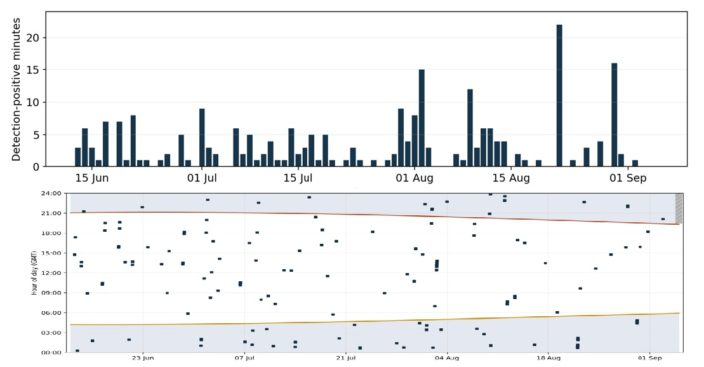 Graphs showing daily presence of Dusty in White Strand and detections during day (white) and night (shaded)
In summary this short period of acoustic monitoring shows a higher use of White Strand by Dusty than may have been expected. It suggests the bay is an important part of her home range and used for foraging, but that also the potential for interaction between Dusty and trainee lifeguards is also maybe higher than anticipated.
IWDG believe that conservation management of dolphins should be based on evidence and if derogation licenses are issued the implications should be monitored to inform future decisions and support adaptive management. This project was supported by the National Parks and Wildlife Service under the National Biodiversity Action Plan (2023-2030) and by Clare County Council’s Biodiversity Officer. The Local Authority Biodiversity Officer Programme is delivered in Partnership with the Heritage Council.
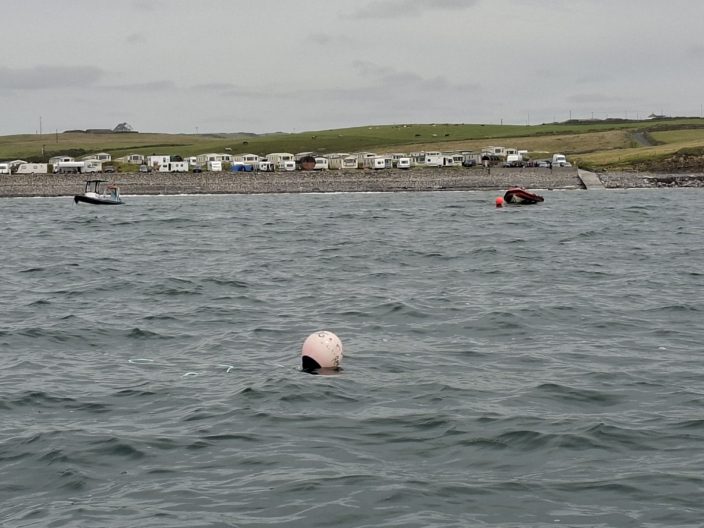
CPOD mooring surface buoy in White Strand
The full report can be accessed here
Static Acoustic Monitoring at White Strand Miltown Malbay_Report