
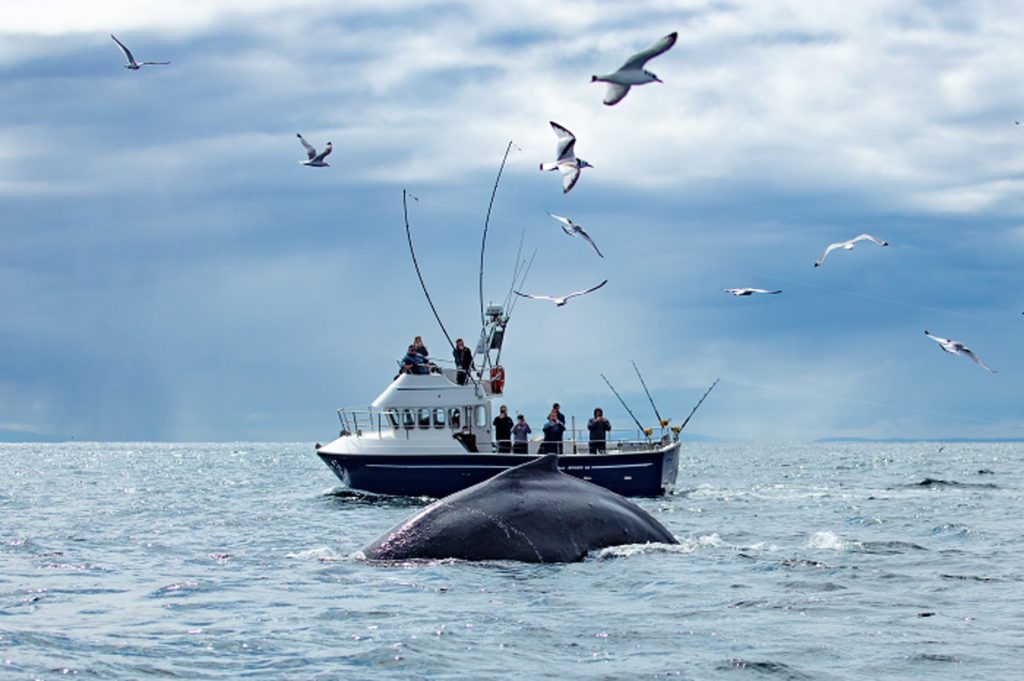
Codes of Conduct to limit disturbance to marine wildlife by marine tourism have been rolled out throughout the world. From whale watching to approaching seal haul out sites or breeding seabird colonies, whale sharks to sunfish, many species of marine megafauna, some endangered, are targeted by marine tourism and a balance needs to be found between supporting tourism and reducing negative impacts.
The IWDG has been working on this issue in Ireland for decades. We drafted the first guidelines in Ireland for dolphin-watching tourism in the Shannon Estuary (an MPA for bottlenose dolphins). These were prepared in consultation with the tour boat operators and launched in 2000. These guidelines formed the basis of Marine Notice 15 of 2005 which expanded these local guidelines to incorporate all Irish waters. This was during a time when marine wildlife tourism was very under-developed and these guidelines were only relevant at a very local scale. However, marine wildlife tourism has expanded greatly in recent years, particularly off the Irish southwest and there was clearly a need for more extensive, relevant and more widely promoted guidelines.
Code of Conduct guidelines for marine tour operators
In the Summer of 2024, the IWDG was contacted by the Southwest Division of NPWS Regional Management seeking tenders for establishment of a Code of Conduct guidelines for marine tour operators running trips out to see marine mammals and other protected species including seals, basking sharks, seabirds and turtles. These guidelines were to target tour boats and other enterprises operating within the newly designated Páirc Náisiúnta na Mara, Ciarraí, which supports internationally important populations of seals, seabirds and other species such as basking sharks and humpback whales.
The primary objective is to foster best practice in marine wildlife tourism by establishing these voluntary guidelines which will help ensure tour operators are compliant with their legal obligations under Irish and EU law and with ethical considerations as regards protected marine wildlife, especially when occurring in Natura 2000 sites, such as Special Areas of Conservation (SAC) or Special Protection Areas (SPA).
The following is a chronology of the events that lead to the recent announcement by Minister of State for Nature, Heritage and Biodiversity, Christopher O’Sullivan TD, in March 2026.
July 2024: Following discussions, IWDG sent a draft proposal with costing to NPWS.
September 2024: IWDG bid was successful and we received a Letter of Acceptance for preparation for a Responsible Marine Wildlife Operators Code of Conduct and related works, which would include:
- The drafting of a Code of Conduct
- Host initial workshop in the Southwest with local operators to work through the draft
- Publishing a final Code of Conduct
- Host a final one-day workshop to act as a debrief for operators and provide accreditation to the new Code of Conduct.
October 2024: Online meeting with William Hunt (NPWS), Simon Berrow and Pádraig Whooley to discuss the panel of experts IWDG would be engaging to help carry out this work, which would include Anna Le Méléder (seabirds) and María Pérez Tadeo (seals).
October – December 2024: Research and production of first draft
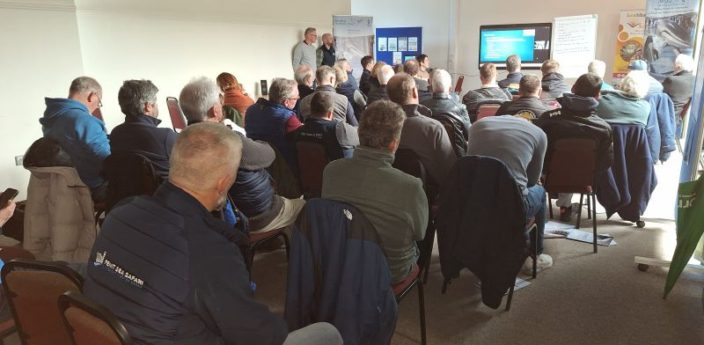
Joint IWDG/NPWS workshop, Killarney Library, January 2025 © IWDG
January 2025: Workshop delivered in Killarney library hosted jointly by IWDG and NPWS attended by almost 40 people, mostly from the marine tourism sector, but with relevant NPWS staff also present. Online guest speakers from AFBI in Northern Ireland and WiSE UK. The primary purpose of this was to walk through the draft and to iron out any aspects of it deemed unworkable.
March 2025: Online meeting to discuss amendments to draft document.
April 2025: Draft document with final amendments sent to operators who attended the workshop, allowing a two- week response time for any further comments.
May 2025: Final draft V5.3 of the Responsible Marine Wildlife Watching Guidelines for Ireland, signed off by NPWS Management Board.
January 2026: IWDG contacts Minister of State for Nature, Heritage and Biodiversity, Christopher O’Sullivan TD, who has responsibility for the NPWS, asking for a progress update to ensure the Code of Conduct is circulated ahead of the 2026 season.
February 2026: Response confirmed that the Draft Code of Conduct being finalised.
March 2026: Press Release issued by the Minister announcing the pilot Code of Conduct ahead of the 2026 season in the Irish southwest region. Link below:
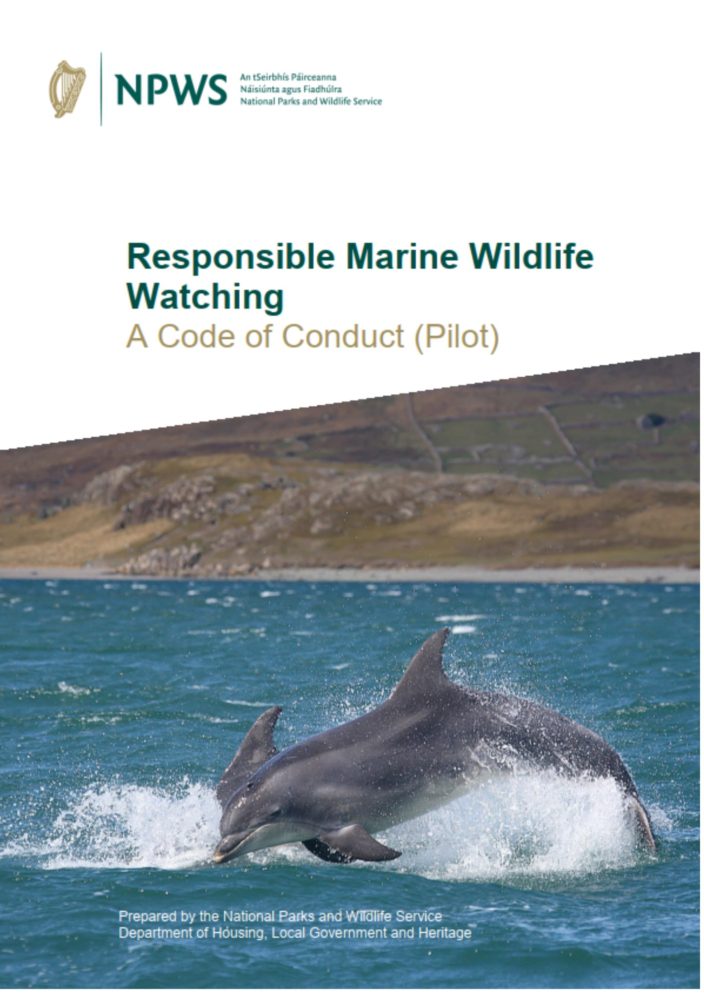
Cover of the pilot Code of Conduct sent to all operators in Irish Southwest March 2026.
It is planned that the Code of Conduct may be used as part of the conditions attached to an ARC (Activities Requiring Consent) application where appropriate and operators may be required to submit their ARC applications to NPWS before the start of the 2026 season.
The plan is to host a follow-up meeting with the marine tour operators towards the end of the 2026 season, to solicit feedback on its delivery and explore any further amendments to the Code of Conduct, but only if consistent with conservation values.
The IWDG welcome these guidelines and acknowledge the work of the Southwest Division of NPWS Regional Management and the Minister is getting them through review and out to operators in the Southwest.
If Ireland wants to encourage and promote the amazing marine wildlife, especially along the Wild Atlantic Way, it is critical that this commercial activity does not overly disturb the species encountered. There is great value in enabling people observe marine wildlife in the wild and not just on TV and we hope these guidelines will be useful, respected and enable those responsible to confidently promote Ireland’s marine wildlife watching, safe in the knowledge that any impacts will be minimal and short-term.
by Pádraig Whooley and Simon Berrow
