
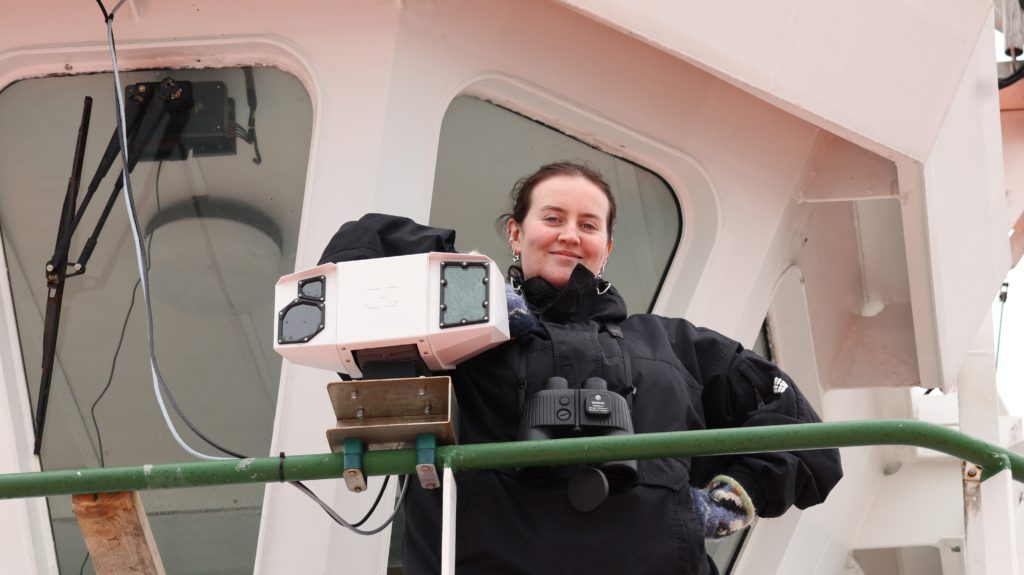
On the 17th of March 2026, Emilie De Loose, IWDG Atlantic Whale Deal project officer, and myself, Ailbhe Power, MMO and past IWDG intern, embarked on a three-week survey on board RV Celtic Explorer. The aim of this survey was to test the capabilities of the SEA.AI thermal camera (nicknamed Wall-E) in detecting whale blows in real-time as part of the Atlantic Whale Deal. This project aims to mitigate ship strikes and enhance carbon sequestration in the Atlantic, with partnering countries testing various methods and working to protect whale populations. The yearly International Blue Whiting Acoustic Survey (IBWAS) provides a great opportunity to test the thermal camera in the Northeast Atlantic, an area abundant in cetacean encounters.
During the survey, the Celtic Explorer crew use echo sounders to locate schools of blue whiting along east to west horizontal transects covering an area along the shelf edge from the southern Porcupine Bank up to the Faroe/Shetland Ridge, including offshore regions such as the Rosemary, Hatton and Rockall Banks. Once a school is located, they will trawl in the pelagic zone and collect biological samples to assess the blue whiting spawning stock. This assessment will be used to determine sustainable catch quotas among the nations for the next year. Meanwhile, Emilie and myself were stationed 18m above sea level in the crow’s nest (weather permitting) scanning the ocean with binoculars for signs of whale blows alongside our trusty sidekick Wall-E, who was mounted to the handrail.
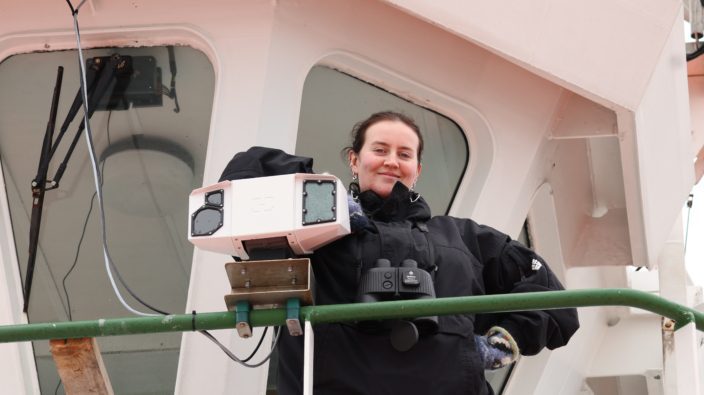
IWDG Marine Mammal Observer Ailbhe Power
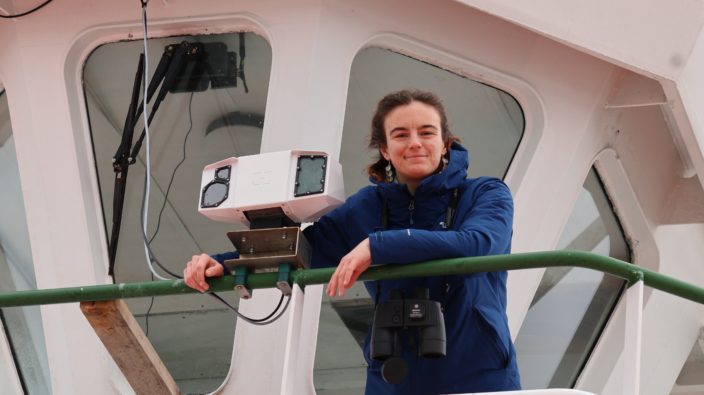
IWDG Atlantic Whale Deal Project Officer Emilie De Loose
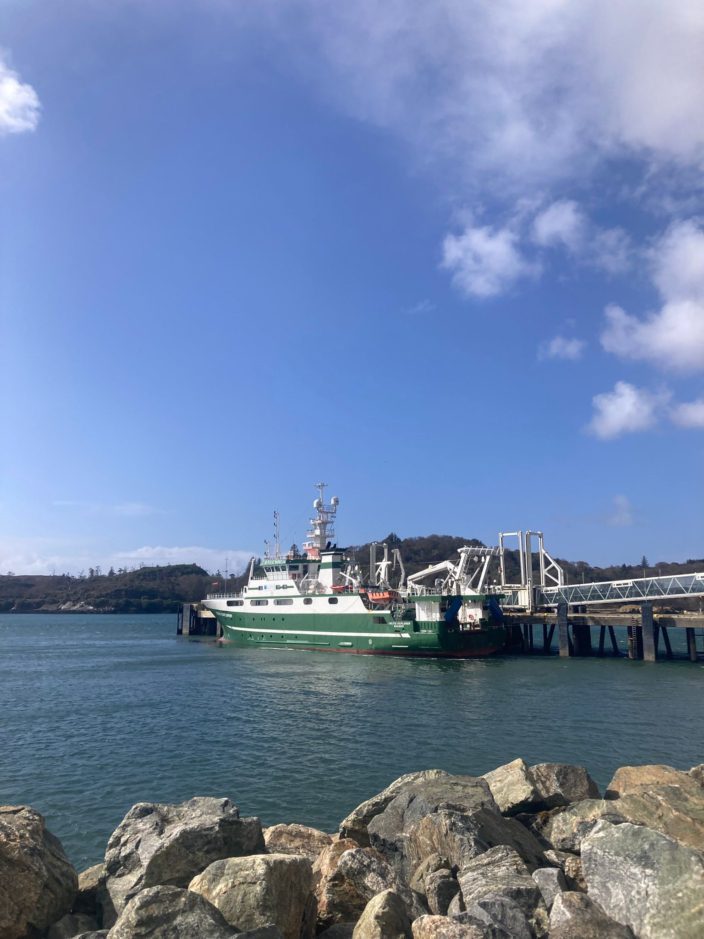
After a two-day delay due to rough weather conditions, we departed from Horgan’s Quay in Cork City on St. Patrick’s evening and steamed through the night towards Dunmanus bay to calibrate the acoustics. Whilst setting up and testing Wall-E on the crow’s nest, we spotted our friends the Dutch, in RV Tridens, also calibrating in the bay. They are one of four other nations also taking part in the yearly blue whiting survey, including the Norwegians on RV Vendla, the Faroese on RV Jákup Sverri, and the Spanish on RV Vizconde de Eza. We then said our last goodbyes to land as the ship headed out into the Northeast Atlantic with a destination set for the start of the track line.
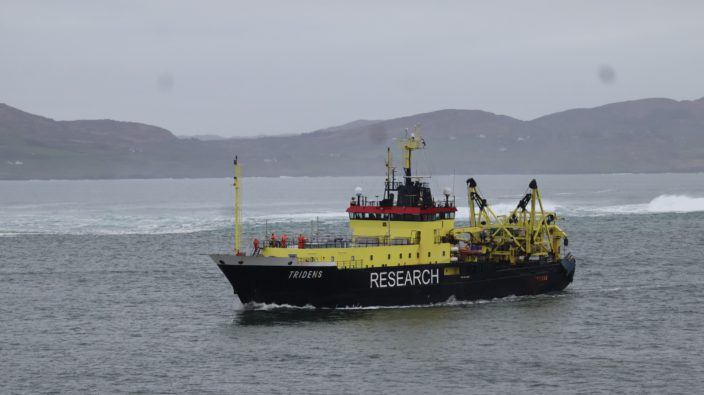
RV Tridens in Dunmanus Bay
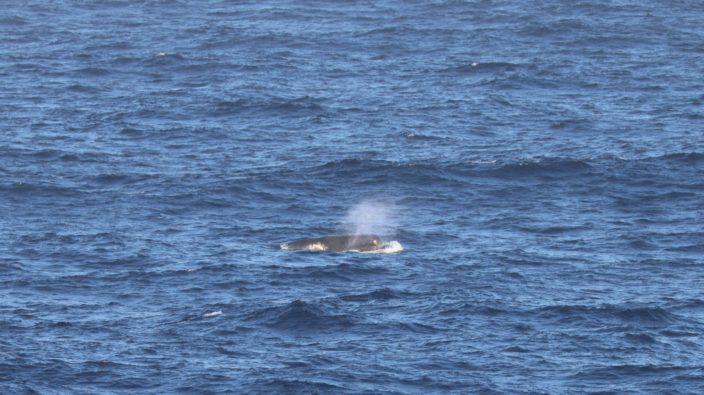
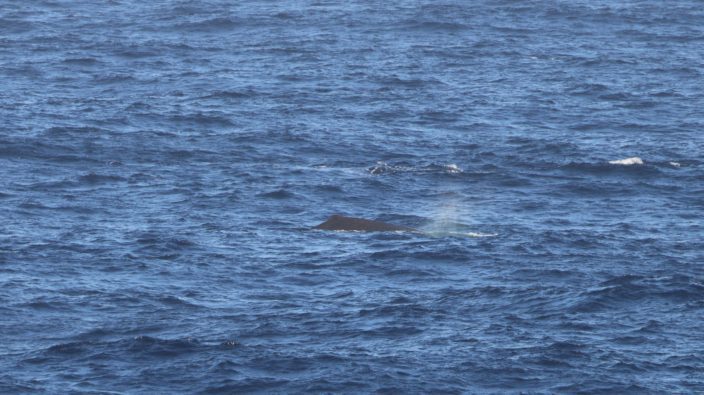
On the 19th of March, the Celtic Explorer had officially begun its track line and our collective high hopes for abundant whale sightings had become a reality with an exciting first day on survey. Giddy excitement rushed through both of us as a distinctive bushy and angular blow was spotted a distance away and we began to realise what we were seeing. Then, two more spectacular blows were seen and it was undeniable that we had not one, but three sperm whales in our vicinity. As they got slightly closer to the ship, travelling in the opposite direction, we hurriedly adjusted Wall-E’s position to capture the heat signature of their blows and snapped pictures of these magnificent deep divers. Occasionally they treated us to a view of their stubby rounded heads and equally as stubby dorsal fins.
As I stood there in awe of my first encounter with sperm whales, we spot two more bushy blows behind us for a total of five sperm whales. Then, just as we were recovering from our first sighting, we spot another three sperm whales from a greater distance. Our sperm whale tally for day one came to eight individuals within an hour of each other. This was not a normal first day as Emilie aptly reminded me.
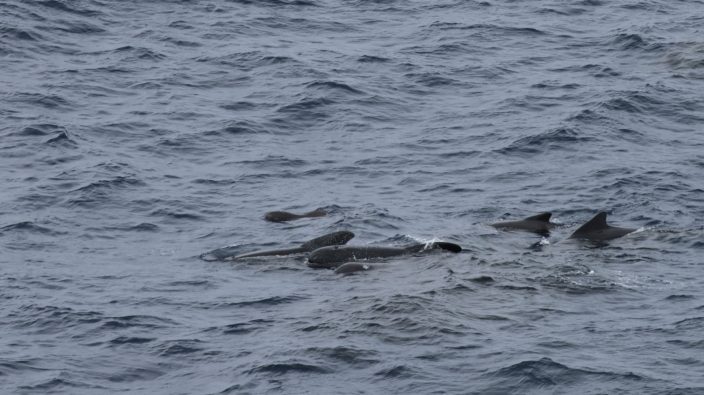
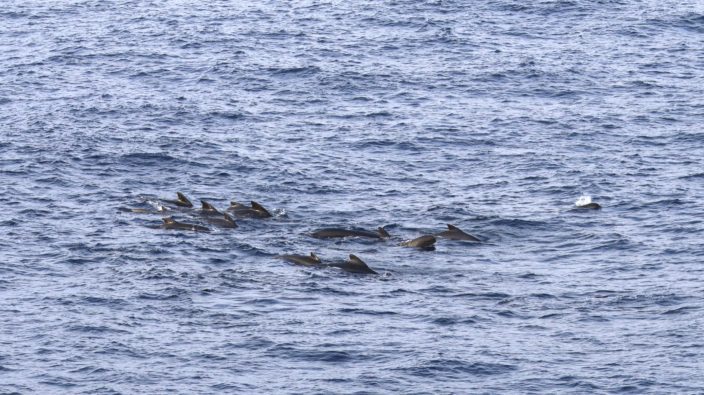
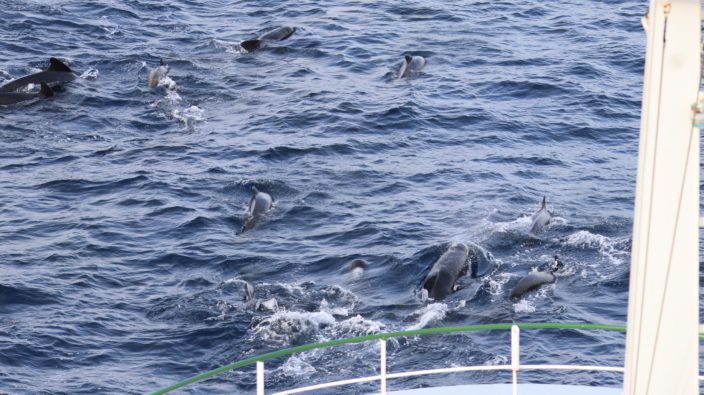
The next day was equally if not more exciting as we entered a pilot whale haven. Just when I thought a single pilot whale was thrilling early in the day, we spot a group of 20-30 later travelling close to the ship. As we had stopped at a CTD station, the whales had the chance to cross in front of the bow without any rush, giving us an opportunity to admire them and their calves. And finally, to top it all off a group of 50 individual pilot whales approached the ship only a few hours later, with some spyhopping to check us out before going to the bow to briefly bowride.
In this same day we also had sightings of a group of common dolphins, two sperm whales and a possible fin whale blow. The following two days were fairly quiet with two common dolphins following the bow for a while, two sperm whales spotted from afar and a possible shark sighting.
Over the next two weeks it became apparent that our luck had run out as the weather conditions worsened and turned the ship into a washing machine at times. It grew unsafe for us to operate on the crow’s nest most days, with the swell reaching up to 8m alongside 50mph gusts. And so, we began watches from the bridge which significantly lessens our field of view and is far less exciting than being outside in the wind and waves. Wall-E toughed out the weather and remained on the crow’s nest, with the ability to pick up heat signatures from blows and continued to collect data throughout the night when we are off the clock.
We did not let the bad weather dampen our spirits or resilience however as we continued to watch hopefully from the bridge. And when that became futile at times due to poor visibility, we kept ourselves busy with the occasional bird watching session, helping the scientists in the wet lab and even starting what may be the first all female Celtic Explorer crochet club.
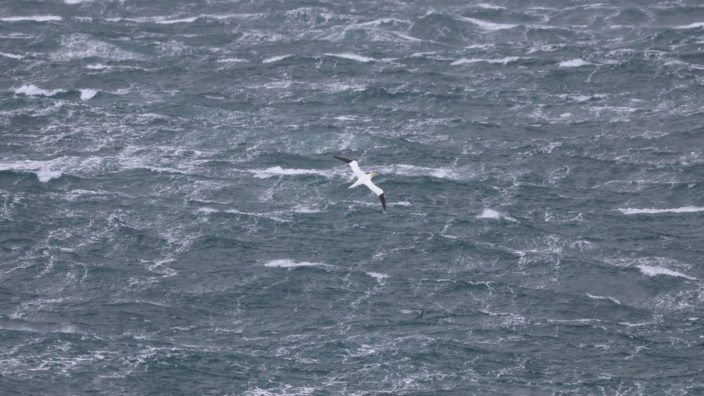
A gannet unbothered by wind and swells
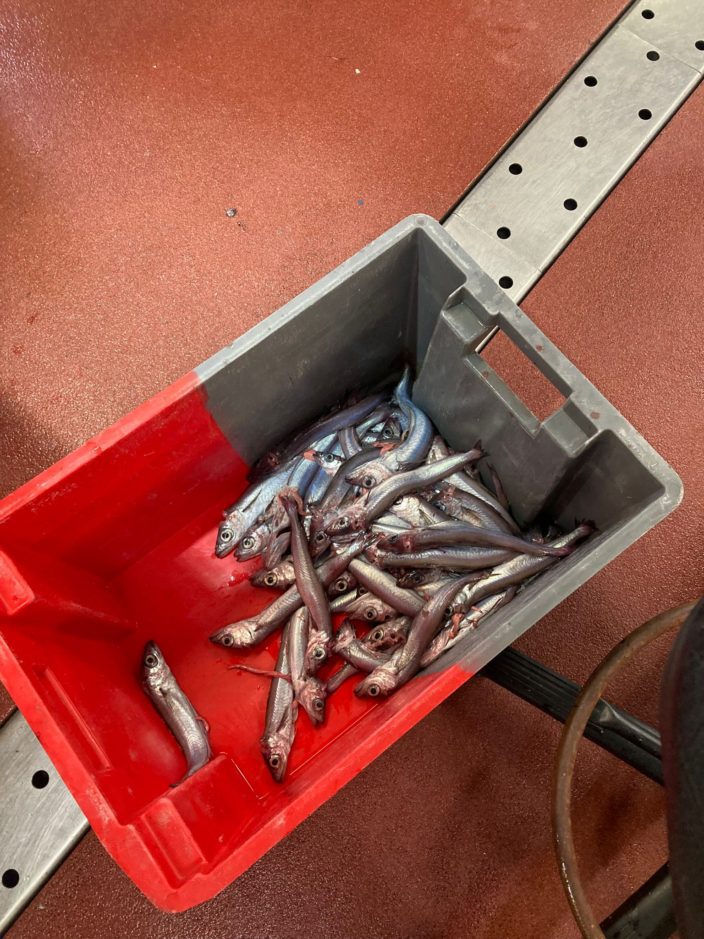
Blue Whiting in the wet lab
We were forced to retreat into port on two occasions due to unfavourable conditions which gave us the opportunity to go sea swimming and drink “land” coffee in Rathmullen, Co. Donegal. And in Stornoway, in the Outer Hebrides, we exchanged boat tours with the Dutch RV Tridens and went grey seal spotting along the coastline.
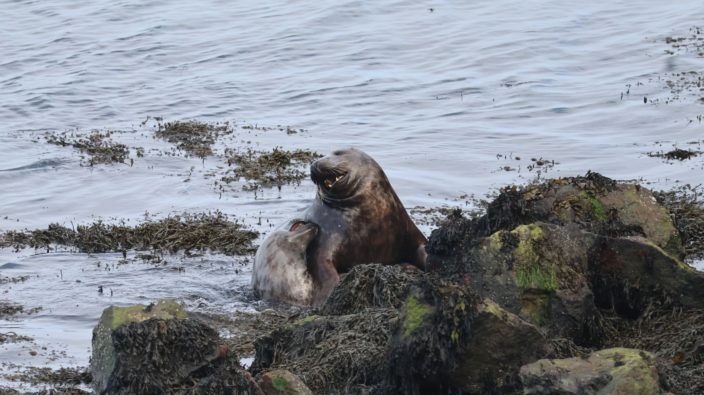
Grey seals
As we left Stornoway during our third week on survey, the weather improved slightly on two days allowing us two final full shifts in the crow’s nest. And although we had no sightings, even in The Minch, it was good to be outdoors again getting pushed around by the strong gales and watching the birds glide over the crashing waves.
Despite the curse of bad weather throughout our trip, the survey gathered vital information to be used in building thermal camera software that can effectively detect whale blows. This technology will further the effort to mitigate ship strikes and by extension preserve biodiversity and our shared environment through carbon sequestration. And it gave me a certainly memorable first offshore survey!
Our gratitude goes out to Dr. Ciaran O’Donnell and everyone in the Marine Institute for having us onboard the survey.
Ailbhe Power, Marine Mammal Observer.