
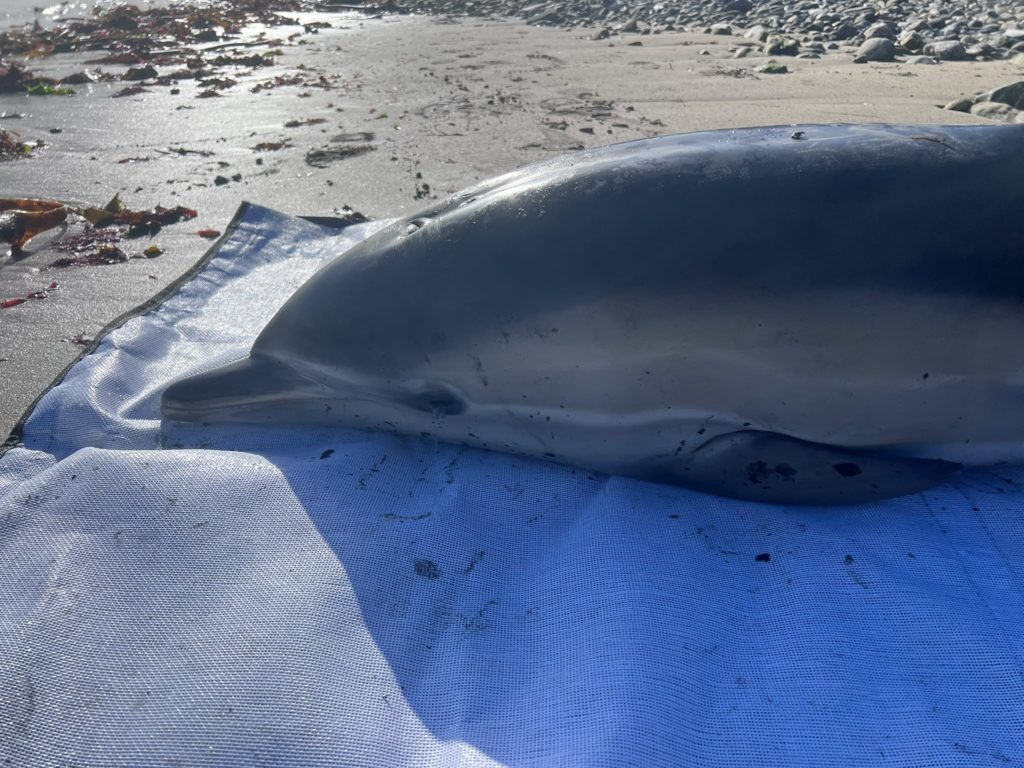
A mother and calf, a race against tide and a community coming together 💙🐬
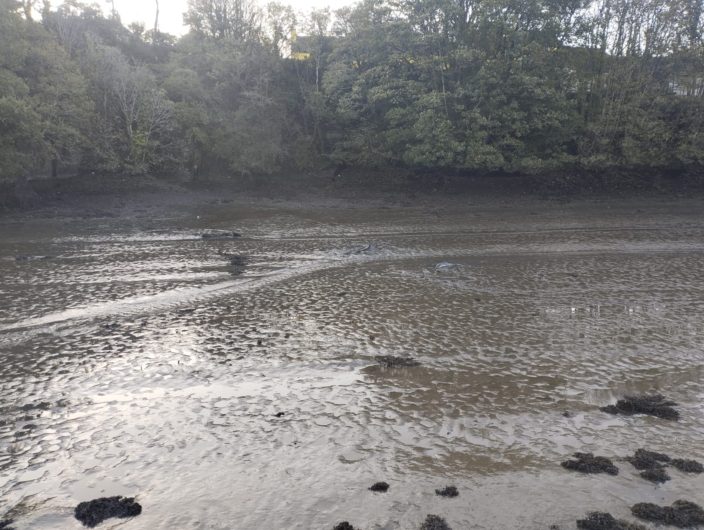
This morning, our emergency hotline received the kind of call we always dread: two common dolphins, a mother and calf, stranded on mud in Kinsale, Co. Cork.
Mud is always a serious concern at live strandings. Conditions vary from sandy or silty mud to deep, soft mud that can trap anyone attempting to cross it. Sometimes there is no safe way to reach the animals, however much we want to help.
Our local IWDG responders attended and assessed the scene, considering the animals’ welfare, the conditions and how they could be reached safely.
The mother was lying on her side in a precarious position, with a serious risk that she would be unable to keep her blowhole above water as the tide rose around her. Local residents’ knowledge proved invaluable in finding a firm, gravelly route, allowing them and IWDG responders to reach the pair.
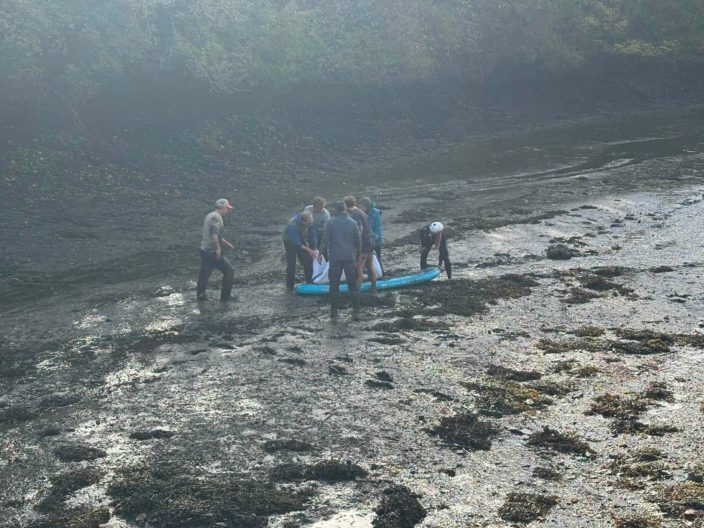
Both animals were in good body condition. One of our responders is a veterinarian, bringing valuable veterinary expertise to the response. Following assessment of the dolphins and the location, the decision was made to relocate them to Sandycove, a 15-minute journey by road, with access to deep water and the open sea. Common dolphins being an open water species, can struggle to find their way out of shallow tidal waterways and following a live-stranding, they have even less chance of finding their way out, leaving them at risk of becoming beached during the next low tide cycle.
IWDG’s network of trained volunteer responders has access to specialist equipment to help lift and move stranded dolphins safely, minimising stress and discomfort during an already traumatic ordeal. With a Garda escort, the mother and calf were brought to Sandycove, where both were supported in the water for some time before being guided towards the open sea. Thank you to the locals who lent their kayaks to help guide them in the right direction.
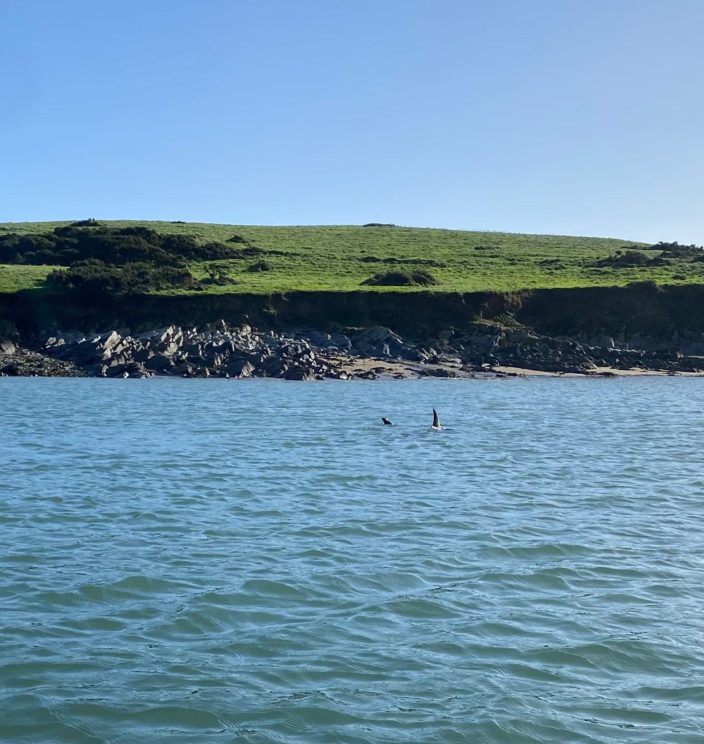
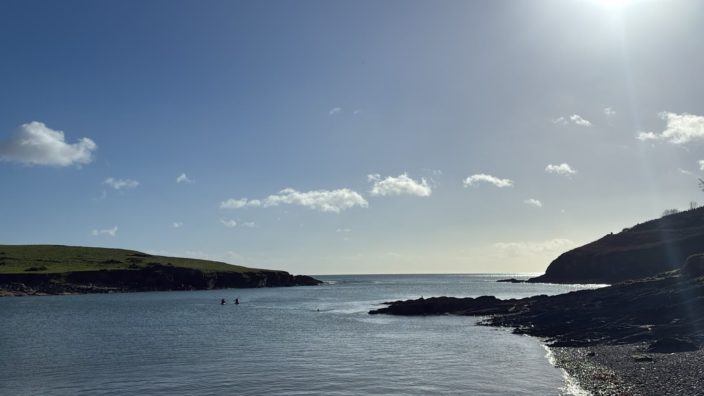
Giving this mother and calf a chance to return to the wild matters. Live-stranding responses are about animal welfare, but they also have a role in conservation, helping protect breeding females and the next generation.
From assessing access to providing equipment, transport and support in the water, this response depended on many people working together. A huge thank you to our IWDG volunteer responders, local residents, the local fire service, Kinsale Yacht Club, the Coast Guard and Gardaí. Thank you also to everyone who called our emergency hotline.
A big thank you to Cork County Council biodiversity office for recently providing funding towards mud safety training and specialist equipment for some of our Cork IWDG responders. Those skills and equipment were put to good use today.
Our responders regularly drop everything to help animals in distress. These responses can be physically and emotionally demanding, with hopeful moments alongside heartbreaking losses. Thank you for continuing to turn out and give these animals the best chance you can.
Live-stranding response is always a group effort. To everyone who brought their time, skills, equipment and local knowledge today: thank you. 💙
⚠️ If you find a live-stranded whale, dolphin or porpoise:
- Never drag or pull the animal by its tail or fins. This can cause severe pain and serious injury.
- Stay calm, keep your distance, keep dogs away and minimise noise and disturbance.
- Do not put yourself at risk by entering mud or water.
- Don’t push dolphins back into streams or puddles as they may never find its way back out to open water if it they aren’t a coastal species and are likely get beached on the next low tide.
- If safe, take a short video and note the exact location using GPS coordinates or a Google Maps pin.
Call the IWDG Live Stranding Hotline on 097 28118 immediately. You will receive advice and a mobile number to send your video and location to. We will contact the nearest available responders.
Please seek advice before attempting to move or refloat an animal. Your call can make all the difference.