
Blog 1:
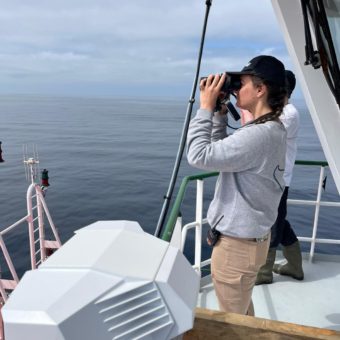
On the 19th of June, PhD student Cilia Kootstra and Atlantic Whale Deal project leader Emilie De Loose left Galway and boarded RV Celtic Explorer for a three-week survey. A day earlier the Sea.AI Sentry thermal camera, nicknamed Wall-E, had been mounted on handrail of the crow’s nest and excitement was running high. The Explorer would spend the next two days steaming down to the north of France to start the first transect of the WESPAS (Western European Shelf Passive Acoustic Survey). The ship would travel through the North Atlantic in long horizontal transects search for Boarfish, Mackerel, Horse Mackerel and Herring with an echosounder, stopping periodically to trawl, collect zooplankton and lower the CTD. Meanwhile Cilia and Emilie would be spending as much time as possible up in the crow’s nest, armed with a binocular each, a camera, their rangefinders and Wall-E, scanning the horizon for cetaceans.
As the sun began to set over Galway Bay engines hummed to life as first RV Tom Crean and then RV Celtic Explorer left Galway Port. The first cetaceans of the trip, Nimmo and the Shannon bottlenose dolphins moving away as the ships approached.
For the first two days, only the marine mammal observers would be on shift as the other scientist waited to reach the start of the transect. With the sun shining brightly, many of them found themselves in the crow’s nest alongside the observers, having the chat and enjoying the weather. A competition was created; whoever spotted the first cetacean of the trip (Nimmo excluded) would receive a drawing of the moment. Shortly after the agreement was made the first sighting was made.
Far in the distance a large black fin broke the surface. Not one, not two but three killer whales appeared out of the blue. A thrill ran through the crow’s nest as the observers got their first ever glimpse of their favourite animal. While the small group remained too distance for proper photography, both Cilia and Emilie got a good view of the large black body with the white blaze. A moment neither of them would soon to forget.
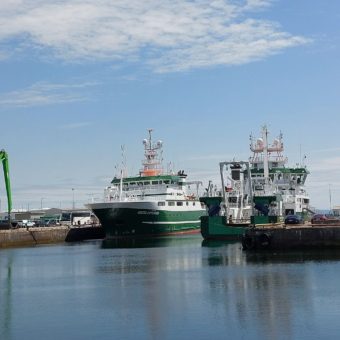
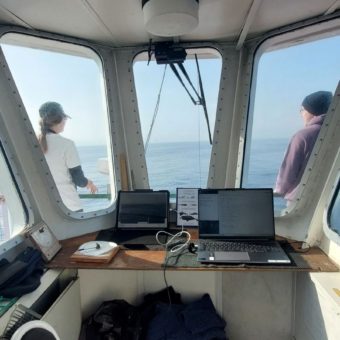
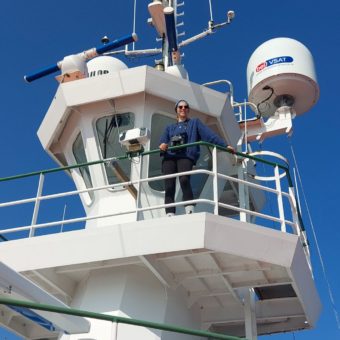
Images below: RV Tom Crean and then RV Celtic Explorer, Inside crows nest and Cilia Kootstra with camera in crows nest
Emilie De Loose
The weather generally remained in everyone’s favour throughout most of the survey. Calm seas, low winds and a lovely sun burning off most clouds. Up in the crows nest it was a constant progression of adding layers and stripping them back off, turning the small shelter into a various closest of winter coats and weatherproofs. When turned into the wind the gloves, hats and scarfs would come out but the second the ship turned out of the wind and into the sun, a generous lathering of sunscreen was applied, and the caps replaced the hats.
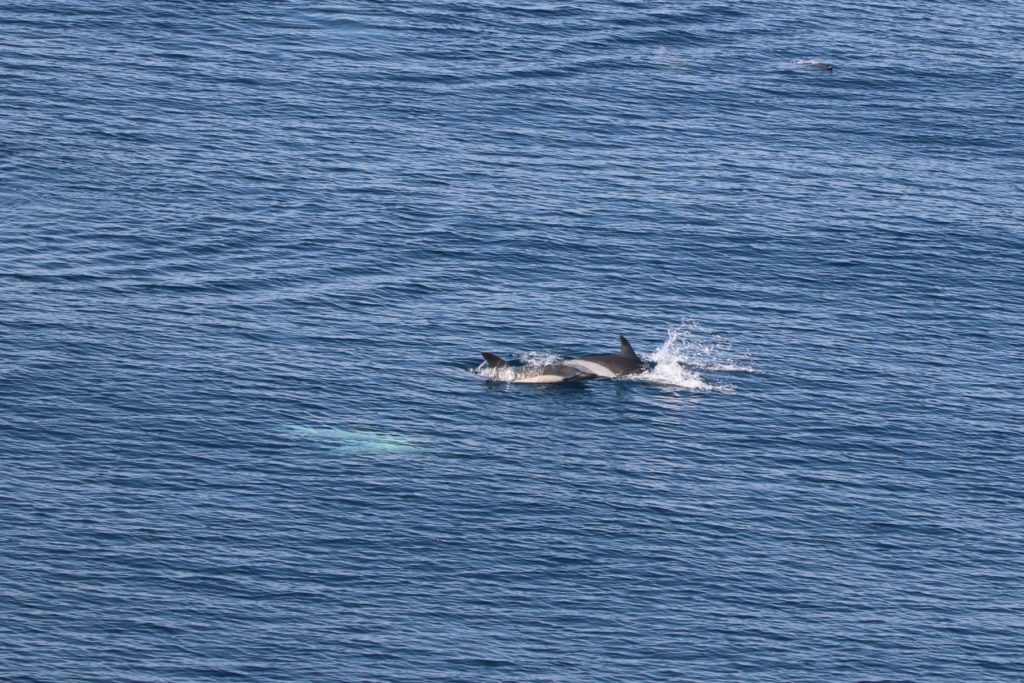
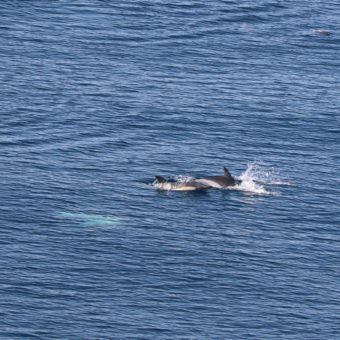
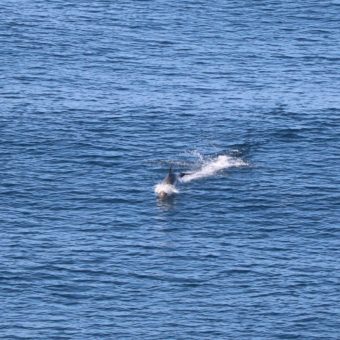
Everyone fell into a rhythm dictated heavily by the mealtimes. Until one morning the peace was disturbed. Before the marine mammal observers had even finished their morning coffee, common dolphins were spotted from cabin windows. For the next 2 hours a near continuous stream of common dolphins appeared from every direction. Almost 400 were seen, some remaining a distance away while others bowriding or surfing on the waves behind the ship. The Explorer was practically swarmed by dolphins and the observers could barely keep up with the count. Just when you thought you had seen them all, another small group would pop up on the other side of the ship. Just as quickly as it had started, it stopped, and the water fell quiet again.
Images below: Common dolphins
After a small week at sea the longest transect of the survey was reached, alongside the English Channel. Mist banks crept in reducing the visibility to less than a kilometre for swats of the transects before clearing back out. The weatherproofs proved vital in the continuously moist environment. The discussion to wait the weather out was raised repeatedly but it was eventually decided to push through it as the mist did not remain consistent throughout the day.
This decision turned out to be fruitful as on the second mist-full day the dolphins showed up once again. Birds became the observers’ best friends as groups of diving gannets turned into a clear early warning of upcoming foraging dolphins. Occasionally, when the waters was particularly flat the serpentine movement of a passing blue shark could be spotted or the continuously confused visage of a Mola mola, Ocean sunfish.
It was not until this transect was cleared that the third cetacean species of the day was spotted. A small pod of travelling dolphins were caught in the glare, washing out all the colours. However, both observers agreed, these were not common dolphins. Finally, they had moved out of the direct sunlight and the near uniform grey coloration stood out against the blue hue of the water. The bottlenoses were confirmed.
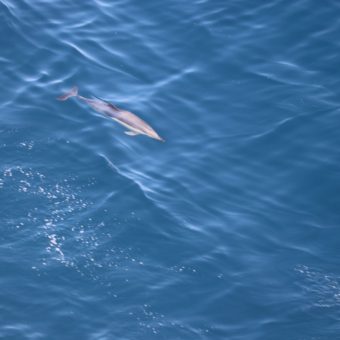
Pictures below: Common dolphin and shark
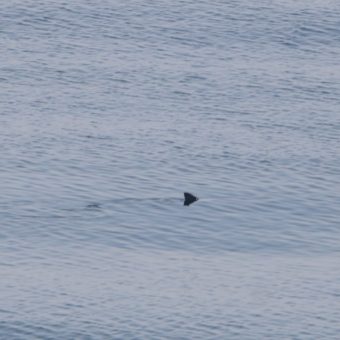
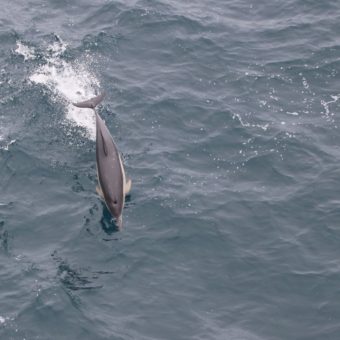
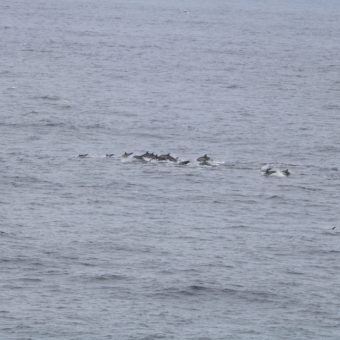
As we passed the English Channel a flock of birds were spotted on the horizon. Not surprisingly fins quickly followed. First only 8ish dolphins were counted, then 20, and then 30. As more dolphins began to appear they were steadily steaming passed them, until, to the observers delight, the ship turned to begin fishing. They were now sailing straight at the ever-growing pod of common dolphins and the dolphins were heading towards them. When the two paths collided, it was exceedingly obvious that they had come across a super pod as hundreds of dolphins were now leaping and swimming around the ship. For the following minutes the common dolphins lingered, putting on a water churning show before finally continuing their way.
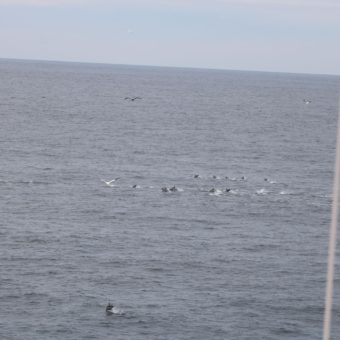
Unfortunately, it seemed that the ocean exhausted its cetaceans after this magnificent display. While the occasional sighting-free day had previously passed, July started with a 4-day dry streak. The birds, which had previously been a wonderful help to the observers, had turned against them. While still seen hovering and occasionally diving, they too had fallen silent. This came to an all-time high when hundreds of gannets were seen during the last hour of the third day. The sun was setting, painting the normally white birds almost pinkish hue as they amassed a distance away from the boat. As the numbers grew and the diving became more frequent, the observer eagerly checked for the sight of fins, larger splashes or even a blow. The sheer number of animals and noise of the dives were sure to draw any nearby dolphin, right?
After 15 minutes of monitoring the feathered feeding frenzy, the birds finally dropped out of sight. Not a single ounce of blubber had been seen. Slightly dejected, the third day came to a close. The fourth day brought the wind, finally driving the observers into the bridge. As the Explorer approached Irelands southern most coast, the wind had picked up steadily until the chances of spotting anything approached nill. The visual survey was halted until the ship either turned against the wind or the waves calmed away. Reports of large whales had been coming in around the Dingle Peninsula and the Blasket Islands, leaving the observers hoping that the weather would clear in time for them to return to the crow’s nest as the ship sailed passed the Kerry coast.
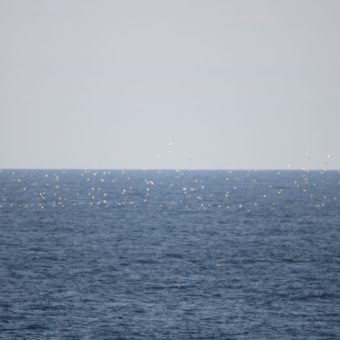
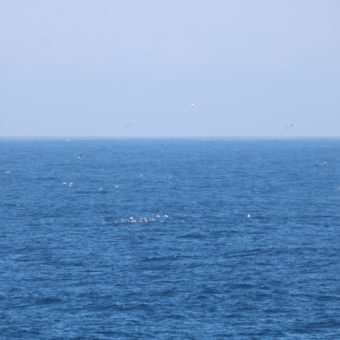
Images below: Common dolphin super pod, gannet mass group
Blog 2:
The first leg of the WESPAS ended with a spectacular, perfectly bushy blow. A humpback whale in the Blaskets. The weather had cleared; the wind had fallen as we approached the Dingle Peninsula. Common dolphins played in the waves as the marine mammal observers pointed them out to the students, showing them how to use the camera and counting the individuals. As they observed the familiar blast of hot air shot up and the cries of “blow” echoed across the crow’s nest. A flurry of activity as coordinates are noted and the thermal camera is angled correctly. Silence. The dolphins continue passed the ship and disappear behind the horizon. The whale remains quiet; it might still be in the area but simply obscured by towering rocks of the islands dotting around Dingle. Despite having a long 30 minutes to wait and observe as the CTD is lowered into the water, the rest of Dingle remained quiet as the final shift drew to a close.
After three weeks onboard RV Celtic Explorer the ship returns into Galway Port for a crew exchange. Cilia leaves and Mar Leon, recent IMBRSea graduate boards to continue the second leg with Emilie. Nimmo and the fellow bottlenose dolphins bow ride as the new crew heads out for the northern track.
As the ship passes along transect lines in Clare, a reminder of why the IWDG headquarters lies at the side of the Shannon Estuary is revealed. It is only the first day of observation and the crow’s nest is alive with shouts of sightings. The first of the trip, a fin whale. Powerful towering blows announce its present over a kilometre away from the ship. It remains alongside the vessel for several minutes as the blows continue to be spotted further and further into the distance. Not long after the disappearance of the giant, common dolphins approach the boat, bow and wake riding in small pods over an hour. As the day draws to a close a large body breaches straight out of the water as a basking shark nearly completely clears the surface and comes down with a boom of sound. An hour later, two more are seen skimming the surface, following and feedings.
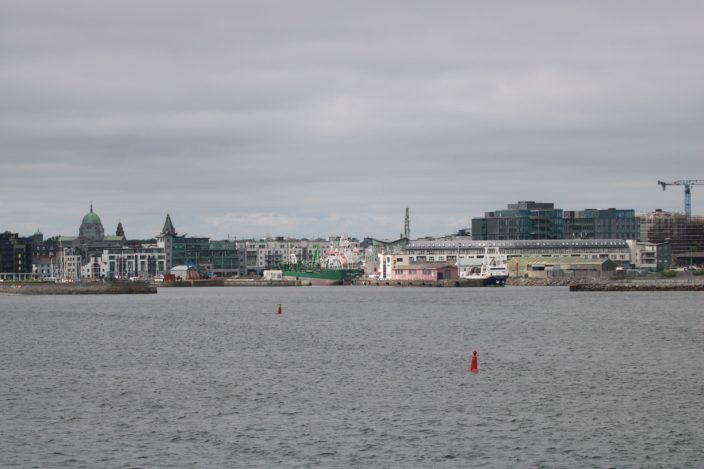
Galway City
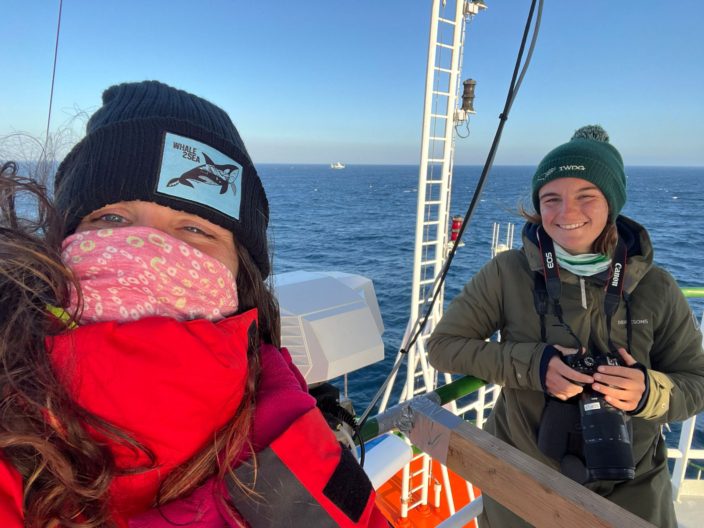
Mar Leon and Emilie
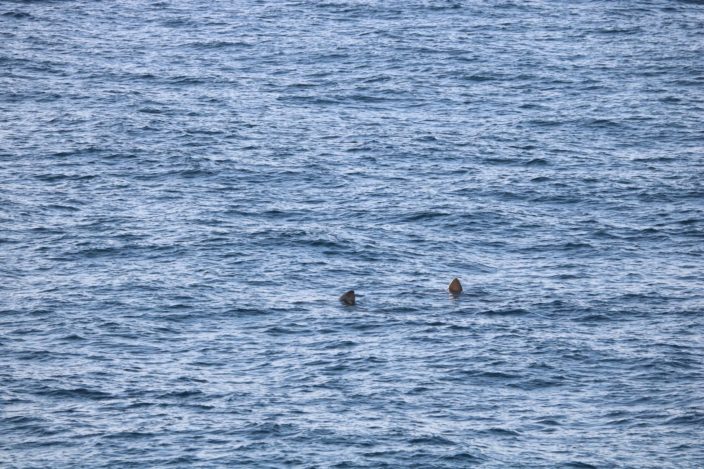
Basking shark
The following days are filled with the familiar small dolphins with a golden/amber hourglass figure painted on their sides and the ridiculously impressive leaps of bottlenoses as they track up the west side of Ireland. As Donegal Bay approaches, anticipation rises. Humpback whales have been reported near Killybegs and so far, only two whales have been spotted in four weeks. As the Explorer draws closer so do ominous dark clouds. A flash is seen, quickly followed by the familiar rumble of thunder and there is a careful retreat to the mess hall. After dinner the ship has turned, and the lighting storm seems to have moved away as an MMO makes her way back into the crow’s nest. Dolphins quickly make an appearance but no sign of a humpback yet. With one eye on the storm clouds hanging over the coast and another surveying the water before them, anticipation and nerves hang in the air. The wind shifts and slowly the dark mass of sky begins to travel back to sea, the occasional flash of light brightening the grey clouds. Still no humpback.
A quick call down to the bridge with the radio, to check in is interrupted by a flash, suddenly much closer than the last. Realising that the MMO is in fact on the highest point for miles, all the gear is packed before the lightning storm can reach the ship. As rain finally catches up, the MMO makes her way down the ladder to the bridge when a mass of grey breaks the surface next to the ship. Her heart leaps into her chest as she races down the last few rungs and sprints across the bridge, calling out an apology to the first officer for the sudden flurry of activity. There, seemingly the tail end of a large animal moving through the water. The thermal camera computer is quickly gathered as she hurriedly aims to the spot she last saw the animal. Lighting now streaks above them, and the rain is coming down in earnest. The only thing disturbing the water surface is the rolling waves. Nothing is seen for the rest of the day. Whale? Dolphin? Sea serpent? The identity might never be known, although educated speculation would give a good idea.
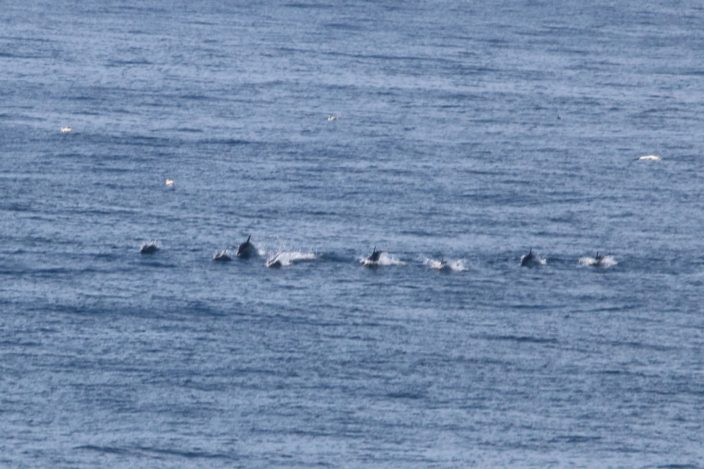
Common dolphins
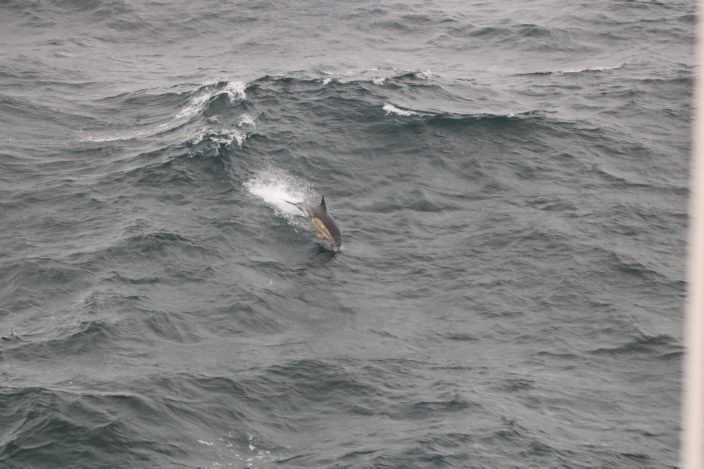
Common dolphin
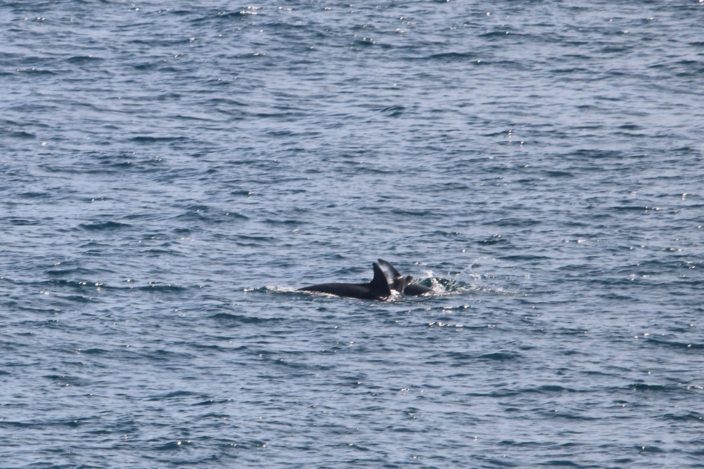
Bottlenose dolphins
The drama of Donegal is left behind as they finally pass the last bit of Ireland, sailing into UK waters as the survey brings them towards the Hebrides. Where before common dolphins were the predominant species spotted, bottlenose dolphins arrive in force. There is also a newcomer to the survey log as the curious heads of grey seals poke up, watching the ship pass. No matter how often they are seen, the shape of their head poking straight up, as if they are studying the clouds, always manages to throw off the observers for a second. While not a target species for the survey, there is delight on the ship when Puffins make an appearance. Their orange legs in bright contrast as they run/fly out of the path of the ship.
The closer they sail to the Hebrides the more life is seen. Tuna makes a dramatic appearance one morning, splashing and leaping with a ferocity that would make any dolphin envious. Large, black, sail-like dorsal fins announce the presence of basking sharks. Guillemot fathers show their offspring how to navigate the waters as their small feathery frames dot the waves. A large falcate fin cuts through the water, followed by an impressive leap. It is too big to be bottlenose dolphin. Binoculars catch glimpses of the fast-moving cetaceans; the shutter of a camera clicks. A pod of four white-beaked dolphins is breaching in the deep waters of the continental shelf. Their stomachs flashing white in the waves as they twist and turn. An impressive sudden burst of activity that leaves everyone cheering for the 6th cetacean species of the WESPAS.
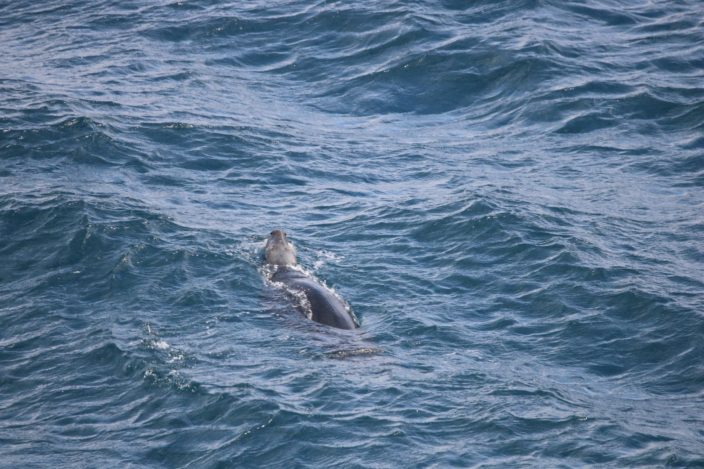
Grey seal
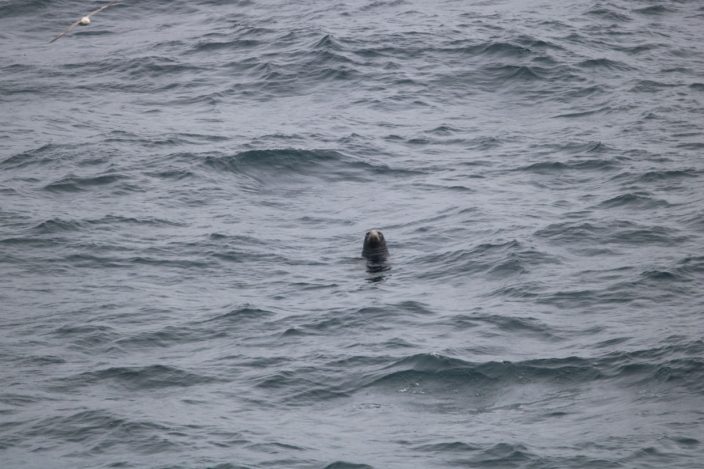
Grey seal
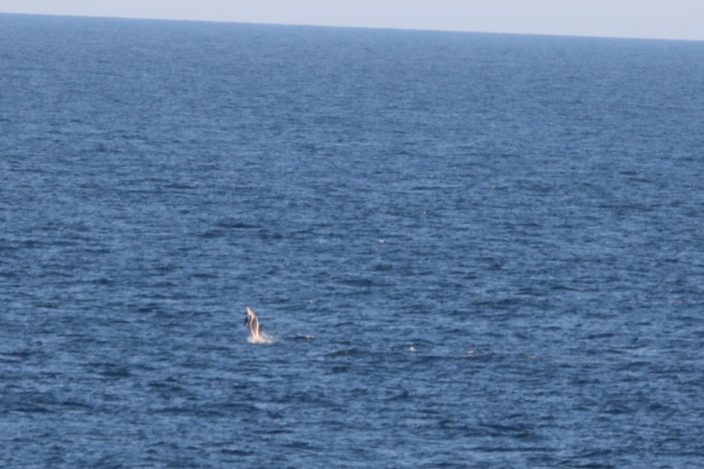
White beaked dolphin
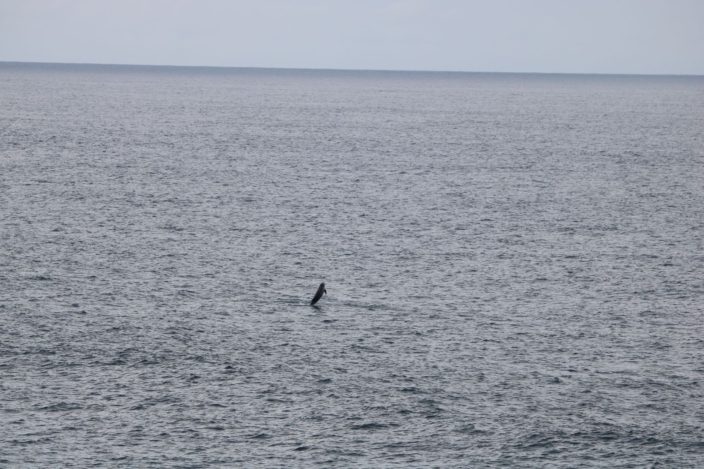
White beaked dolphin
For the next few days, the wind continues to pick up before dying back down and resurging with a vengeance. Along with a slew of common dolphins and the occasional bottlenose dolphins, large scarred dorsal fins were spotted during one misty sunset. With the MMO’s sequester in the bridge due to high winds, they were delighted to see a small pod of Risso’s dolphins darting in the swell.
The six weeks of the WESPAS draw to a close as the ship slowly crests the Hebrides, making its way down the Minch and back to Galway. The Hebrides was the home of puffins as rafts of up to 50 little auks rise and fall over the waves for most of the journey. Their bright orange feet on clear display as they run over the water with frantic flapping wings to get out of the ships path.
Predictably and wonderfully, the Minch was teaming with Minke whales. While the shy baleen whales rarely stuck around for long, several were spotted along the ships path. To both MMO’s surprise, one made an appearance right at the bow of the ship, showing off its white arm patch as it arched away from us. The last few days are quieter as they finally return to the Irish Coast. Common dolphins remain the MMO’s best friends as they give one final valiant display of playful acrobatics, wake and bow riding before the end of the final shift.
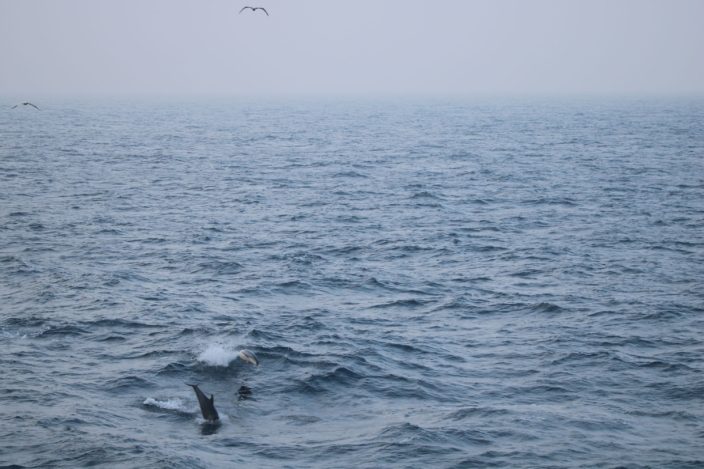
Bottlenose dolphins
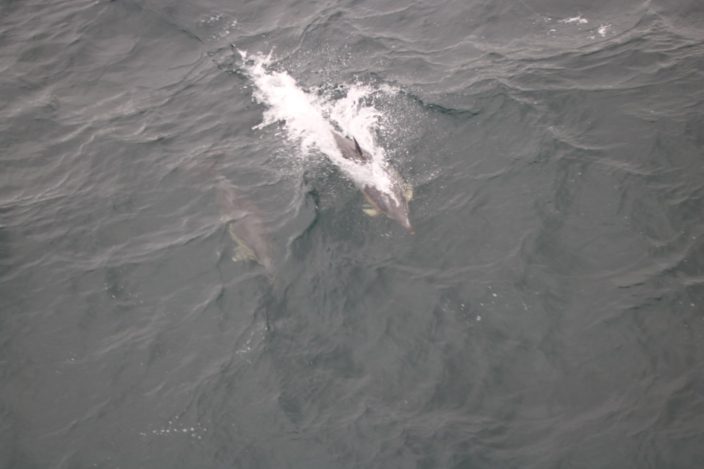
Common dolphins
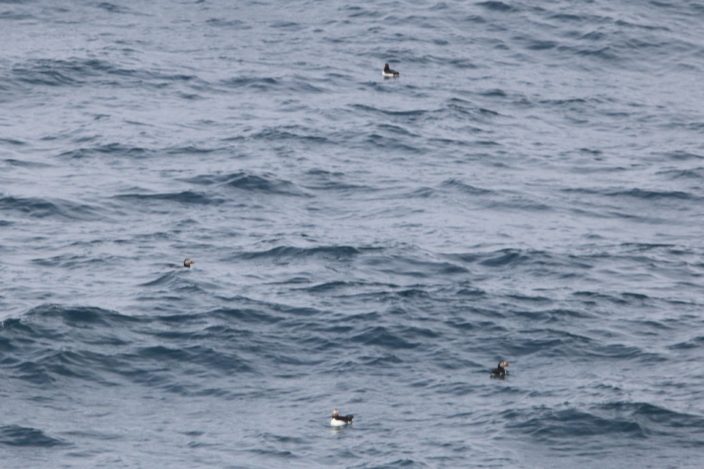
Puffins
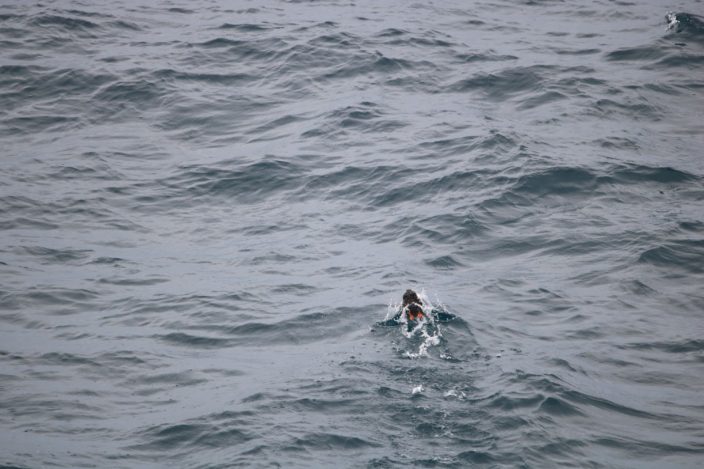
Puffin

Survey tracks
Emilie De Loose, IWDG Atlantic Whale Deal project leader