
On 12 November, IWDG joined colleagues from Fair Seas, BirdWatch Ireland, Irish Wildlife Trust, Irish Environmental Network and the wider Environmental Pillar for a briefing with Minister Timmy Dooley and officials from the Department of Climate, Energy and the Environment (DCEE) on the future of Ireland’s Marine Protected Area (MPA) legislation.
The meeting followed Cabinet’s decision earlier that day to advance MPA legislation through an amendment to the Maritime Area Planning (MAP) Act, rather than through a stand-alone MPA Bill.
What the decision means
Cabinet has now approved the preparation of the General Scheme for this amendment. In practice, this means that Ireland’s MPAs will be designated using the existing Designated Maritime Area Plan (DMAP) system, aligning MPA delivery with the wider marine planning framework.
Officials confirmed that core elements of the previously drafted MPA Bill will carry over, including:
-
clear conservation objectives for each site
-
management plans and responsible authorities
-
strong requirements for public and stakeholder participation
-
obligations for licensing bodies to consider MPA objectives
-
enforcement tools and penalties
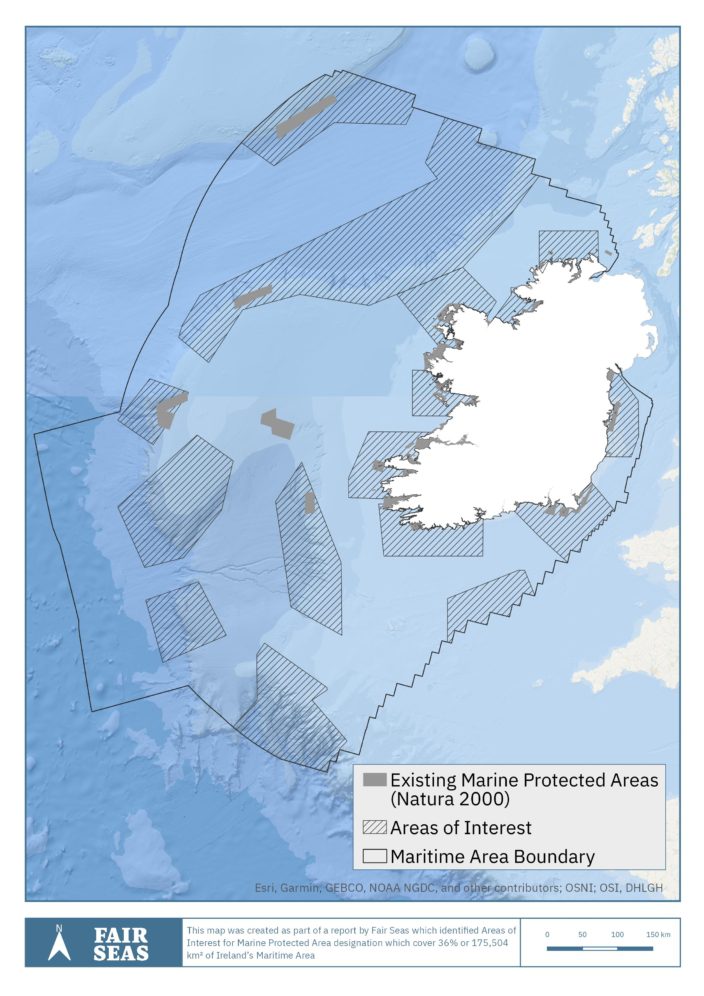
This approach, they said, is designed to accelerate progress to Ireland’s target of protecting 30% of our seas by 2030, while avoiding the creation of multiple overlapping planning systems.
The State also highlighted the role of the €25 million MPA LIFE project, which will continue building the ecological evidence base and preparing site proposals so that MPAs can move forward quickly once legal tools are in place.
Government follow-up on 13 November
The Department published a further update the next day (13 November), confirming:
-
the legislative amendment will provide the full legal basis for both designation and management of MPAs,
-
the decision marks the start of drafting work on the General Scheme (Heads of Bill),
-
extensive public engagement will be required under the DMAP process,
-
and the Government intends the new system to “streamline and strengthen” marine planning by bringing renewable energy and marine protection into a more coordinated framework.
The follow-up publication largely reinforced what was communicated during the meeting: momentum is increasing, the legislative route is now chosen, and drafting begins immediately.
What needs attention
While the renewed momentum is welcome, IWDG will be watching several key issues closely:
-
Quality and transparency of the DMAP process
Lessons must be applied from the ORE DMAP process to ensure that ecological sensitivity is fully reflected and that data is used transparently. -
Natura 2000 obligations
Ireland must still complete overdue designations for marine SPAs and strengthen management of existing SACs and SPAs. These cannot be sidelined by the new MPA process. -
Strict protection and no-take areas
The EU target of 10% strict protection remains. Officials suggested the tools will exist within the amended Act, but implementation, especially beyond the 12-mile limit, will require coordinated work at EU level. -
Clear timelines
With national ORE DMAPs due in 2027 and 2030 approaching quickly, Ireland needs a clear, time-bound roadmap to ensure new MPAs are designated, resourced and effectively managed without delay.
IWDG’s role moving forward
IWDG will continue to work within Fair Seas and the wider NGO community to engage with the Department as the General Scheme is drafted. We will advocate strongly for MPAs that are ecologically meaningful, well-managed and enforceable, and for a process that is transparent, science-based, and aligned with Ireland’s biodiversity obligations.
This latest Government decision is a positive step, but the real test will be delivery at sea. Whales, dolphins, porpoises and all marine life depend on Ireland getting this right, quickly, and with ambition.
By Eva Lambert, Marine Policy and Advocacy Officer.