
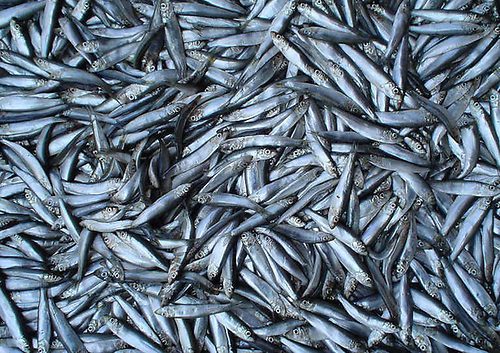
The Irish Whale and Dolphin Group welcomes the recent fishing restrictions on vessels over 18m within the 6 nautical mile zone. This measure is an important recognition of the need to protect our inshore ecosystems and represents a step in the right direction. However, to secure long-term sustainability for Sprat and other forage fish, further action is urgently required.
Forage fish such as sprat, sand eels and in the future probably anchovies and pilchards, play a pivotal ecological role, supporting seabirds, cetaceans, and commercially valuable fish stocks. Yet, without science-based quotas and effective management, these keystone species remain at serious risk from unregulated fishing effort. While the interim restrictions on larger vessels fishing Sprat are positive, the lack of controls on sub-18m vessels risks undermining the progress made. In 2024, smaller vessels accounted for nearly half (46% SFPA) of total Sprat landings, far exceeding precautionary scientific ICES guidance (International Council for the Exploration of the Sea).
To address these challenges, we propose these six steps:
1. ICES Assessment
Sprat must be placed into the ICES stock assessment process. Only through independent, internationally recognised scientific advice can a long-term, sustainable management framework be built. Without this, decisions will remain ad hoc and reactive rather than evidence-based.
2. Baseline Science
The Marine Institute must be resourced to complete its work on the basic biology of sprat, including stock structure, growth rates, and reproductive capacity. A robust population baseline is essential if Ireland is to move beyond interim measures and towards a sustainable quota system that balances ecological and economic needs. We understand a model which better accounts for the fluctuations inherent in small pelagic fish populations has recently been developed (1). This is very welcome.
3. Historical Perspective
Research by John Molloy in the Celtic Sea (2) has shown that sprat once had a much broader age and size structure, with significant numbers of larger, older fish. Today, the fishery is dominated by 0–2 year classes — most likely a direct result of intensive fishing pressure. This loss of older age classes leaves the population extremely vulnerable to fluctuations in recruitment and environmental change. Recognising this history is vital if we are to restore resilience to sprat stocks.
4. Precautionary Quotas
Forage fish such as sprat underpin the wider marine food web. Catch limits must therefore be set not only with a view to maintaining the stock itself but also to ensuring adequate food supply for cetaceans, seabirds, and larger fish. Quotas should reflect the ecological importance of sprat, with precautionary buffers to protect against uncertainty in stock estimates.
5. Fair Monitoring and Future Enforcement
Management measures cannot be limited to >18m vessels alone. In 2024, sub-18m vessels landed almost 8,000 tonnes of Sprat, more than three times the ICES precautionary advice. Equal monitoring, bycatch sampling, and enforcement are essential across all fleet segments. We are also concerned that, under the new policy directive, Sprat will revert to a non-quota species after October 2026. We therefore seek urgent clarity on what role the Sea Fisheries Protection Authority (SFPA) will have in overseeing the Sprat fishery beyond this season, and how compliance will be maintained in the absence of quota status. It is essential that the SFPA be given the resources and authority to extend its monitoring and compliance regime to the sprat fishery, ensuring consistency across fleet segments. By applying the same rigorous checks, inspections, and bycatch sampling used for other quota species, the SFPA can help close the current enforcement gap and ensure a level playing field.
6. Protective Measures
Finally, complementary protections are needed to safeguard spawning stocks and prevent ecosystem damage. This should include limiting fishing effort during the spawning season (October–February), ensuring that sprat are not disproportionately removed during this essential phase of their life-history. We also urge consideration of whether forage fish should be prioritised for human consumption, rather than processed into fishmeal for aquaculture, given their central ecological role.
By adopting these six steps, Ireland can move from short-term restrictions to a long-term, ecosystem-based approach to managing forage fish. This is not only about Sprat but about safeguarding the marine food web, protecting biodiversity, and supporting resilient coastal communities.
Jack O’Callaghan
IWDG Science Officer
- Laurence T. Kell, Jacob W. Bentley, David A. Feary, Afra Egan, and Cormac Nolan. (2024) Developing management plans for sprat (Sprattus sprattus) in the Celtic Sea to advance the ecosystem approach to fisheries. Canadian Journal of Fisheries and Aquatic Sciences. 81(8): 1104-1121. https://doi.org/10.1139/cjfas-2023-0090
- Molloy, J. (1967) Irish Sprats and Sandeels”, Irish Fisheries Investigations Series B, Department of Agriculture and Fisheries (Fisheries Division)