
MARÉIRE, the project that brings together the IWDG, Birdwatch Ireland and the Irish Environmental Network (IEN) to better understand and protect marine biodiversity in relation to offshore renewable energy (ORE), has recently launched a new website (www.mareire.ie). The website outlines the work of the project in “finding a balance between mitigating the climate crisis and protecting biodiversity through research and advocacy”.
MARÉIRE is run by the IEN with funding from the Department of Climate, Energy and Environment with the aim of building capacity in the eNGO sector and creating opportunity for environmentalists to respond appropriately to the development of ORE in Irish waters in the coming years. The team consists of Dr Jenny Bortoluzzi, Project Coordinator at the IEN, Rochelle Streker, Marine Spatial Planning Officer at Birdwatch Ireland, and Dr Stephen Comerford, ORE Marine Biodiversity Officer at the IWDG.
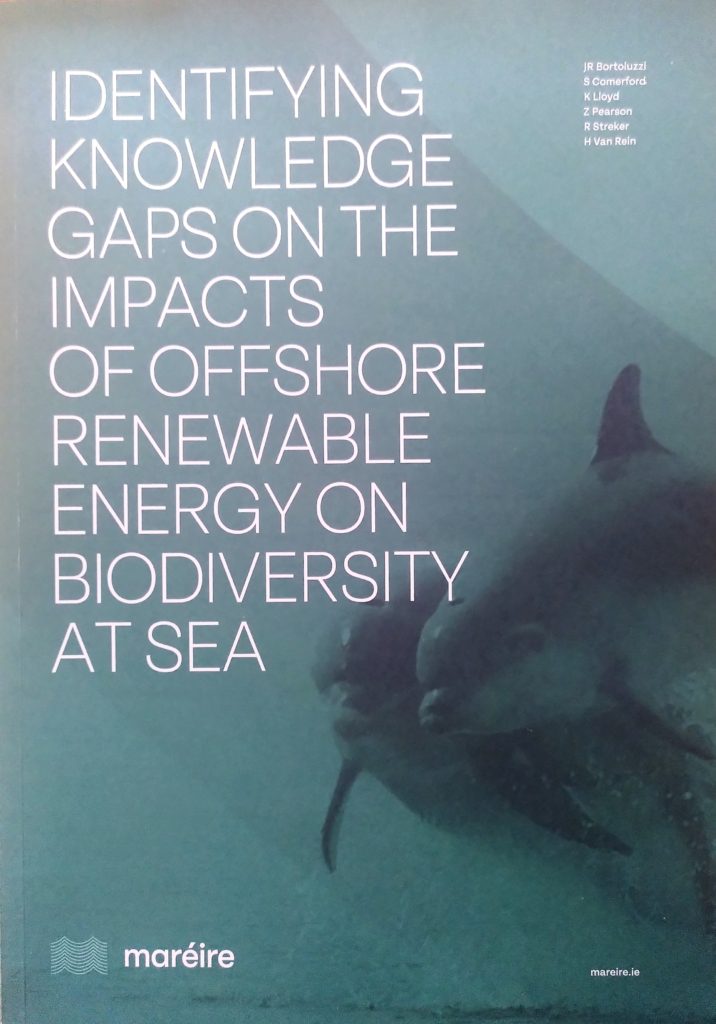
The Resources section of the website lists a growing number of activities and publications, most recently the report Identifying knowledge gaps on the impacts of offshore renewable energy on biodiversity at sea. Emerging from the gaps identified by the report, a workshop was held in Dublin where NGO and academic experts prioritised research topics on ORE and marine biodiversity in Ireland. A report on the results of the workshop has just been published on the MARÉIRE website.
The project has also organised webinars to inform IEN members, industry and the wider environmental community on topics relating to offshore renewable development, and plans more through 2026. MARÉIRE also manages access to funding for research projects, and there are a number of grants and tenders currently open on the website.
Stephen Comerford, MARÉIRE team member at the IWDG, said “The MARÉIRE project is a timely response to the need for capacity in the marine eNGO community to deal with the environmental implications of ORE. The new website allows people to keep up-to-date on the activities of the project, to inform themselves on recent developments, and to access funding for research. With the recent successful auction of the Tonn Nua site, the five Phase I projects currently in the planning system, and the progression of a National Designated Maritime Area Plan, activity in the marine space is about to ramp up dramatically, and the NGOs need to respond with evidence-based advice, and commentary founded in good science.”