
Minister of State for Nature, Heritage and Biodiversity Chris O’Sullivan TD was in Fenit, Co. Kerry on Thursday, August 6th1 to announce a major funding programme for the restoration and protection of marine habitats in Tralee Bay.
The Tralee Bay Marine Biodiversity Restoration Project will receive €7.9 million over five years with the specific aims of restoring and expanding existing seagrass meadow, and increasing the area of native oyster beds. These improvements will enhance biodiversity, water quality and carbon sequestration throughout the Tralee Bay system. An important element of the project will be to increase public engagement and awareness of this unique ecosystem.
The Project is a consortium of UCC, Tralee Oyster Society and Tralee Hatchery directed by the National Parks and Wildlife Service (NPWS).
Speaking at the announcement Minister O’Sullivan said: “Eelgrass meadows and native oyster reefs provide essential habitats for marine wildlife. They also improve water quality, enhance biodiversity, support fisheries and contribute to climate resilience. This flagship project represents a significant investment in the future of Ireland’s coastal ecosystems. Tralee Bay provides a unique opportunity to restore these fragile habitats of national and international importance, by applying on the ground restoration measures with cutting-edge research. By bringing together research expertise from University College Cork with local partners in the Maharees and Tralee Bay, we can create a model that will inform and inspire similar restoration initiatives in Ireland and beyond. Habitat recovery is a key part of our Nature Restoration Plan, and landmark projects like this act as pathfinders for how we do this at scale.”
Tralee Bay is already designated as a Natura Special Area of Conservation (SAC) for various physical features and a Special Protected Area (SPA) for many species of birds, mostly ducks and waders. Tralee Bay is also designated a Nature Reserve “of international importance for waterfowl especially the wintering populations of Brent geese that it supports”. The Bay is adjacent to, but not part of, Páirc Náisiúnta na Mara, Ireland’s first marine national park.
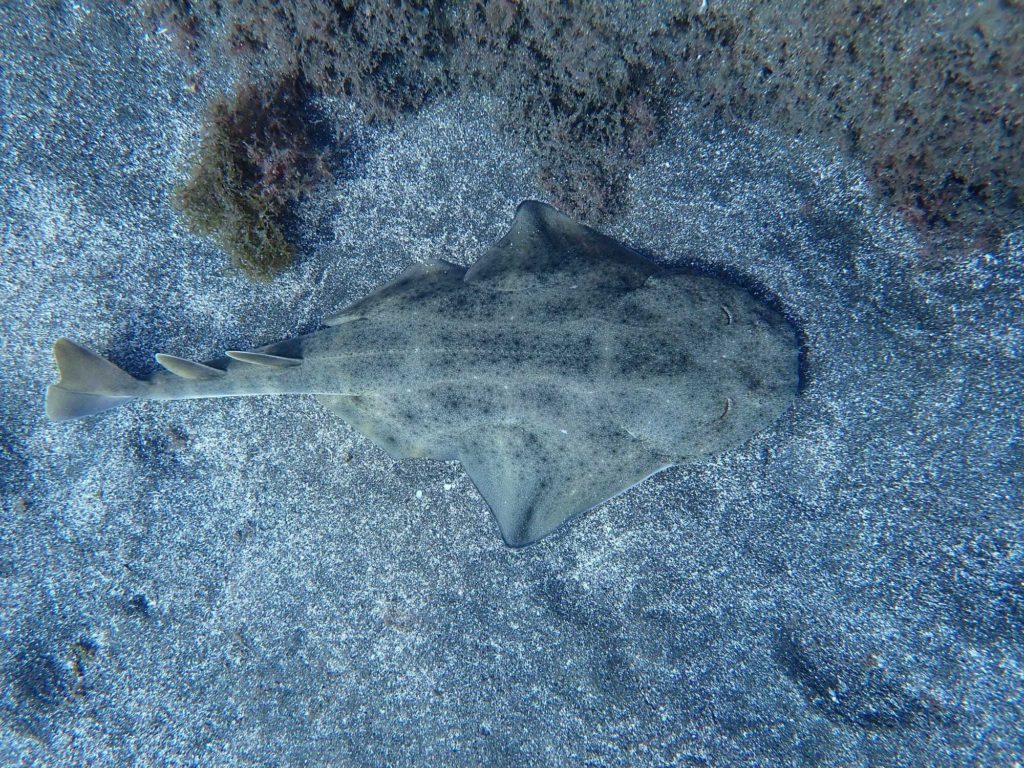
The IWDG welcomes this announcement and considers the bottom-up ecosystem approach with seagrass and native oysters to be a very good start. Tralee Bay is an Important Shark and Ray Area (ISRA), wonderfully titled “Bay of Angels” for the critically endangered angelshark found there. These iconic sharks are one of Europe’s rarest, and Tralee Bay is recognised as an important habitat. Other rare and vulnerable elasmobranch species found here include undulate ray, white skate, stingray and porbeagle. Bottlenose dolphins regularly visit the Bay and are seen off Fenit as well as further west around the Magharees and Brandon; these are animals from the River Shannon population which often travel further afield in search of prey.
The Natura designations do not specifically protect these fish and cetacean species which are particularly vulnerable to fishing bycatch, and the IWDG hopes that this project begins a process of oversight and management resulting in effective protection for all fish and cetacean species within the broader ecosystem approach. Tralee Bay is a vital enclave for rare and protected species on our Atlantic coast, and it is heartening to see that recognised and funded to this level. The Bay would be a perfect candidate MPA under the new amendments to the Maritime Area Planning Act expected by 2030, which would get around the weaknesses of the Habitats Directive (SACs), particularly in protecting elasmobranch species.