
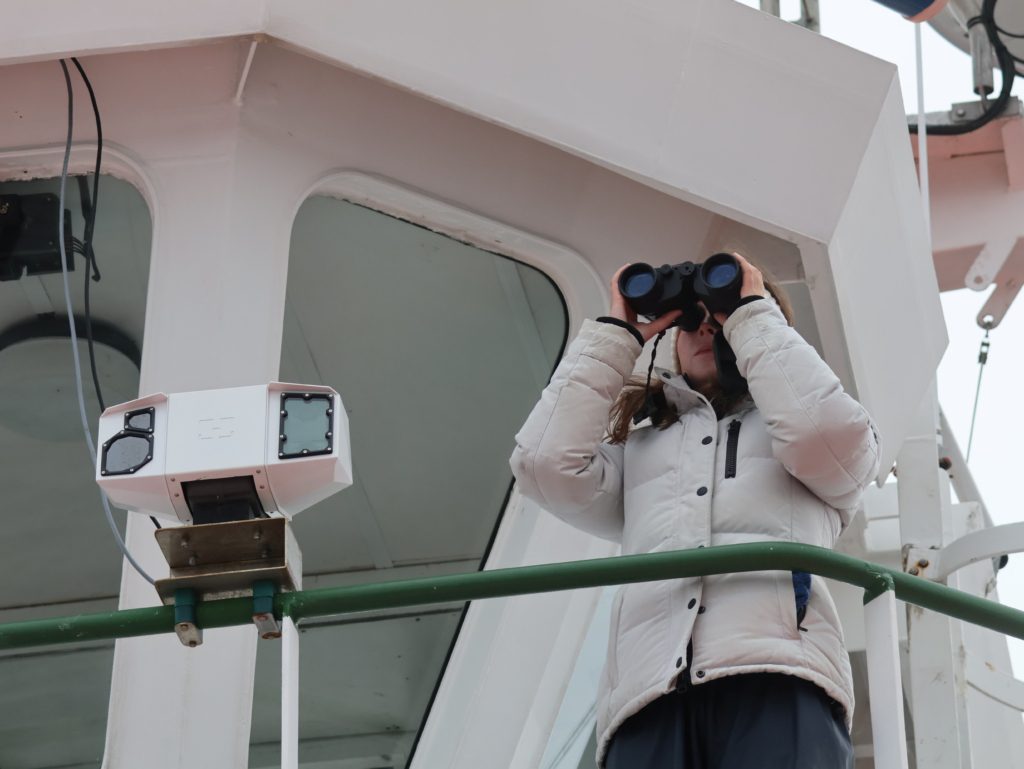
Atlantic Whale Deal: Leg 2 of WESPAS aboard the Celtic Explorer
By onboard MMO Leah Moynihan, IWDG
I spent three weeks onboard the RV Celtic Explorer as a Marine Mammal Observer (MMO), and it was one of the most exciting and eye-opening experiences I have ever had. As a newly graduated marine biology student, I was full of nervous excitement before the trip. I also had many questions; Will I see anything? Will the weather be bad? Will the swell be too much? However, I did not need to worry as all these questions were quickly answered.
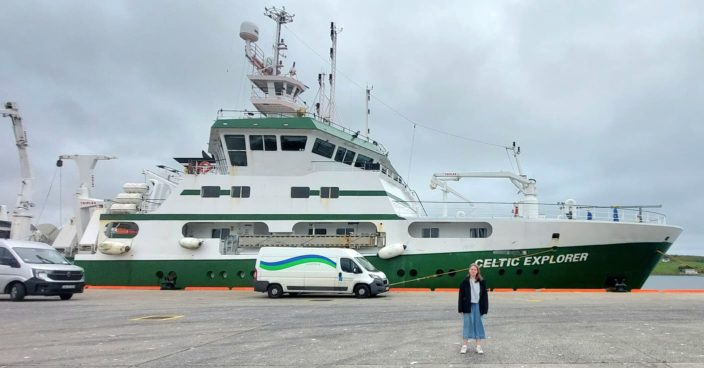
Leah Moynihan in front of RV Celtic Explorer
The aim of the survey was to monitor key fish species in Irish waters from Cork harbour northwards to the Hebrides using trawl samples and acoustic monitoring. My role as an MMO was to record cetaceans along this route. My co-MMO, Emilie De Loose, works for the Atlantic Whale Deal for the Irish Whale and Dolphin Group, and has been tasked with testing out new thermal camera equipment. This technology is designed to reduce collisions by rapidly detecting large whales passing in front of ships. It was exciting to be part of such an important project, and Emilie could not have been more welcoming. She greeted me with a big hug, and I was immediately at ease.
She led me to the crow’s nest, and at first, I felt unsteady on the ladder, but I soon became used to the platform’s height. From there, you have the best view on the ship, which is ideal when trying to find needles in a massive blue rolling haystack.
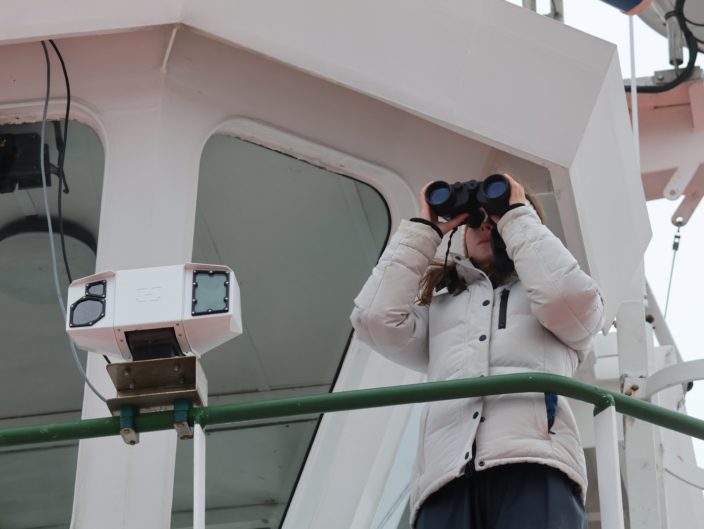
The SeaAI Thermal Camera and Leah watch for blows
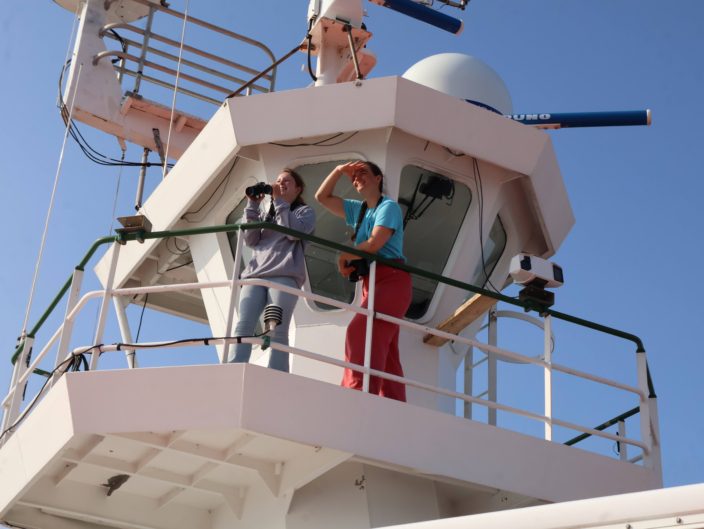
MMOs in the crow’s nest
The next morning, we left the safety of the harbour to start the first day of the survey. We slowly made our way past Kerry, and I was bubbling with anticipation. However, the weather had other ideas. For hours Emilie and I stood vigilantly on the crow’s nest, trying to keep our focus through dense fog that was playing tricks with us. It would become clear for an hour, with the horizon visible and rays of sun breaking through, then the fog would gradually creep in and our hearts would drop. It also took me some time to get used to the swell. I was comfortable with observing from land, however holding binoculars steady on a heaving platform is a completely different experience. Even with these challenges, we knew there was life out there, we just had to be patient enough to see it.
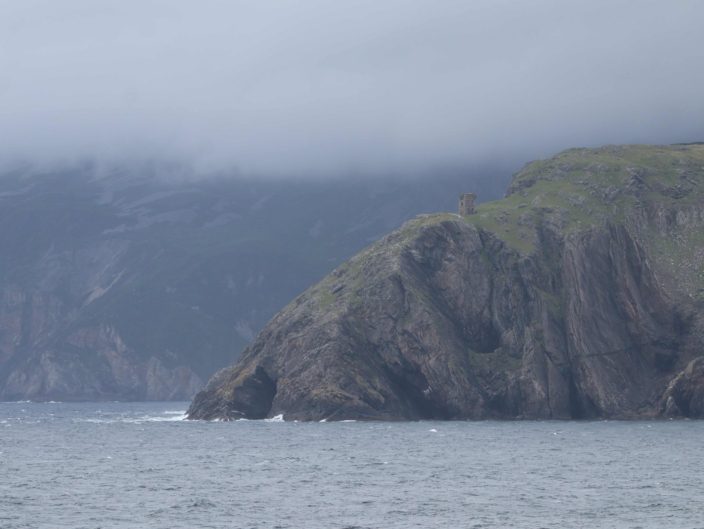
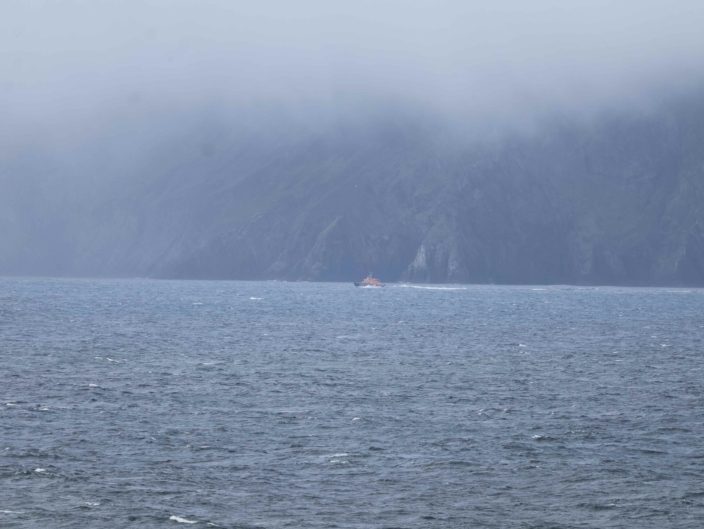
A foggy start
Emilie made the first sighting, and it was one of the most exciting ones. It was off the Irish coast, and we were still surrounded by hazy fog when she yelled the magic word “sighting!”. I ran inside to log the time and rushed back out to glimpse what she had seen. “A minke, there”, she pointed and I fixed my binoculars. A massive dark grey back rolled out of the water and disappeared quickly into the depths as if it was
never there. We saw no sightings that day after that, however the minke gave us hope to keep searching, even when our hands and faces were being battered by the icy wind. As we moved north and the fog got heavier, those quiet hours gave me plenty of time to get to know my fellow MMO.
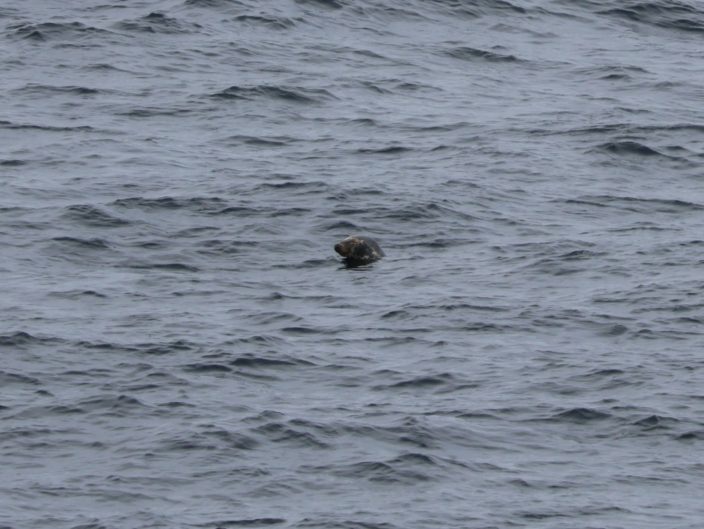
A grey seal
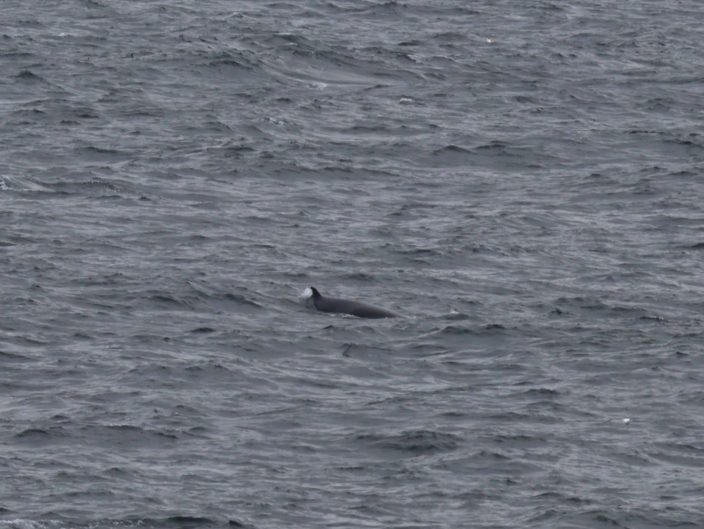
A minke whale
Our chats on the crow’s nest were one of the highlights of the trip and I was lucky to get to know someone who also shared such an intense interest in marine conservation as me. So, when Emilie yelled “breach!” and grabbed her camera grinning “I think it might be humpbacks”, we both knew how important that moment was. The eruption in the distance was like a massive rock had fallen from space, leaving a lasting white tsunami in its wake. I ran to Emilie’s side and grabbed my binoculars firmly. I had to kneel to be able to hold them steady enough against the moving ship. My eyes strained, but I could see a large flurry of gannets flying over the splash site. As anyone who has observed the ocean long enough knows; diving birds usually means there are other animals feeding there too.
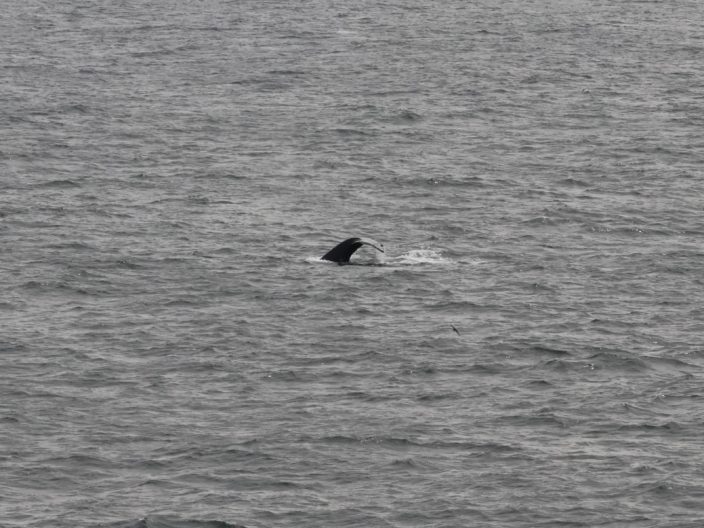
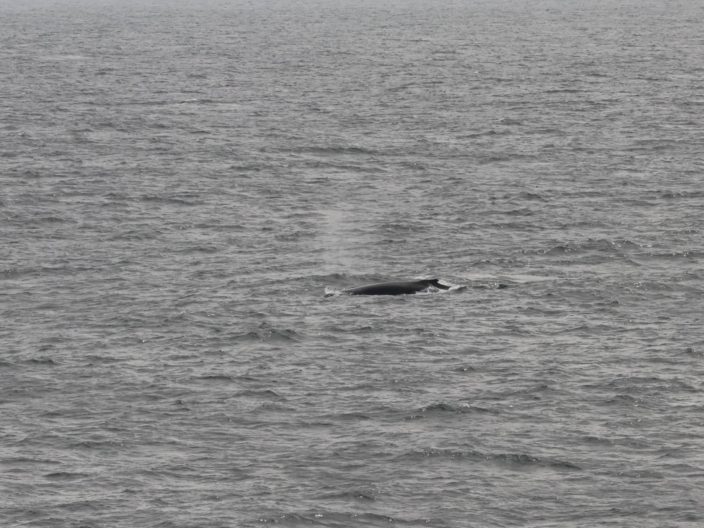
Dream come true
Thankfully, we were heading in that direction, and I tried not to get my hopes up. To me, humpback whales were giants that you only ever saw in nature documentaries. Yet there they were. A bushy blow erupted from within the birds feeding frenzy, then another, and another. The humpbacks lunged out of the water to show us their baleen plates, and many began slapping the water with their powerful white tails. Emilie rushed to get the thermal camera positioned, but in which direction? There were humpbacks feeding to the left and right of us, dozens of minkes silently popping up and hundreds of common dolphins joyfully bow riding beside us.
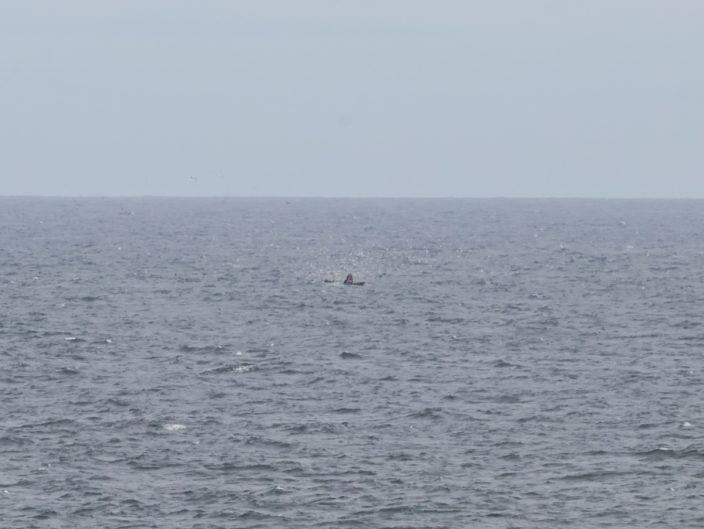
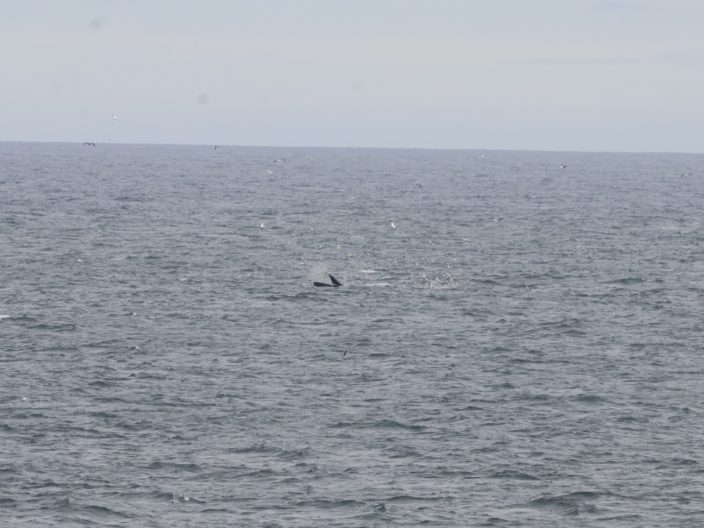
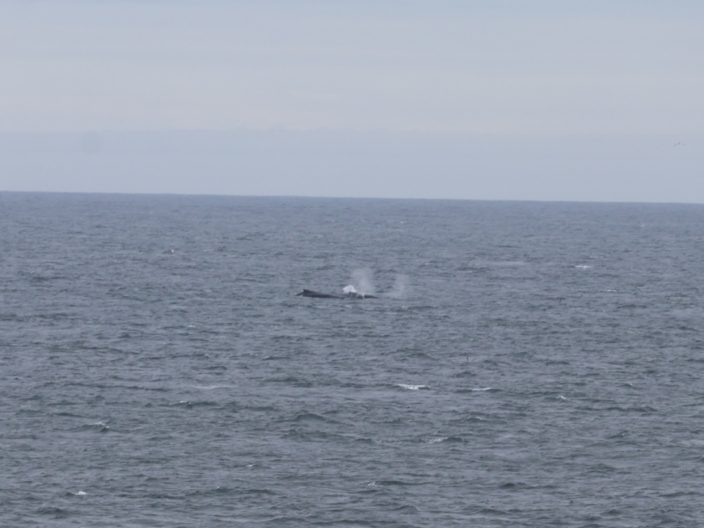
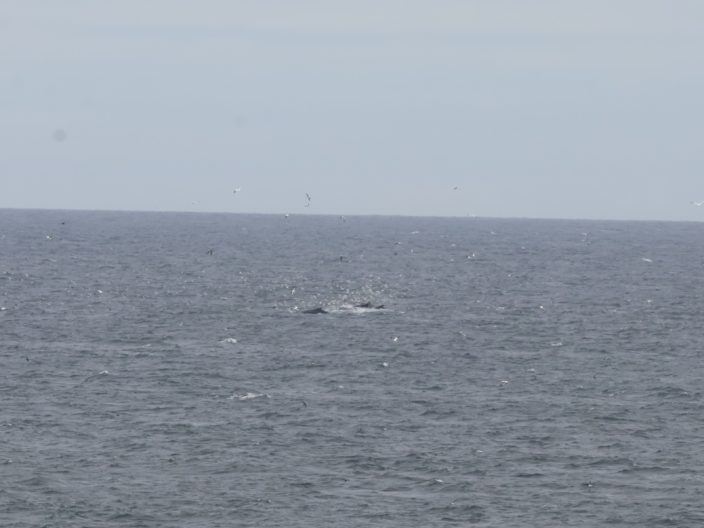
The frenzy
Our binoculars were moving so much that my arms began to tire with our attempt to count as many individuals of each species as we could. It was even difficult to keep track of the huge humpbacks as the air was so dense with swarms of white gannets. The ocean was finally coming alive, and we were in the middle of it. By the end of the day, we were exhausted but grinning from ear to ear. I had never experienced
anything so inspiring. I felt privileged to get the opportunity to observe what a healthy thriving ocean should look like, and a bit saddened that feeding frenzies such as this are no longer common at home on the south Irish coast. It showed me what the word ‘hotspot’ really means, and that we should strive to identify and protect them.
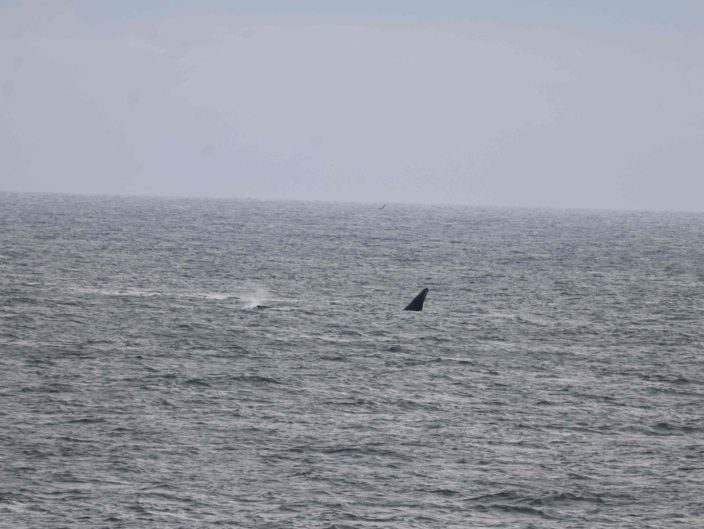
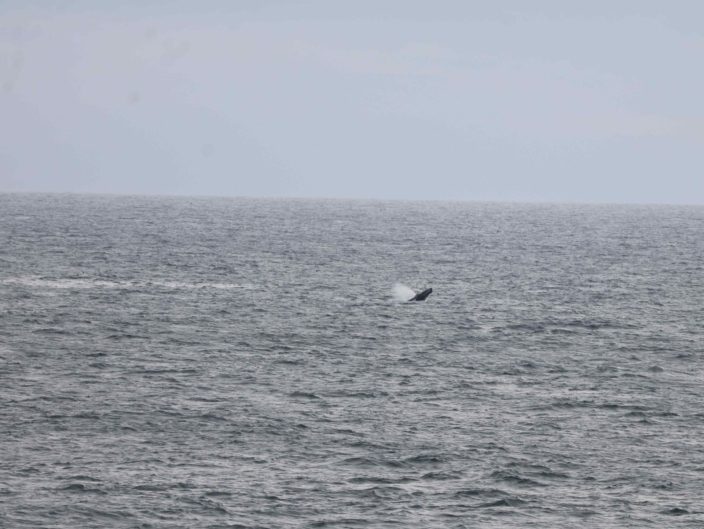
The next morning, I was satisfied that if we saw nothing else for the rest of the survey, I would be delighted. But as we moved further North along the Hebrides, the mist gave up its pursuit of us, and the calm ocean revealed its secrets. The water was smoother than glass and it was as if we were moving through the stillest lake. Everything felt so soft and gentle after the rush and excitement of the whales the previous day. It was like we were on another planet, isolated in our own world away from land and any other ships.
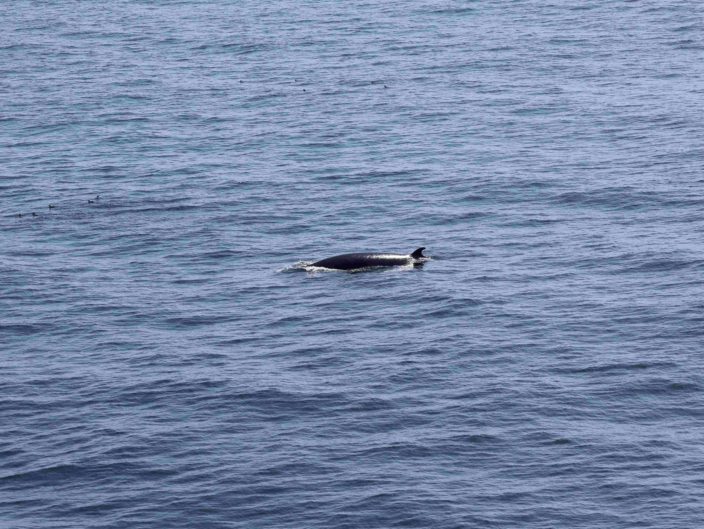
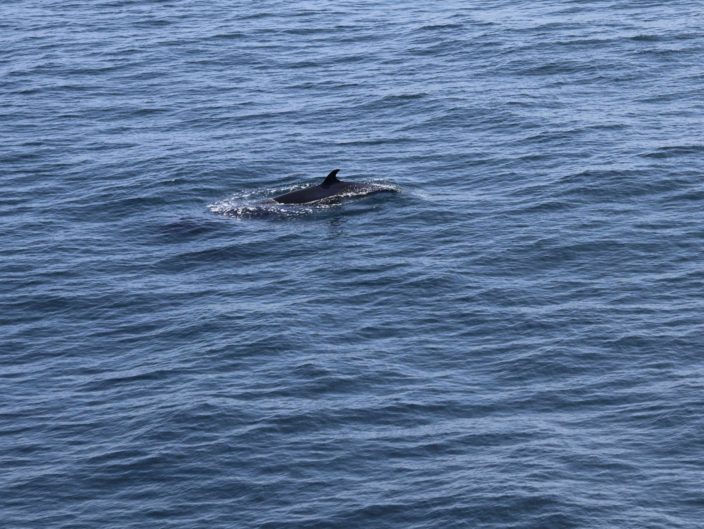
More minkes
We moved slowly through this tranquil sea onto St. Kilda, where another surprise was waiting for us. A splash on the horizon caught our attention, but this time it looked different. It was not the same as the whale’s breach; it was smaller. There was another explosion beside it, but this time we had our binoculars positioned on the right spot. A massive grey-brown body shot from the surface and quickly flopped
back down as if losing all energy mid-air. It was a basking shark. I had always dreamed of seeing one after learning about their hypnotic circling behaviour. After that, we saw many large triangular fins nearby thanks to the low swell, and one got so close to the boat that I could see its bulging nose and streamline body. I could not believe how enormous this beautiful creature was, but Emilie later stated that that
individual was only a juvenile!
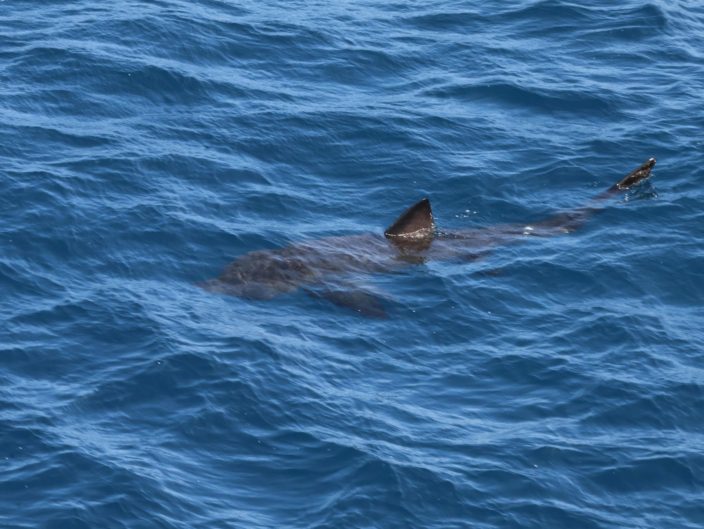
A juvenile basking shark
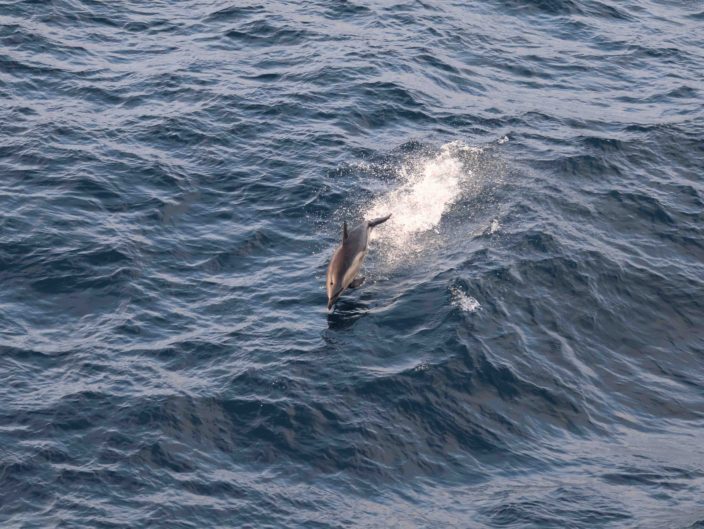
A playful common dolphin
Later that day, Risso’s dolphins paid us a visit. At first, I thought they were gannets resting on the surface, as they were such a bright white, but as they travelled closer, their dorsal fins and scratched bodies emerged. A tiny calf popped up beside them, much darker and less scarred than its parents. I could not believe my eyes. Somehow, the ocean had even more to offer.
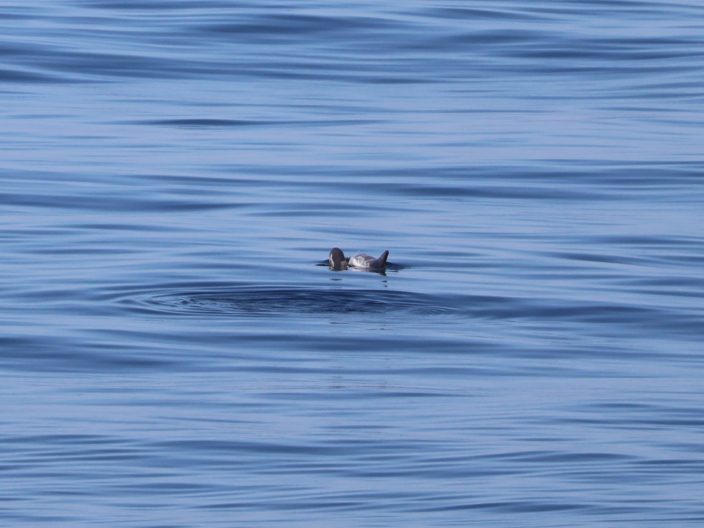
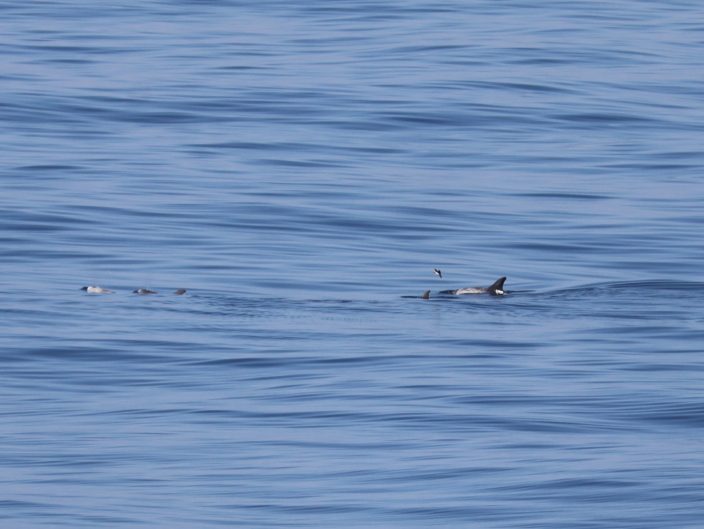
Risso’s dolphins – mother and calf
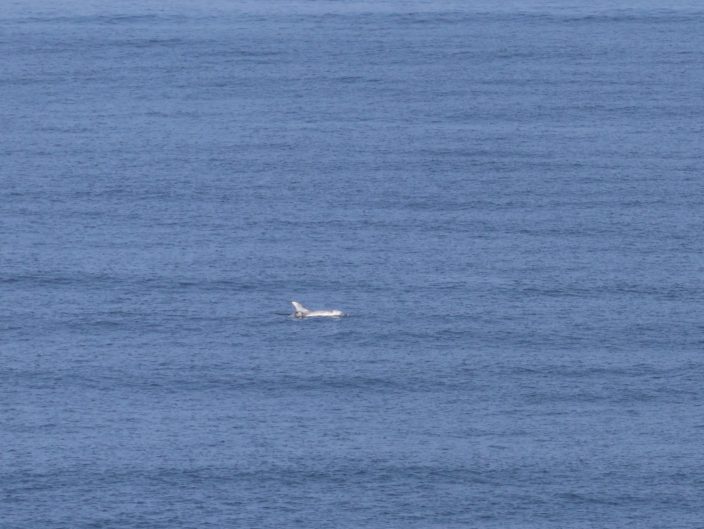
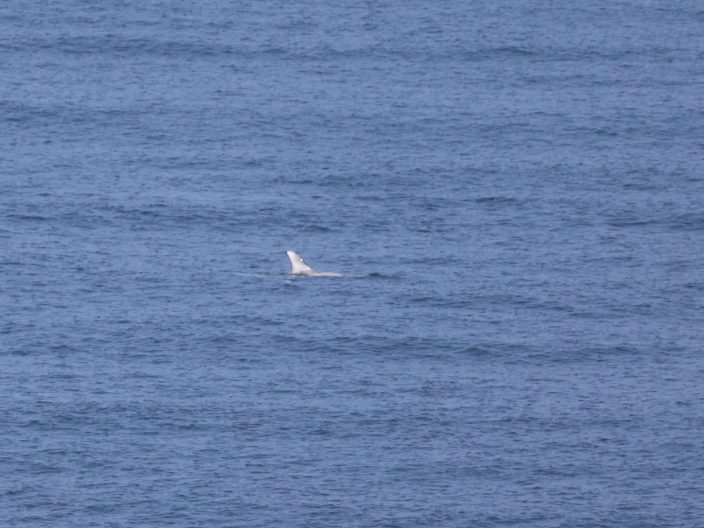
Spectre on the surface
A few days later, white-beaked dolphins put on a show for us. They leaped high out of the water and flopped back down, flashing their bright white bellies. Bottlenose dolphins also visited us just as we started our morning shift. They swam right up to the bow but did not stay for long. In contrast, the many common dolphins that we met along the way seemed to like being by our ship, and we found great joy as they played in the engine’s waves.
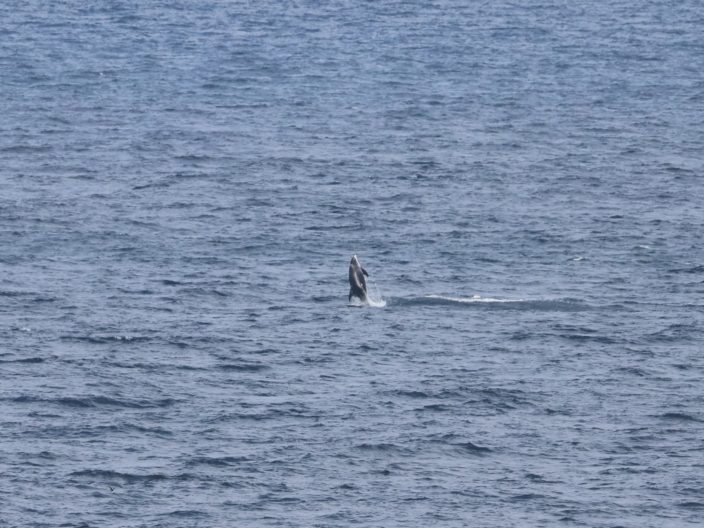
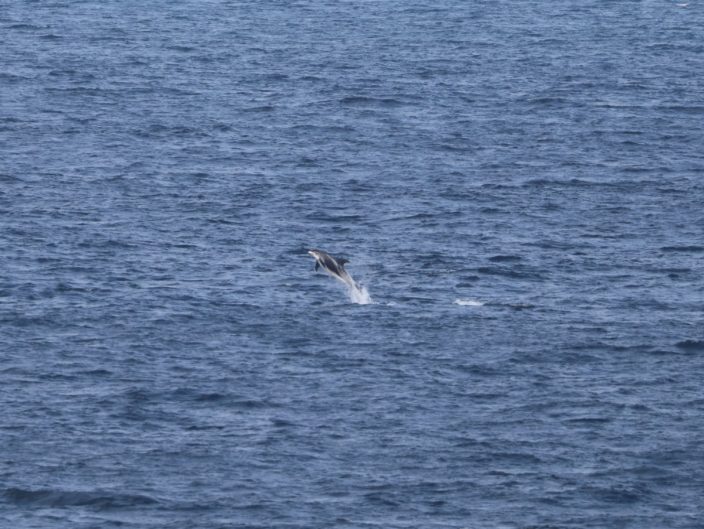
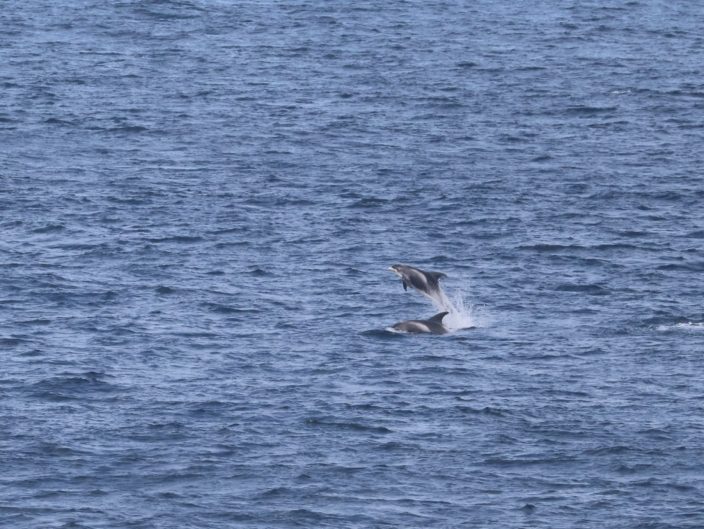
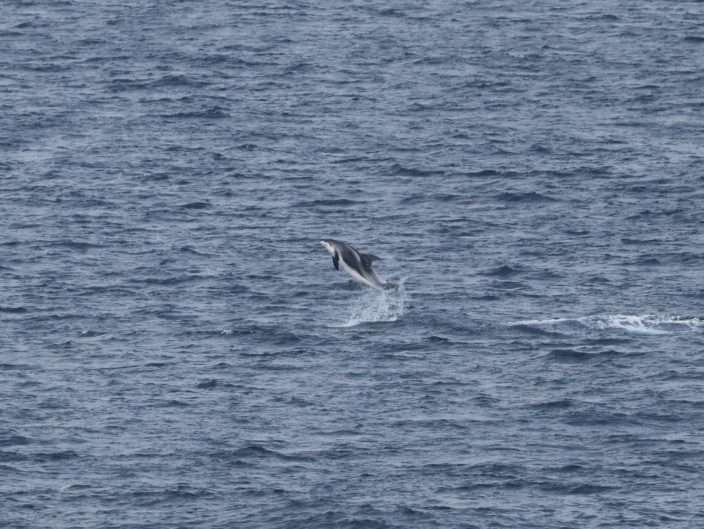
White-beaked dolphin breaches
On the last day of the survey, I was happy to go home to see my family. I also wanted to stay on the Celtic Explorer forever, yet I knew how lucky I was to see so many animals on my first full-time survey. It showed me how abundant our oceans can be, and it made me fall in love with the marine all over again. As we headed back to Ireland, the fog settled in once more, but this time I did not mind as much. Up on the crow’s nest, Emilie and I were reminiscing about how incredible the survey had been when my eyes caught something in the distance. At first, I thought that my mind was tricking, but soon I realised what I had seen. “Sighting”, I shouted, “Pilot Whales”. Emilie looked at me as if I had indeed lost my mind. She looked at where I was pointing sceptically. From the swell, massive tanks thundered closer and closer. “Wow, they are pilot whales”, she laughed.
They were not like any cetacean I had ever seen. They were much broader than the delicate minkes, and they moved too strong and fast to be humpbacks. I was in awe at these apex predators. I never thought I would see pilot whales in person, so this was the perfect end to the perfect survey.
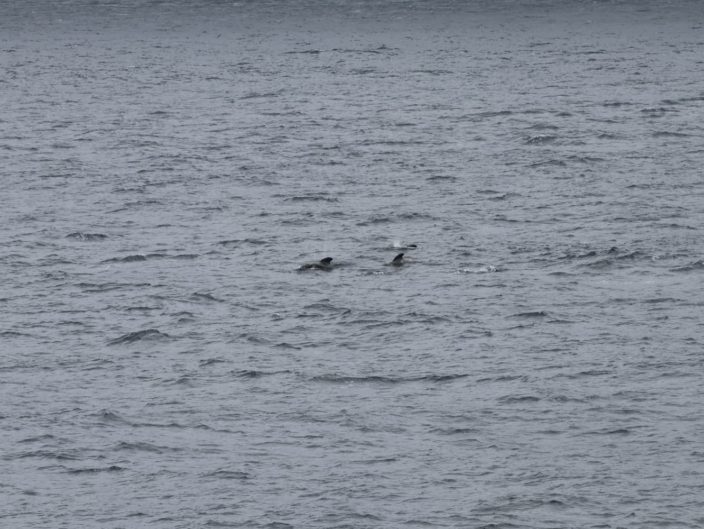
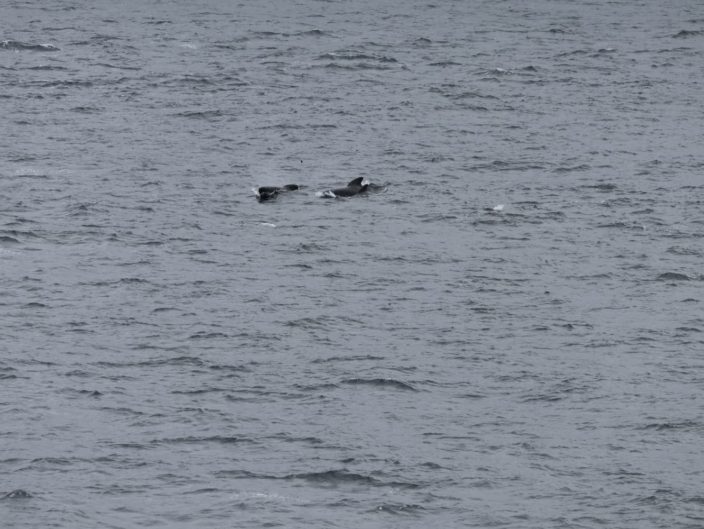
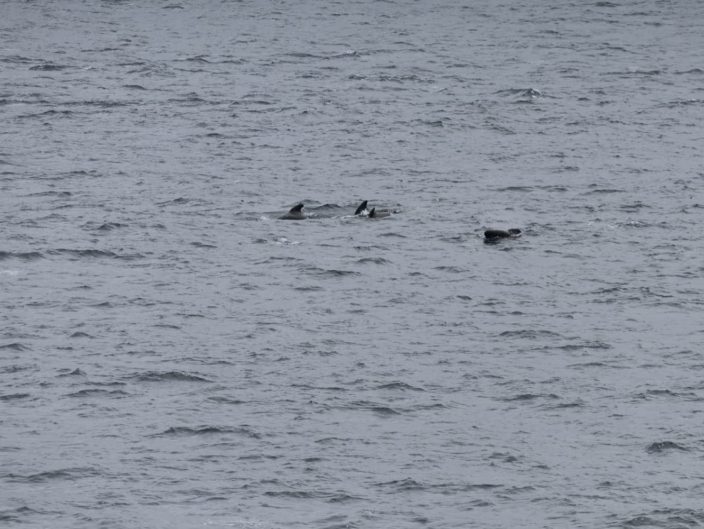
A powerful pilot whale sighting
Even though the first few days started off quiet, we logged hundreds of animals and gained hours of footage on the thermal camera. This data can be used to inform conservation management in the future by identifying feeding hotspots, as well as testing thermal technology that can help safeguard whales against ship collisions. One of the flukes of the humpback whales that we photographed has been identified,
and was previously spotted in Cork, Scotland, and even Iceland. I felt privileged to be part of an extraordinary team that is undertaking such important work. Even though I know that all surveys are not so fortunate to have such good weather or to record so many sightings, I am hooked. I would especially like to thank Emilie for sharing her knowledge and passion for cetaceans; it really was infectious.
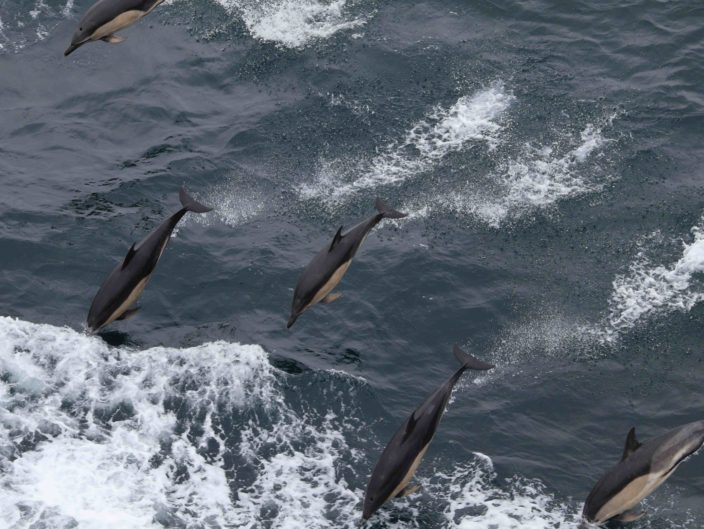
Common dolphins
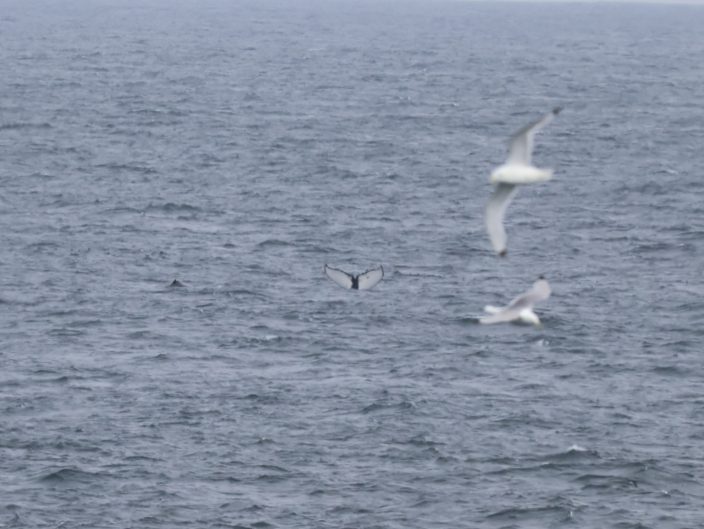
#HBIRL081
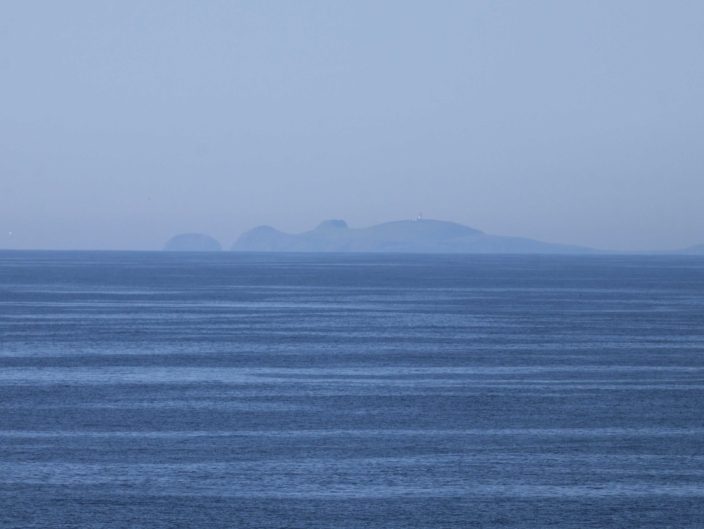
Inis Tuaisceart – “the Sleeping Giant”
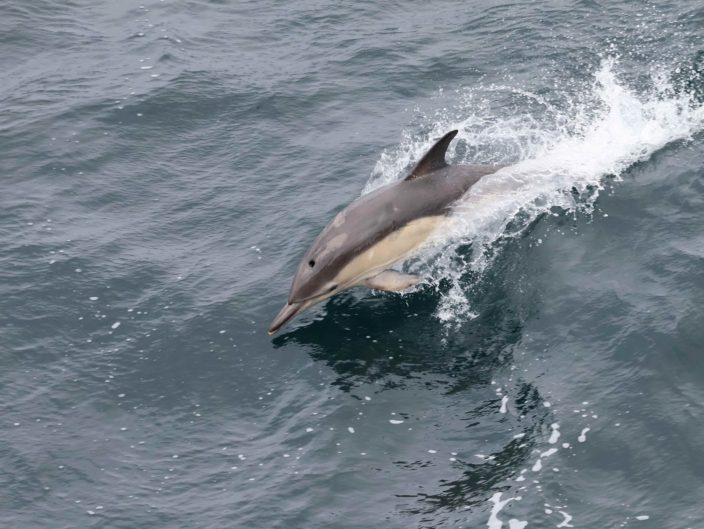
And another common dolphin
Written by Leah Moynihan, IWDG