
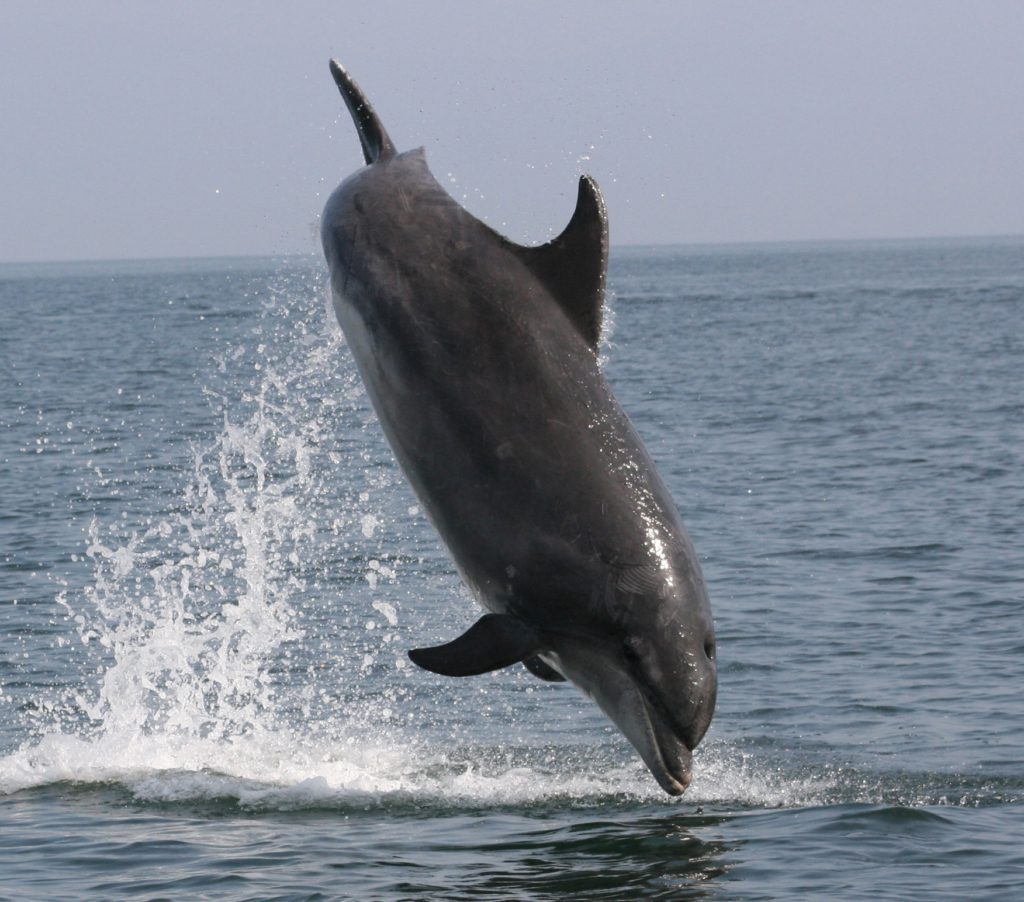
Ireland boasts such rich and abundant marine biodiversity as well as a legal responsibility to protect it. The European Commission has recently sent a letter of formal notice to Ireland opening an infringement procedure for failing to fulfil its obligations under the Habitats and Birds Directives. The deadline for putting in place a network of Natura 2000 protected sites was 2012, now the Commission has given Ireland two months to respond and address the shortcomings raised. The Commission’s letter of formal notice confirms what IWDG and others have raised for many years: Ireland’s marine protected area network remains incomplete, and further evidence-based designations are urgently required.
Current MPA Network
In practice, Ireland’s marine protection framework has relied heavily on the Natura 2000 network of SACs (Special Areas of Conservation) and SPAs (Special Protection Areas), which remain the main legal tool currently protecting marine habitats and species. Without the EU Habitats and Birds Directives, which obliges Ireland legally to implement their conservation ambitions, there would be very little nature conservation in Ireland.
The only cetacean (whales, dolphins and porpoises) species listed on Annex II of the Habitats Directive, are harbour porpoise and bottlenose dolphin, and this requires Ireland to designate SACs to protect a representative sample of their habitats.
The first MPA in Ireland for dolphins was designated in 2000 – the Lower River Shannon SAC for the resident bottlenose dolphins. In 2011, two SACs for harbour porpoise were designated – the Blasket Islands SAC and Roaringwater Bay and Islands SAC and in 2013 a third one for harbour porpoise (Rockabill to Dalkey Island SAC) and a second one for the coastal population of bottlenose dolphins (West Connacht Coast SAC). The designation of these SACs was underpinned by good science which showed strong site fidelity and high calving rates for bottlenose dolphins and elevated densities and continuous presence for harbour porpoises. The work to support the Lower River Shannon SAC had been carried out by the IWDG since 1993 and for the West Connacht Coast SAC since 2001 by University College, Cork (UCC). Harbour porpoise SACs were identified following an intensive survey effort by the IWDG in 2007 and 2008, funded by the NPWS.
16 new SACs for harbour porpoise and bottlenose dolphin
In 2024, under pressure from the EU to designate additional sites for harbour porpoise and bottlenose dolphin, the NPWS included harbour porpoise as a qualifying interest in 13 existing SACs (including one offshore) and bottlenose dolphin to five existing SACs, including three offshore sites. However the data supporting such designations was never made available and the area of many of these SACs is so small as to make them functionally irrelevant to the species and make conservation efforts impractical. The IWDG noted to the NPWS at the time the lack of sightings supporting designations (e.g. only one harbour porpoise sighting in the Belgica Mound Province SAC) and the exclusion of the appropriate species in others (e.g. only harbour porpoise in Lough Swilly SAC, Kilkieran Bay and Islands SAC and Gweedore Bay and Islands SAC rather than bottlenose dolphin). There exist significant challenges when monitoring these new SACs effectively for dolphins and porpoises to ensure they are at favourable conservation status, given their very small sizes or offshore nature.
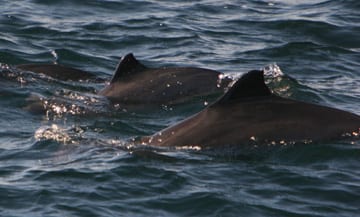
Harbour porpoise in the Blasket Island SAC © Simon Berrow/IWDG
IWDG recommended potential SACs
The IWDG have been very involved in the designation and monitoring of SACs for harbour porpoise and bottlenose dolphin for decades. The work started in the Shannon Estuary in 1993 provided the supporting evidence to identify the estuary as a very important habitat for a relatively small and genetically discrete population and the IWDG carried out all the surveys at eight sites to explore their potential as SACs for harbour porpoise.
In 2009, the IWDG published a report identifying Donegal Bay as a potential SAC for bottlenose dolphins (Berrow 2009). The IWDG “collated a total of 147 sightings of bottlenose dolphins in Donegal Bay collected by the IWDG between 1994 and 2008”. During “eight dedicated boat-based surveys carried out in Donegal Bay between July and September 2008, bottlenose dolphins were recorded during three visits. Images of bottlenose dolphins were obtained with a total of 44 individually recognized of which two individual dolphins were seen on all three trips with dolphins, seven dolphins (15%) were seen on two occasions with the remaining 35 seen on only one occasion. The IWDG recommended that “Donegal Bay should be considered a good candidate for designation as an SAC for bottlenose dolphins, as dolphins regularly use the site in good numbers and there was evidence of site fidelity”. Further work by UCC also showed great site fidelity and connectivity with the West Connacht Coast SAC (see references at end). These recommendations were ignored and although St John’s Point SAC is one of the existing SACs which bottlenose dolphin has been added to, the area is very small and has no ecological functionality and a much larger area was recommended.
Boundary extension to the Lower River Shannon SAC
IWDG have lobbied the NPWS to consider extending the westward boundary of the Lower River Shannon SAC to include Tralee and Brandon Bays. We have carried out extensive surveys since 2014 and published papers to support this recommendation (see references at end).
IWDG provided hard evidence that dolphins we know as the Shannon Dolphins are frequently recorded during summer months in Brandon and Tralee Bays. During boat surveys on Celtic Mist in 2013 a total of 70 individual dolphins were identified, of which 67 have been regularly recorded within the Lower River Shannon SAC, confirming them to be from this population. In collaboration with the Atlantic Technological University, an acoustic dataset collected between May and November 2013 showed dolphins were detected on 92% of days monitored in Brandon Bay with foraging during 20% of all monitored hours. Probably the most compelling evidence emerged while exploring mortality and survival rates of the Shannon Dolphin population from a 26-year dataset provided by the IWDG. Some dolphins assumed to be dead as we hadn’t seen them in the Shannon Estuary for a number of years, despite consistent survey effort, had in fact moved to Brandon and Tralee Bays. These dolphins, once recorded regularly in the estuary and now only recorded in Brandon and not back in the estuary, suggesting a permanent emigration (see references at end).
Thus, this evidence showed that Tralee and especially Brandon Bay are very important for the Shannon Dolphins. Some dolphins are now only recorded in Brandon Bay and not in the estuary and that this prolonged use of Brandon Bay may be relatively recent suggesting a range expansion. The IWDG recommended to either extend the existing boundary of the Lower River Shannon SAC from Loop Head across to Brandon Head or include bottlenose dolphin as a feature in a new MPA incorporating both Tralee and Brandon Bays. The Approaches to the Shannon were designated as an IMMA (Important Marine Mammal Area) during a recent review of the NE Atlantic by the IUCN (https://www.marinemammalhabitat.org/immas/)
The NPWS rejected these recommendations citing that the IWDG hadn’t shown that it was an important calving area. So, despite peer-reviewed evidence indicating regular use of Brandon and Tralee Bays by dolphins from the Lower River Shannon SAC population, the current SAC boundary has not been extended to reflect this wider habitat use. IWDG considers this a missed opportunity to ensure that protection follows the best available scientific evidence and expands Ireland’s MPA network.
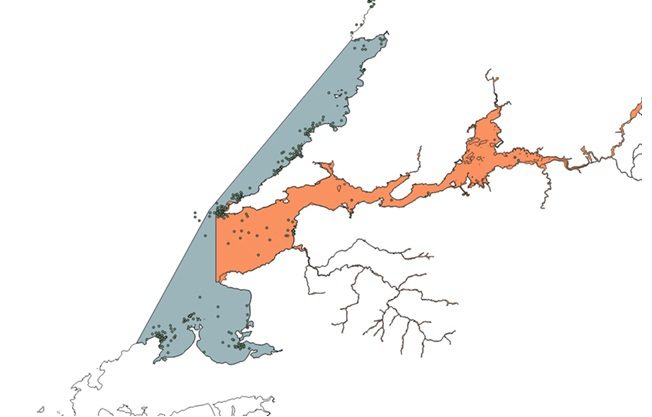
Boundary of West of Shannon Coast IMMA with sightings of Shannon bottlenose dolphins
EU formal letter to Ireland
The EU reached out to the IWDG on a number of occasions seeking our input to their review of Ireland’s implementation of MPAs for harbour porpoise and bottlenose dolphin. We supported their opinion that Ireland has been insufficient and has failed to provide an evidence-based justification of the recently designated SACs for these species.
A transparent and evidence-based approach to identifying, designating and managing Marine Protected Areas for cetaceans is essential if they are to be effective and encourage stakeholder buy in. The continued lack of engagement by the state to properly implement and manage SACs for dolphins and porpoises is regrettable. We await new legislation to support the designation and management of MPAs for all cetacean species – not just bottlenose dolphin and harbour porpoise – but the legislation and the process is important otherwise Ireland faces more “paper parks” with no measurable benefit to cetaceans or coastal communities. Cetaceans are top predators and reflect the health of the wider marine environment. Healthy cetacean populations mean healthy seas.
At some point we hope that the state, elected representatives and the people of Ireland realise what wealth we have in the seas around us, and embrace our obligations to protect and enhance them. Healthy seas are not a luxury but essential to support our lives and build resilience to face the uncertain times ahead. Ireland is fortunate to be an island, surrounded by highly productive waters, but if we do not do the right thing very soon, we will lose these precious species and habitats and not only be impoverished but lose essential, and irreplaceable resources, for the future.
The EU Formal Notice (edited)
Under the Habitats Directive, Member States must propose sites of Community importance (SCIs) to protect the EU’s most threatened habitat types and species, including several marine ones. While Ireland has undertaken significant monitoring of its marine waters, the Irish authorities have not yet formally proposed new marine SCIs and have not yet classified marine SPAs in coastal and offshore areas. More specifically, additional SCIs for reefs, sandbanks, bottlenose dolphin and harbour porpoise need to be established. The failure to propose such sites, so many years after the deadline has passed, obstructs the rapid roll-out of renewable energy projects as it creates legal uncertainty for authorities and developers. Ireland has ambitious offshore renewable energy plans, which the Commission fully supports. To advance on this objective, the authorities and developers need to have clarity on where the most environmentally sensitive areas are. The Commission is therefore sending a letter of formal notice to Ireland, which now has two months to respond and address the shortcomings raised by the Commission. In the absence of a satisfactory response, the Commission may decide to issue a reasoned opinion.”
Dr Simon Berrow
Chief Executive Officer and Steering Group member of the Fair Seas coalition
References
Berrow, S.D., O’Brien, J., O’Connor, I. & McGrath, D. (2009) Abundance Estimate and Acoustic Monitoring of Habour Porpoise Phocoena phocoena in The Blasket Islands Candidate Special Area of Conservation. Biology and Environment: Proceedings of the Royal Irish Academy 109B(1), 35-46.
Berrow, S.D. (2008) The potential of Donegal Bay as an SAC for Bottlenose Dolphins. Report to the National Parks and Wildlife Service. Irish Whale and Dolphin Group. pp.
Berrow, S., Hickey, R., O’Connor, I. & McGrath, D. (2014) Density estimates of harbour porpoise (Phocoena phocoena) at eight coastal sites in Ireland. Biology and Environment 114B (1), 19-34.
Charish, R., Berrow, S., & O’Brien, J. (2021) Acoustic Monitoring of a Bottlenose Dolphin (Tursiops truncatus) Population: Trends in Presence and Foraging beyond the Limits of the Lower River Shannon SAC. J. Mar. Sci. Eng., 9, 650. https://doi.org/10.3390/jmse9060650
Ingram, S.N., Englund, A. & Rogan, E. (2001). An extensive survey of bottlenose dolphins (Tursiops truncatus) on the west coast of Ireland. Heritage Council Report No. WLD/2001/42 17pp.
Ingram, S.N. & Rogan, E. (2003) Bottlenose dolphins (Tursiops truncatus) in the Shannon estuary and selected areas of the west coast of Ireland. Unpublished report to the National Parks and Wildlife Service. December 2003.
Levesque, S., Reusch, K., Baker, I., O’Brien, J. & Berrow, S. (2016) Photo-Identification of Bottlenose Dolphins (Tursiops truncatus) in Tralee Bay and Brandon Bay, Co. Kerry: A Case for SAC Boundary Extension. Biology and Environment: Proceedings of the Royal Irish Academy 2016. DOI: http://dx.doi.org/ 10.3318/BIOE.2016. 11
Ludwig, K.E., Daly, M., Levesque, S. & Berrow, S.D. (2021) Survival Rates and Capture Heterogeneity of Bottlenose Dolphins (Tursiops truncatus) in the Shannon Estuary, Ireland. Front. Mar. Sci. 8:611219. doi: 10.3389/fmars.2021.611219
Nykänen M, Dillane E, Englund A, Foote, A.D., Ingram, S.N., Louis, M., Mirimin, L., Oudejens, M. & Rogan, E. (2018) Quantifying dispersal between marine protected areas by a highly mobile species, the bottlenose dolphin, Tursiops truncatus. Ecol Evol. 8, 9241–9258.