
Introduction & Summary of 2025
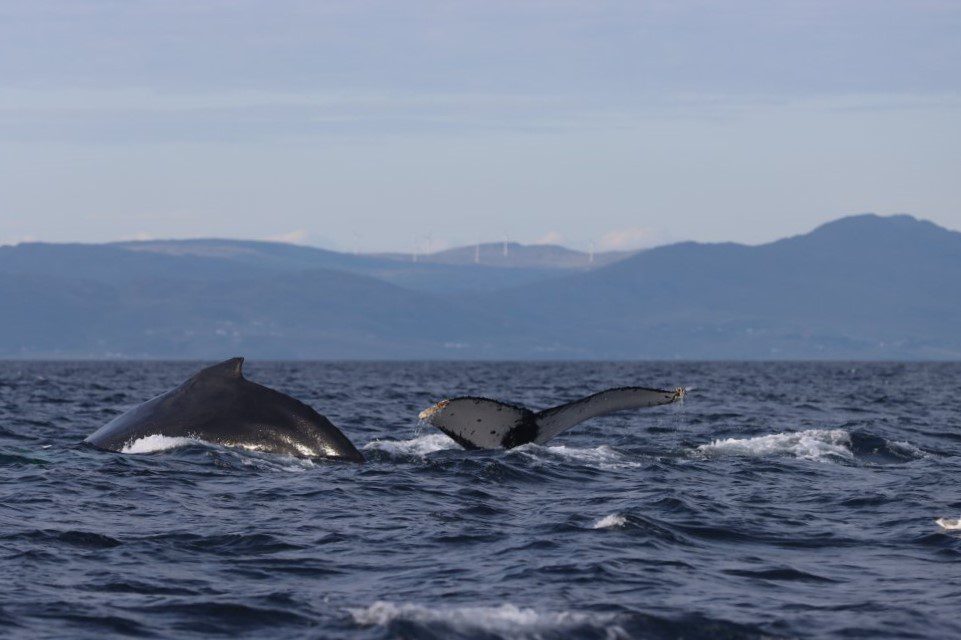
2025 could turn out to be something of a watershed year for humpback whales in Irish waters. In terms of numbers of sightings, the past two years were very different with 150 sightings in 2024/5 compared with 104 in 2025/6, an almost 30% decline. This can’t easily be explained by “weather”, as the main summer/autumn reporting period in 2025 held reasonably fine. The southwest which has consistently been the most productive humpback region over the past two decades has once again had to cede top place to the northwest, as Donegal Bay produced almost 40% of all Irish humpback sighting records in 2025/6. This is now the second in the past three years this has happened and if repeated in 2026/7, would confirm the trend.
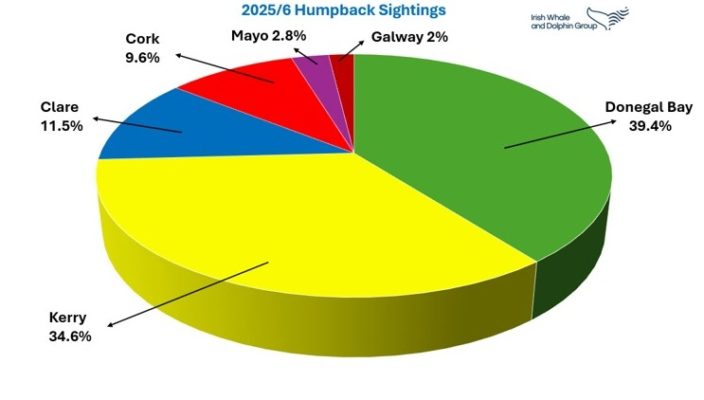
Breakdown of 2025/6 humpback sightings by county or area
2025 produced a good spread of sightings over seven counties, with the biggest number of reports (39.4%) from the Donegal Bay area (Including Co. Sligo), followed by Co. Kerry (34.6%), Clare/Shannon Estuary (11.5%), Cork (9.6%), Mayo (2.8%) and Galway (2%) (see Chart below).
Of the 14 humpbacks photo-identified under the WhaleTrack Project during 2025/6, ten (71%) were known from previous years, while four (29%) were new animals previously undocumented and were added to the Irish Humpback whale Catalogue, which as of January 2026 stands at 140 individuals (see montage below). There was a lower % of new additions to the catalogue in 2025/6 (29%), as against 40% in 2024/5.
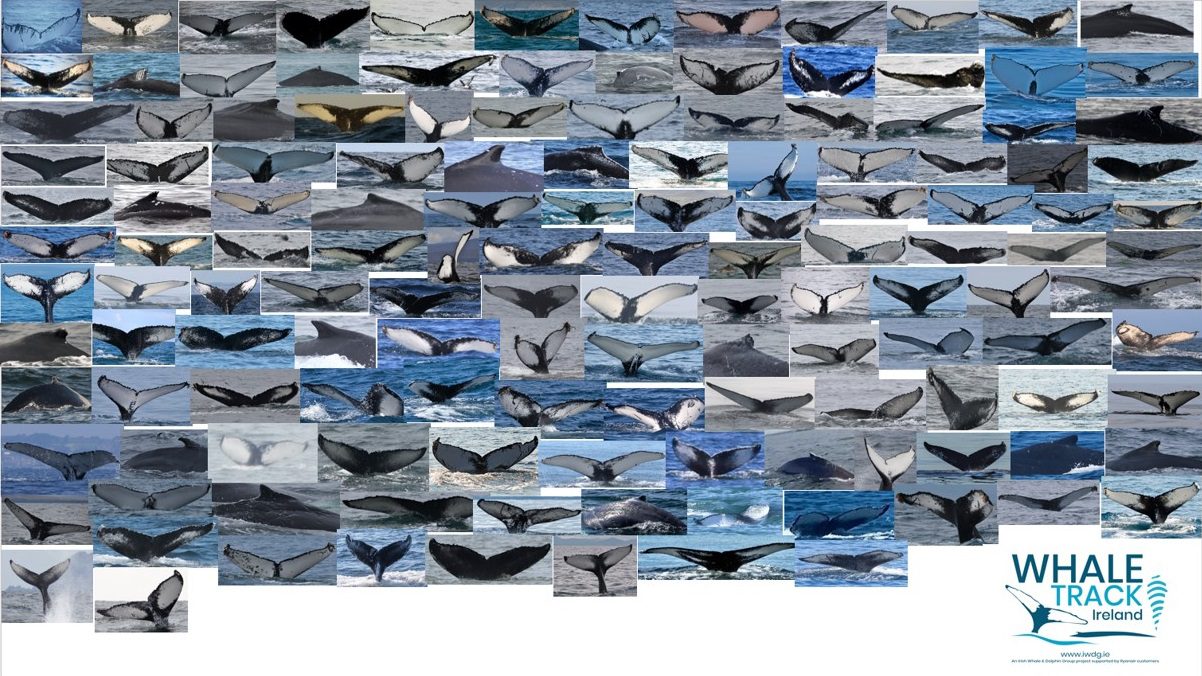
Figure 1 Sample images of all 140 humpbacks on Irish photo ID Catalogue to Jan. 2026 © IWDG
Each of the six known humpbacks that were photo identified this season in Donegal Bay have been recorded in the Southwest in previous years; among these were #HBIRL024, 047, 089, 107, 114 & 118. Interestingly, two of these were also recorded in Donegal Bay in 2024/5. One of the “new” humpbacks this year #HBIRL139 was first photographed on July 19th and last recorded on Oct. 17th, a 97-day residency period. Similar to 2024/5, the humpbacks once recorded in Donegal Bay, appeared to stay there, as none were subsequently recorded in any of our other Irish hotspots.
Some humpback highlights of 2025/6 season
• March 16th: 1st humpback of the season recorded off Dun Na Mbo on Mayo’s Mullett Peninsula.
• April 5th: HBIRL059 recorded off Boa Vista on the Cabo Verde breeding ground for the fifth year between 2016-2025 (photo image below credit Frank Hennike Boa Vista Tours). She was also recorded off Murmansk, Russia in July 2025.
• August 1st: Resighting of #HBIRL003, aka “Boomerang” smashing all Irish records, bringing to 73 the numbers of confirmed sightings of this adult male along the Cork and Waterford coast over 20 years between 2001-2025.
• Nov. 17th: For only the 2nd consecutive year late season humpbacks (Min. 2) found their way to the Shannon Estuary and remained feeding in the area off Kilbaha until Jan. 15th. These were observed from both the Clare and Kerry sides of the estuary.
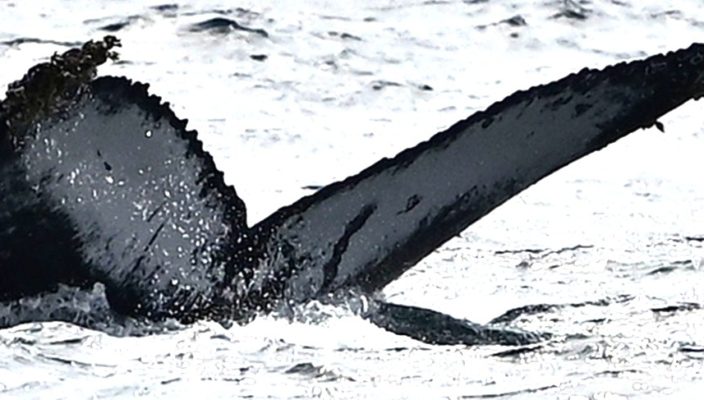
#HBIRL059 off Boa Vista, Cabo Verde April 2025
Adoption update 2025/6
The Irish Humpback Whale Catalogue started 2025 with 136 individuals, most of whom (88%) are identified from their unique and naturally occurring patterns on their tail fluke ventral surface (underside), while a small number (12%) were matched from dorsal fin characteristics. By the close of the 2025/6 season, we added four new animals to the catalogue, bringing this resource to 140 well-marked and recognisable individuals (figure 1.). Compared with previous years 2025/6 was a quiet year for Irish humpback sightings, which is reflected in this year’s lower growth in the catalogue. As always, collaborating with overseas partners is critical in helping us learn more about how these animals use Irish waters and those well beyond our shores.
So, did any of the humpbacks on the Irish “Adopt a Humpback whale” programme make an appearance during our 2025/6 season? Yes, just one individual, whom not surprisingly is Ireland’s best-known humpback, # HBIRL003 “Boomerang”. This is in sharp contrast to recent years, with a 20% re-sight rate among our adoptees, which compares with 80% in the previous 2024/5 season. Here we take a closer look at Boomerang’s recent movements in Irish waters.
#HBIRL003, “Boomerang”.
Perhaps no great surprise, but as his name suggests “Boomerang” did indeed return to our southwest waters, with at least three confirmed sightings from Aug. 1st. Boomerang breaks all records for this species in Irish waters, as no other whale has been recorded over so many years (20 yrs) and with so many sightings (n=73). This year he remained in his favourite west Cork haunts with all sightings between Kinsale and Clonakilty Bay. His last sighting on Oct. 17th off the Old Head of Kinsale brings to 73 the numbers of confirmed sighting dates since he was first photographed in west Cork in August 2001 by Colin Barnes.
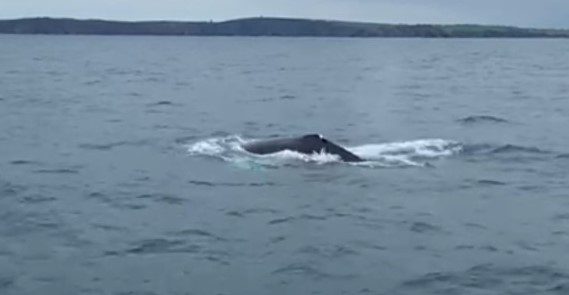
#HBIRL003, or “Boomerang” 1 mile outside Kinsale Harbour, Co. Cork 16/10/2025 © Ronan O’ Sullivan, AWWT. His distinctive white scarred dorsal fin stands out even on low quality images.
WhaleTrack needs your support.
IWDG extends a huge thanks to all of you who have helped our research and conservation work by either adopting one of the “Irish” humpback whales or by providing logistical support to our volunteers who carry out this fieldwork. Your support makes it possible for our volunteers to get out on commercial platforms or to cover some of the costs incurred in spending long hours at sea both searching for and documenting the humpbacks that return to Irish waters year after year.
The WhaleTrack project has enabled IWDG maintain this important monitoring effort across three decades and over an ever-increasing geographic range as our humpback population shifts further north within Irish waters and we better understand their migration to both tropical breeding areas as well as high latitude feeding areas in the Arctic. (Figure 2)
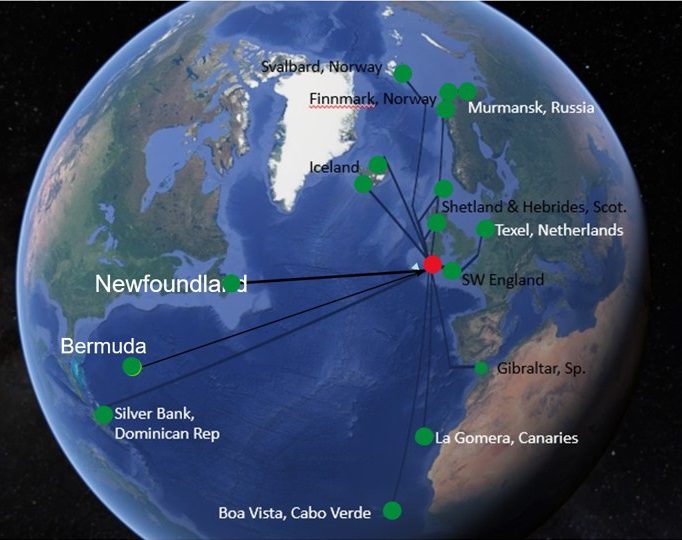
Figure 2: “Irish” Humpbacks, the international dimension of this global traveller.
Behind every humpback on the catalogue are many hours of land watches, boat charters or costly fuel bills and then there is the time spent analysing images for matching and curating the catalogue in real-time. All of this necessitates liaison with overseas research groups on both sides of the Atlantic as well as providing feedback to contributors here. Fieldwork, administration and outreach are a real cost to the IWDG and we are looking for a partner or sponsor to help us build on what we’ve already achieved. If you are a business and feel that support for WhaleTrack could align with your corporate responsibility over the next 2-3 years we’d be delighted to discuss this opportunity with you in 2026.
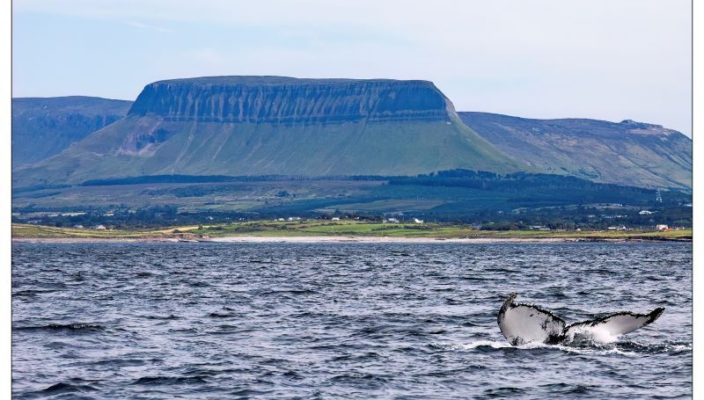
#HBIRL47 under Ben Bulben, Co. Sligo, in Donegal Bay, July 13th 2025, © Tom Ormonde
By Pádraig Whooley, IWDG Sightings Officer
E: padraig.whooley@iwdg.ie Ph. 086 3850568