
🐬 Mother & Calf Dolphin Rescue, Tramore, Co. Waterford 🐬
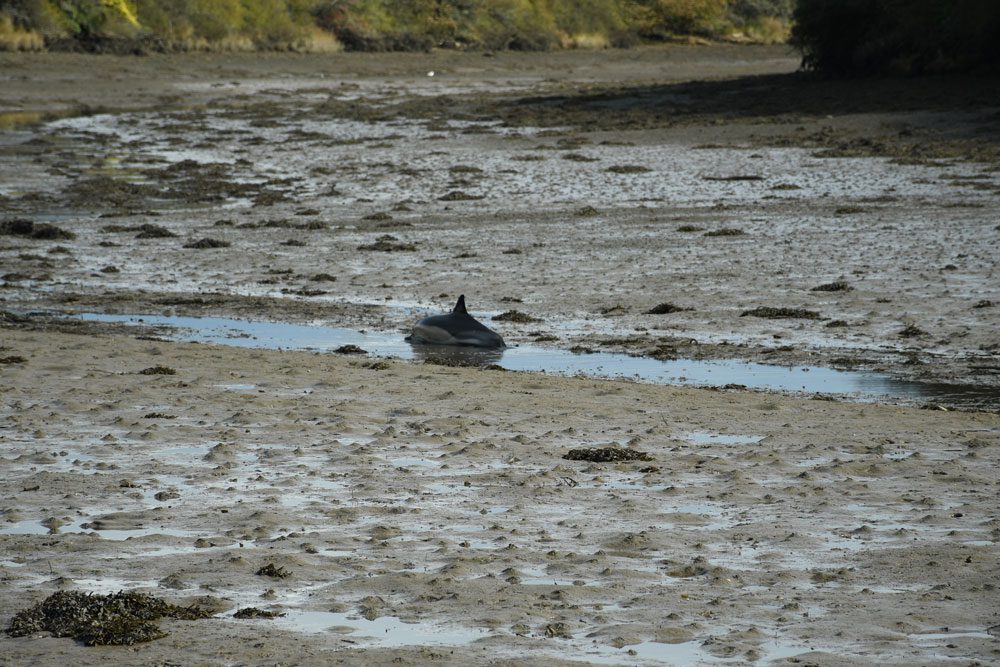
On 24th September, a call came into the IWDG Emergency Hotline that two dolphins were in difficulty in a tidal stream in the Kilmacleague area of Tramore. A mother and calf common dolphin pair were spotted by Ian Stubbs, who contacted IWDG. Thanks to Ian’s quick thinking, volunteers were being tasked before the common dolphins stranded, ensuring a rapid response.
IWDG volunteers Deirdre, Clare and Kieran responded and worked with David, an NPWS ranger, Ian who called it in and Kevin, Justin and Peter from Waterford Sub Aqua Club, who were notified by IWDG responder and diver Paul. Based on where the pair were, the dropping tide, and the fact that common dolphins are a pelagic species used to deep water rather than tidal streams or sandbars, the decision was made to relocate them by road to open water. Refloating them in the waters inside the Tramore sand dune system risked them moving further into inaccessible areas and becoming stranded again. Live stranding in there, in the inaccessible muddy area, would have been fatal for both dolphins.
The team extracted the dolphins using tarpaulins, as trained, since dolphins must never be dragged by the tail — dragging a dolphin can cause dislocations which are life-ending as it prevents them from hunting and feeding effectively. Both dolphins were then placed on padding in a trailer, side by side, and carefully relocated to Dunmore East pier, with stops along the way to cool them. Once released, both dolphins swam immediately and paired up again. Both were upright in the water — a very good indication that no lung compression had occurred while stranded.
Members of Dunmore East Adventure Centre kindly kept an eye on the area after the release, in case the dolphins returned ashore. There were no further reports of the pair being seen again that evening.
Huge thanks to all who assisted. Without a combined effort, live stranding responses are very difficult.
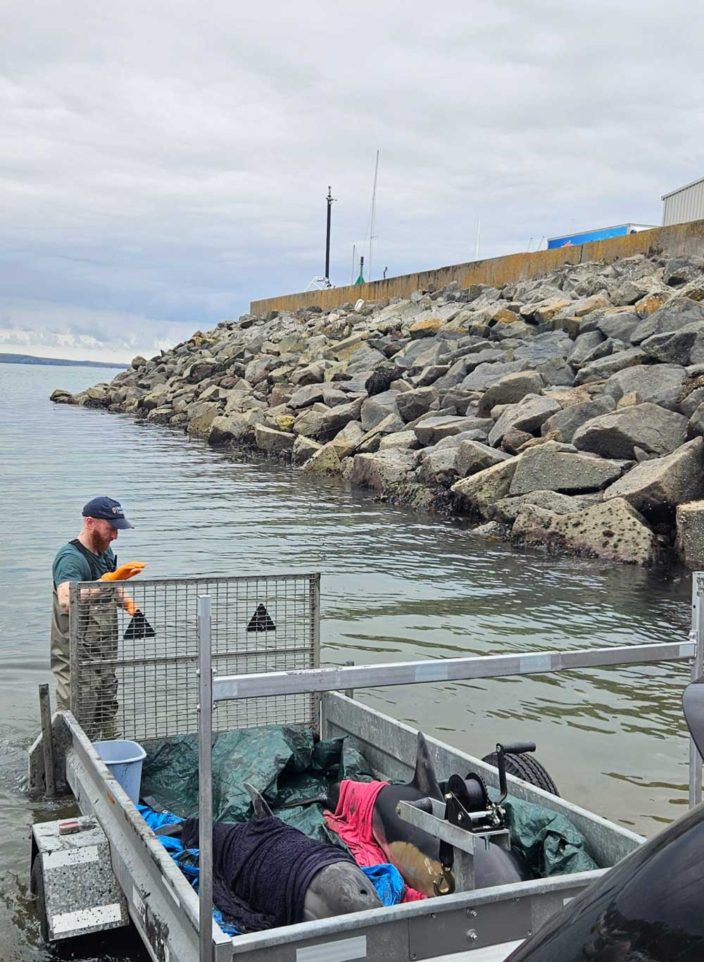
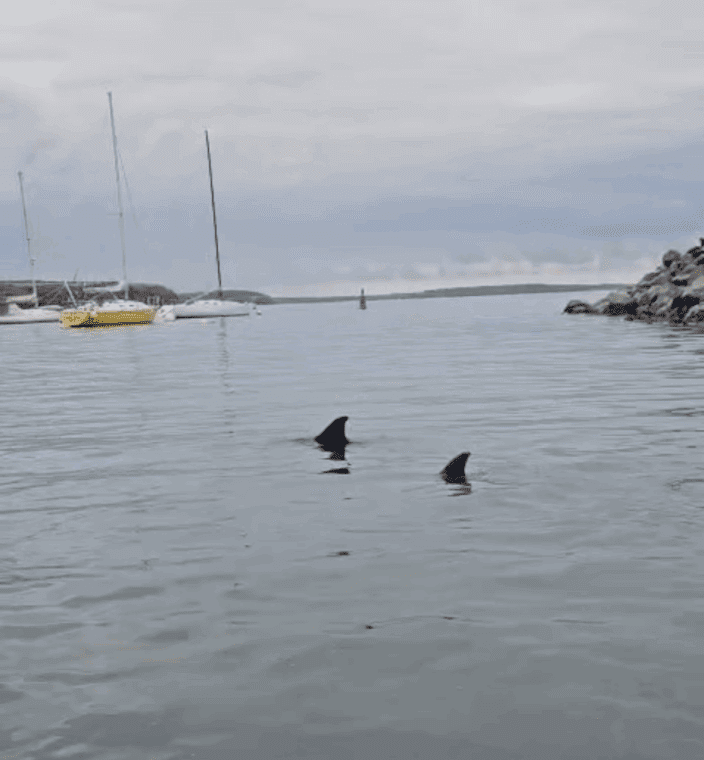
📷 IWDG responders Deirdre & Clare
Not all cases end happily. Just one week earlier, in the Tramore area, a lone pilot whale live stranded on a sandbar at the end of Tramore beach. She was spotted by members of the public, who called it in to IWDG. At that stage she was just beginning to naturally refloat with the rising tide, but in her weakened state it’s possible the strong current in the nearby channel carried her behind the Tramore sand dunes — or, disoriented from her ordeal, she may have swum in there herself — where she live stranded a second time. An IWDG volunteer on scene gathered essential photos and video for assessment. These showed the whale was thin, in poor health, and carrying old open injuries. She was also alone and far from her normal deep-water habitat, which in itself is worrying and often an indicator that something is wrong. As much as we tried, we were unable to get an experienced vet to the scene to end her suffering, and she died naturally. In such harrowing cases, all we can do is give the whale as much space and peace as possible to reduce its stress. Many thanks to Waterford Co. Council, who were on hand to assist with removal had euthanasia been possible; to the IWDG responders who spent many hours monitoring the whale while we tried to get her help; and to Irish Coast Guard volunteers Gareth and Steve, who kept watch for public safety — as there is always risk around stressed whales.
📞 If you come across a live stranded whale, dolphin, or porpoise, please do not attempt to refloat it without contacting the IWDG Emergency hotline on 097 28118 first where advice and assistance will be given.
⚠️ NEVER drag a dolphin by the tail as this may cause life ending injuries to the dolphin. . Take photos of the animal for species identification, and videos to allow us to assess the animals behaviour and condition, as well as local site conditions. You will be given advice and the nearest IWDG trained responders will be tasked to your location.
Remember – Live stranded animals can be dangerous — they have a very powerful tail and may thrash unexpectedly when entering fight-or-flight mode.