We find ourselves in unique circumstances with our lives on hold due to the Covid-19 pandemic. With every day that passes there is a sense that something unpleasant is coming down the line, but the “when’s and where’s” aren’t well understood and this uncertainty is making a bad situation worse. Heck, even getting out to
Posts Categorized: WhaleTrack Ireland
For good reason it always seems to be humpback whales off the known Cork and Kerry hotspots that make the big news stories, such as the one that featured on the main RTE news last night, but recent humpback whale sightings in Donegal Bay remind us that there may be a bigger picture….. IWDG have
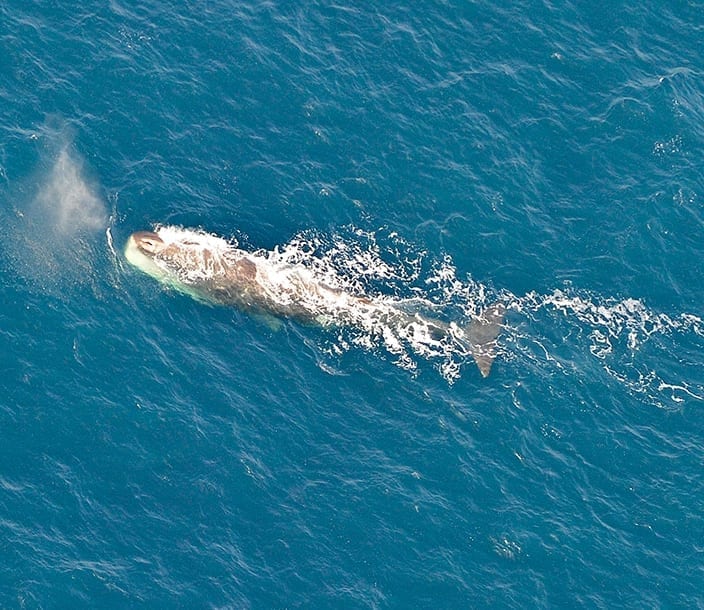
Estimating total length and body condition An Unmanned Aerial Vehicles (UAV) or a “drone” will be used to capture high resolution images of whales from the air that will be measured using a technique called aerial photogrammetry. It has proved to be a powerful non-invasive method to collect information on how long or how healthy
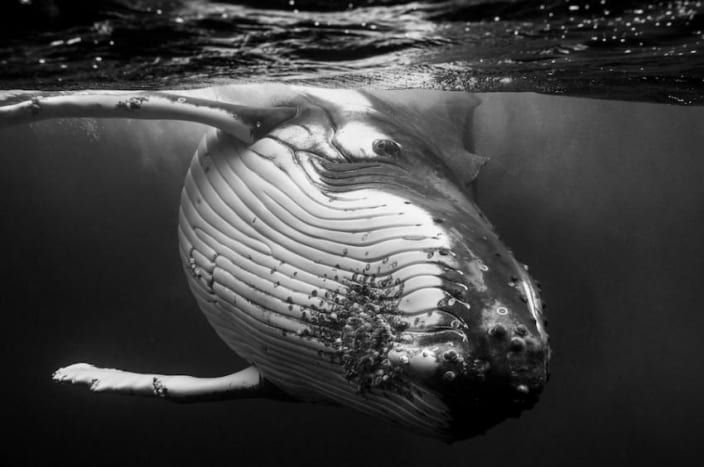
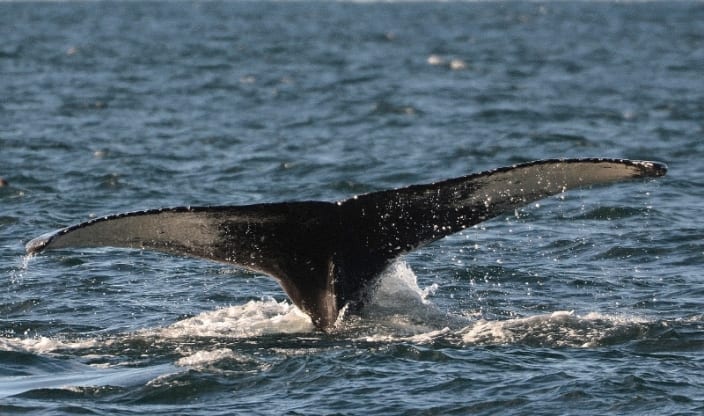
WhaleTrack Ireland aims to determine what humpback whales do in Irish waters, where they come from and go to. This will be achieved by identifying migration patterns and important feeding areas in Irish waters using a variety of techniques. Individual whales will be identified using their unique markings from images through photo-identification with the help
IWDG encourage all citizen scientists to report sightings of large whales. IWDG will validate these records and use them to identify key area for humpback whales and other species such as fin whale. IWDG already have a large database of sightings but want to spread the recording, especially to areas which historically have suffered from
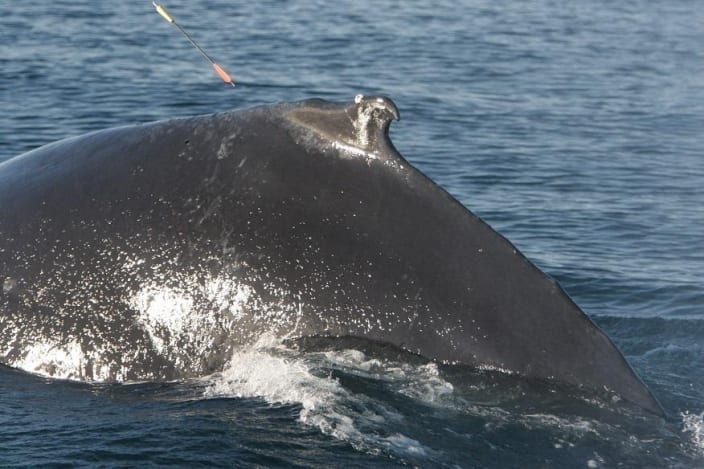
Biopsy sampling is a powerful tool to understand genetics, feeding ecology and threats caused by pollution. It involves firing a dart (under license) into the whale to collect a small plug of skin and blubber. The skin is used to determine the sex of the whale and can be compared to samples collected elsewhere to
Humpbacks whales sing. They are one of the few baleen whales to vocalise within our frequency range which makes them easier to record than other species. Although humpbacks have been tracked in deep water using bottom mounted hydrophones during their migration, only one attempt has been made to see if they vocalise on the inshore
This project commenced in 2003 to study areas along the Irish south and southwest coast that were thought to be ecologically significant for large whales, namely fin and humpbacks with support from the Heritage Council, Marine Institute and Fáilte Ireland. Cape Clear Island to the Old Head of Kinsale, Co. Cork was surveyed during the